Gia Lai Province Approves Nearly 1.5 Trillion VND Wind Power Project
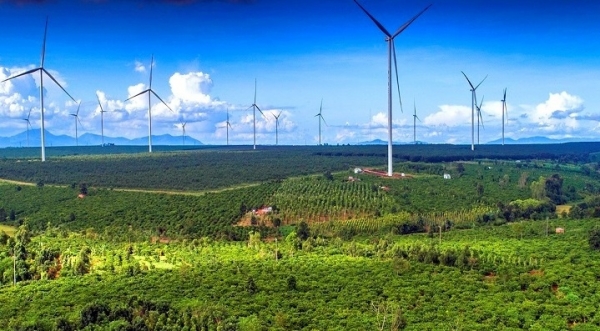
The People's Committee of Gia Lai Province has recently issued a decision in principle to invest in the Ia Le 2 Wind Power Plant project, which is part of the larger Ia Le Wind Power Plant Complex. This significant development represents a major step forward in Vietnam's renewable energy sector and will be implemented in Chư Pưh and Ia Le communes with a total estimated investment of 1,468 billion VND (approximately 62.5 million USD).
Project Overview
The Ia Le 2 Wind Power Plant project marks a significant milestone in the development of renewable energy resources in Gia Lai Province and contributes to Vietnam's broader sustainable development strategy. The initiative aligns with the country's commitment to reducing carbon emissions and transitioning toward cleaner energy sources.
| Project Information | Details |
|---|---|
| Project Name | Ia Le 2 Wind Power Plant |
| Total Investment | 1,468 billion VND (approx. 62.5 million USD) |
| Location | Chư Pưh and Ia Le communes, Gia Lai Province |
| Investor | Yet to be officially announced |
| Implementation Timeline | Pending confirmation |
Renewable Energy Context in Vietnam
Vietnam has been making substantial strides in developing its renewable energy sector in recent years. The country has set ambitious targets to increase the proportion of renewable energy in its total energy mix, with wind power playing a crucial role in this transition. According to Vietnam's Power Development Plan VIII (PDP8), the country aims to have 18-20GW of wind power capacity by 2030, including 2GW from offshore wind farms.
Gia Lai Province, located in Vietnam's Central Highlands, possesses significant wind energy potential due to its topography and climate conditions. The region's average wind speed ranges from 6.5 to 7.5 m/s at hub height (80-100m), making it suitable for wind power development.
Economic Impact Analysis
The implementation of the Ia Le 2 Wind Power Plant is expected to generate substantial economic benefits for Gia Lai Province:
| Economic Impact Area | Expected Benefits |
|---|---|
| Energy Production | Contribution to national grid diversification and energy security |
| Job Creation | < Numerous employment opportunities during construction and operational phases|
| Local Economy | Stimulation of service sectors and commercial activities |
| Infrastructure | Improvement of local transportation and power infrastructure |
| Revenue | Local tax revenue and land lease payments |
Technical Specifications and Implementation
While specific technical details of the Ia Le 2 Wind Power Plant are yet to be fully disclosed, typical wind power plants of this scale usually consist of numerous wind turbines with a total capacity ranging from 30-50MW. The project will likely utilize modern turbine technology capable of operating efficiently in Gia Lai's wind conditions.
The implementation process will involve several key phases:
- Site Preparation: Land clearance and infrastructure development
- Turbine Installation: Transportation and assembly of wind turbines
- Grid Connection: Integration with the national power grid
- Testing and Commissioning: System verification and commencement of commercial operation
Challenges and Considerations
Despite the significant benefits, the project will face several challenges that need to be addressed:
- Land Acquisition and Community Resettlement: The project requires substantial land area, necessitating careful planning and fair compensation for affected communities. Ensuring community acceptance and minimizing social disruption will be crucial.
- Regulatory Approvals: The complex regulatory environment for renewable energy projects in Vietnam may result in delays. Streamlining approval processes while maintaining environmental and social safeguards will be essential.
- Grid Integration: Ensuring the stability and reliability of the national power grid when incorporating variable renewable energy sources requires careful planning and investment in grid modernization.
- Financing and Investment: Securing adequate financing for the project and ensuring financial viability will be important considerations for investors.
Environmental and Social Benefits
The transition to wind energy offers significant environmental advantages over traditional fossil fuel-based power generation:
- Carbon Emission Reduction: Wind power produces minimal greenhouse gas emissions during operation, contributing to climate change mitigation efforts.
- Air Quality Improvement: By reducing reliance on coal and natural gas power plants, wind energy helps improve local air quality and public health.
- Water Conservation: Unlike thermal power plants, wind power requires minimal water for operation, preserving valuable water resources.
- Biodiversity Considerations: Proper siting and design can minimize impacts on local ecosystems and wildlife.
Future Outlook for Renewable Energy in Gia Lai
The approval of the Ia Le 2 Wind Power Plant signals a growing commitment to renewable energy development in Gia Lai Province. This project is likely to be followed by additional renewable energy initiatives in the region, including solar power and potentially other wind power projects.
The Central Highlands region, including Gia Lai, has significant potential for both wind and solar energy development. As technology costs continue to decline and policy support increases, renewable energy is expected to play an increasingly important role in the region's economic development strategy.
Conclusion
The Ia Le 2 Wind Power Plant project represents a significant investment in Vietnam's renewable energy future and offers substantial economic and environmental benefits for Gia Lai Province. As the country continues to pursue its sustainable development goals, projects like this will play a crucial role in transitioning toward a cleaner, more resilient energy system.
Successfully implementing this project will require careful coordination between government agencies, investors, and local communities. By addressing the challenges proactively and maximizing the benefits, the Ia Le 2 Wind Power Plant can serve as a model for future renewable energy development in Vietnam and other developing nations.