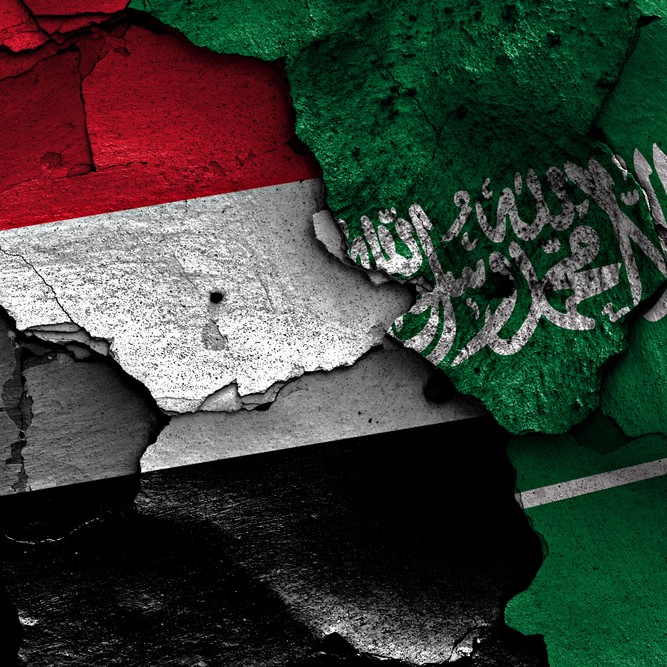
Houthi Declares Maritime Blockade, Threatening Global Energy Export Routes
Yemen's Iran-aligned Houthis have declared an immediate maritime blockade of Saudi Arabia, bringing US-Iran tensions to the southern Red Sea and threatening critical global energy export routes.
According to Reuters, the Iran-linked Houthi group announced an immediate maritime blockade against Saudi Arabia on Monday, officially bringing the US-Iran conflict to the southern Red Sea and jeopardizing an export route that Riyadh utilizes to avoid disruptions at the Strait of Hormuz. The group stated that this "maritime blockade" is in response to what they describe as Saudi Arabia's siege of Yemen. As of this report, Saudi Arabia has not issued an official response to the announcement.
Escalating Tensions in the Region
The Houthi blockade declaration follows Iran's previous instructions to the Houthis to prepare to close the Bab el-Mandeb Strait if the United States continues to attack Iran's energy infrastructure. Reuters reports that a complete closure could disrupt oil shipments equivalent to approximately 7% of global supply, leaving Saudi Arabia exposed at both ends of its export system as vessel traffic through Hormuz remains significantly reduced.
The blockade announcement comes on the ninth consecutive night of US attacks on Iran. Tehran has reported attacks in Tabriz, Chabahar, Konarak, Bandar Mahshahr, and Bandar Imam Khomeini, while Iran's Revolutionary Guard has claimed attacks on US military assets in Jordan, Kuwait, and Syria. Kuwait has also reported another attack on a desalination plant, causing a fire.
Maritime Monitoring Technology and Impact on Oil Transportation
Oil shipping through the Gulf is deteriorating once again. Satellite images reviewed by Reuters show only one ship-to-ship oil transfer outside Hormuz on July 18, down from three weeks prior. Maritime sources estimate that only two or three such transfers have occurred in recent days, and the number of supertankers passing through Hormuz has decreased to an average of two per week, down from eight daily in late June and early July.
Satellite monitoring technology has played a crucial role in tracking maritime activity in the region. Space analytics companies like Planet Labs and Maxar Technologies provide detailed satellite imagery of maritime operations, allowing analysts and governments to monitor changes in vessel traffic in real-time.
| Time Period | Ship-to-Ship Oil Transfers Outside Hormuz | Supertankers Passing Through Hormuz Daily |
|---|---|---|
| Previous Week | 3 | 8 |
| July 18 | 1 | - |
| Recent Days | 2-3 | 2 |
Modern Maritime Monitoring Technologies
- Automatic Identification System (AIS) - tracks vessel positions and movements
- High-resolution satellite imagery - provides comprehensive views of maritime activity
- Artificial Intelligence (AI) - analyzes big data to forecast trends and detect anomalies
- Unmanned Aerial Vehicles (Drones) - monitor sea areas from low altitudes
Impact on Energy Markets and Trading Technology
Brent crude prices briefly rose above $90 per barrel following the blockade announcement before declining as traders assessed reports of new ceasefire efforts. Iran has received a 10-day ceasefire proposal, with both Tehran and Washington leaving open the possibility of renewed negotiations. Brent subsequently traded near $88.04 per barrel, while West Texas Intermediate fell to around $82.29.
Algorithmic trading systems reacted swiftly to market volatility, with automated trading systems executing millions of orders within seconds of the announcement. Electronic trading platforms such as Bloomberg Terminal and Refinitiv Eikon reported sudden spikes in trading volume following the news release.
Technologies in the Oil Industry
The oil industry has developed advanced technologies to cope with geopolitical risks:
- Enhanced positioning technology - optimizing shipping routes
- Remote monitoring systems - tracking pipeline and infrastructure conditions
- Alternative energy conversion technology - developing backup energy sources
- Forecast analytics - predicting market prices and demand
Technology Prospects in the Region
The escalating tensions in the Red Sea and the Strait of Hormuz have driven increased demand for advanced maritime security technology. Countries in the region are heavily investing in:
- Automated maritime border surveillance systems
- Underwater threat detection technologies
- Integrated command and control systems
- Renewable energy technologies to reduce dependence on oil
Major technology companies like Lockheed Martin, Raytheon, and BAE Systems have reported increased orders for maritime security solutions in the region, reflecting the growing demand for advanced technologies to ensure maritime security amid increasing geopolitical instability.
The impact of the crisis on global energy markets remains uncertain, but it is clear that technology will play a crucial role in monitoring, analyzing, and responding to the emerging challenges in the maritime and energy sectors.