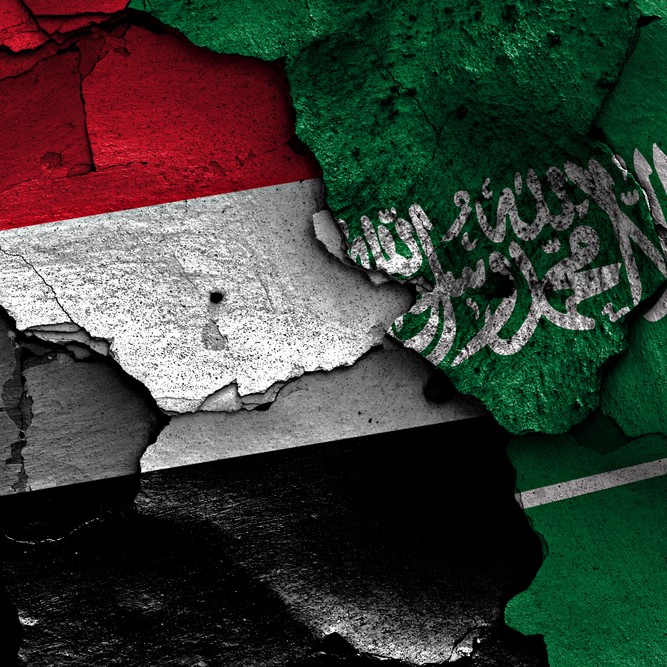
Houthi Militia Declares Maritime Blockade Against Saudi Arabia Amid Escalating Red Sea Crisis
In a significant escalation of regional tensions, the Iran-backed Houthi group has declared an immediate maritime blockade against Saudi Arabia. This development represents a formalization of the ongoing proxy conflict between the United States and Iran at the southern entrance to the Red Sea, while simultaneously threatening a critical export route that Riyadh has utilized to bypass disruptions at the Strait of Hormuz.
Strategic Implications of the Naval Blockade
The Houthi announcement comes amid rapidly deteriorating security conditions in one of the world's most vital maritime chokepoints. By declaring what they term a "maritime embargo," the Houthi militia is directly challenging Saudi naval dominance in the region while attempting to leverage control over international shipping lanes for political advantage.
This move places significant pressure on global energy markets, as the Red Sea serves as a crucial corridor for oil tankers traveling from the Persian Gulf to European markets and beyond. The blockade specifically targets Saudi maritime interests, potentially disrupting the kingdom's alternative export route should tensions with Iran further escalate in the Strait of Hormuz.
Official Statement from Houthi Leadership
In their formal declaration, the Houthi leadership framed the blockade as direct retaliation for what they described as Saudi Arabia's ongoing naval blockade of Yemen. The statement emphasized that the measure was an immediate response to "Saudi aggression" and economic warfare against Yemeni civilians.
As of the time of reporting, Saudi Arabia had not issued an official response to the Houthi declaration. The kingdom's silence may indicate either strategic deliberation or an attempt to avoid escalating the situation further, particularly as regional tensions already remain at elevated levels following recent military exchanges between the United States and Iran.
Iran's Strategic Direction to Houthi Forces
The Houthi blockade announcement follows earlier guidance from Iranian leadership reportedly instructing the group to prepare for the potential closure of the Bab el-Mandeb Strait. This vital waterway connects the Red Sea to the Gulf of Aden and serves as a maritime shortcut between Asia and Europe.
Should the Bab el-Mandeb Strait be fully closed, analysts estimate that oil shipments equivalent to approximately 7% of global supply could be disrupted. This would create significant challenges for Saudi Arabia, effectively trapping the kingdom's oil exports between potential closures at both ends of its export system—Hormuz to the east and now potentially Bab el-Mandeb to the west.
Escalating Military Exchange Between US and Iran
The Houthi declaration comes against a backdrop of intensifying military confrontation between the United States and Iran. Over the past nine consecutive nights, US forces have reportedly conducted strikes against Iranian targets, including locations in Tabriz, Chabahar, Konarak, Bandar Mahshahr, and Bandar Imam Khomeini.
In response, Iran's Islamic Revolutionary Guard Corps (IRGC) has claimed responsibility for attacks on US military assets in Jordan, Kuwait, and Syria. Kuwait has additionally reported a separate attack on a desalination plant that resulted in a significant fire, further demonstrating the spillover effects of the widening conflict.
Deteriorating Oil Transportation Conditions
Maritime traffic in the Persian Gulf continues to deteriorate, with satellite imagery reviewed by Reuters indicating a dramatic reduction in oil transfer operations. Data shows only one successful ship-to-ship oil transfer occurred outside the Strait of Hormuz on July 18, a significant decrease from three such transfers recorded the previous week.
Maritime sources estimate that only two to three oil transfers have taken place in recent days. Additionally, the frequency of very large crude carriers (VLCCs) passing through Hormuz has decreased to an average of two per day during the most recent week, down from eight per day in late June and early July.
Market Response and Price Volatility
The global oil market reacted swiftly to news of the Houthi blockade, with Brent crude temporarily trading above $90 per barrel following the announcement. However, prices moderated as traders assessed reports of new ceasefire initiatives.
Iran has reportedly received a proposal for a 10-day ceasefire, with both Tehran and Washington indicating openness to resuming negotiations. This diplomatic overture helped stabilize markets, with Brent crude subsequently trading near $88.04 per barrel, while West Texas Intermediate (WTI) crude declined to approximately $82.29 per barrel.
| Oil Market Indicator | Pre-Blockade Level | Post-Blockade Level |
|---|---|---|
| Brent Crude (USD/barrel) | 90.00 | 88.04 |
| WTI Crude (USD/barrel) | 82.29 | 82.29 |
Geopolitical Context and Regional Dynamics
The current developments represent a complex interplay of regional rivalries and international power competition. The Houthi blockade, while directly targeting Saudi interests, aligns with Iran's broader strategy of leveraging proxy forces to challenge US and Saudi influence in the Middle East.
The Red Sea has increasingly become a focal point of great power competition, with major naval powers including the United States, China, and regional actors all maintaining significant naval presence in the area. The closure of critical maritime chokepoints like Bab el-Mandeb would not only impact energy markets but also disrupt global supply chains that depend on these vital waterways.
Future Scenarios and Potential Outcomes
Several potential scenarios could unfold in the coming weeks. If the Houthi blockade is strictly enforced and Saudi Arabia responds with countermeasures, the situation could escalate into direct naval confrontation, potentially drawing in other regional powers.
Alternatively, diplomatic efforts may succeed in de-escalating tensions, particularly if the proposed 10-day ceasefire materializes into a longer-term arrangement. However, given the deep-rooted animosities and strategic interests at stake, a return to stability remains uncertain.
Energy markets will remain sensitive to developments in the region, with any sustained disruption to oil flows likely to trigger significant price volatility and potential supply concerns for importing nations worldwide.
The international community continues to monitor the situation closely, with United Nations officials expressing concern over the potential humanitarian and economic consequences of further escalation in this strategically vital region.