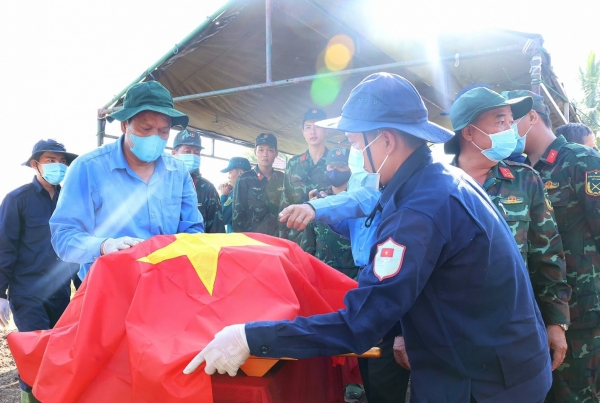
Cần Thơ: Discovery of Female Revolutionary Fighter Út Móm's Remains After More Than Half a Century
On October 24, 2023, a significant historical event took place in Cần Thơ city when the remains of female revolutionary fighter Nguyễn Thị Út, commonly known as Út Móm, were discovered after more than 50 years of being missing. This discovery not only holds profound historical significance but also serves as a tribute to those who sacrificed their lives for the nation's independence and freedom.
Historical Discovery Details
The discovery of Út Móm's remains represents a moment of closure and remembrance for both her family and the nation. The search operation, which lasted several months, culminated in the successful identification and recovery of her remains in Cần Thơ. The breakthrough came when living witnesses provided crucial details about the burial location, enabling authorities to conduct an effective search operation.
According to officials involved in the recovery operation, the remains were discovered in remarkably good condition considering the length of time they had been buried. The site was carefully excavated using modern archaeological techniques to ensure proper recovery and preservation of the remains.
Biography of Revolutionary Fighter Nguyễn Thị Út
Nguyễn Thị Út, known by her revolutionary name Út Móm, was a significant figure in Vietnam's resistance against American forces. Her contributions to the revolutionary cause have been documented in historical records, though much of her personal story remained untold until now.
| Personal Information | Details |
|---|---|
| Full Name | Nguyễn Thị Út |
| Revolutionary Name | Út Móm |
| Birthplace | Cần Thơ |
| Period of Activity | During the American Resistance War |
| Role | Female revolutionary fighter who participated in numerous significant battles |
The Search Process
The search for Út Móm's remains was a meticulous operation that combined modern technology with traditional historical research. The team responsible for the search comprised archaeologists, forensic experts, and historians who worked collaboratively to locate the burial site.
The search process involved several key stages:
- Information Collection: Gathering testimonies from surviving witnesses who had knowledge of Út Móm's activities and the circumstances surrounding her death.
- Site Analysis: Using historical maps and witness accounts to identify potential burial locations in Cần Thơ.
- Technological Application: Employing ground-penetrating radar and other modern archaeological equipment to detect anomalies underground.
- Excavation: Carefully excavating the identified site using archaeological methods to ensure proper recovery of remains.
- Verification: Conducting forensic analysis to confirm the identity of the remains through historical records and comparative analysis.
Historical Significance of the Discovery
The discovery of Út Móm's serves multiple important purposes in preserving historical memory and honoring revolutionary sacrifice. This finding provides closure for her family, allowing them to finally pay proper respects through traditional memorial ceremonies.
From a national perspective, the discovery contributes to the preservation of Vietnam's revolutionary history. It highlights the often-overlooked contributions of female fighters in the nation's struggle for independence, providing a more complete historical narrative. The recovery of remains also enables future generations to connect with the personal stories behind historical events.
Historians note that discoveries like this one help maintain the connection between past and present, ensuring that the sacrifices of revolutionary heroes are not forgotten as time passes.
Community Response and Commemoration
The discovery has resonated deeply within the Cần Thơ community and beyond. Local residents have expressed profound gratitude and respect for Út Móm's sacrifice, with many participating in memorial ceremonies and discussions about her historical significance.
Local authorities have announced plans to establish a memorial at the discovery site to honor Út Móm and other revolutionary heroes from the region. Educational institutions have also incorporated her story into curricula to ensure younger generations learn about her contributions to the nation.
The media coverage of the discovery has sparked renewed interest in Vietnam's revolutionary history, with documentaries, articles, and public forums discussing the role of female fighters in the resistance movement.
Broader Historical Context
Út Móm's story represents the countless unsung heroes who contributed to Vietnam's struggle for independence. During the American Resistance War, many women like her took on active roles in the revolutionary movement, often facing extraordinary dangers and hardships.
Their contributions were multifaceted - from frontline combat to intelligence gathering, medical support, and political organizing. Despite their significant contributions, the stories of many female fighters remained untold or underrepresented in historical narratives.
Discoveries like the one in Cần Thơ help correct historical imbalances by bringing attention to these important figures and ensuring their sacrifices are properly recognized and remembered.
Conclusion
The discovery of female revolutionary fighter Út Móm's remains after more than half a century is a poignant reminder of the human cost of war and the enduring nature of memory. It represents not just a personal resolution for her family but also a collective act of remembrance for the entire nation.
As Vietnam continues to develop and modernize, such historical discoveries play a crucial role in maintaining cultural identity and historical continuity. They serve as bridges between generations, connecting contemporary society with the struggles and sacrifices that made the present possible.
The story of Út Móm and the efforts to find her remains exemplify the nation's commitment to honoring its revolutionary past while looking toward the future with respect for those who paved the way.