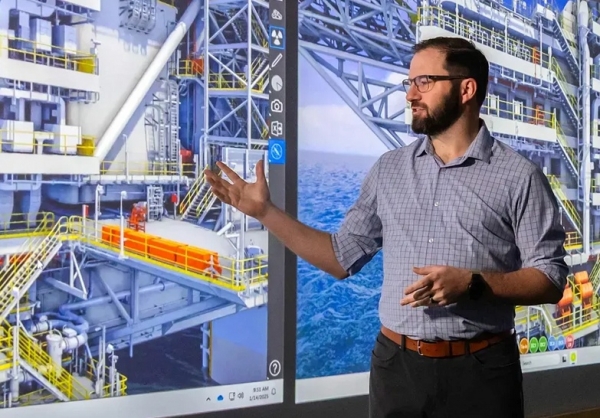
BP Revolutionizes Oil and Gas Industry with AI and Robotics, Driving Record Production
In an era where the oil and gas industry faces numerous challenges in efficiency and sustainability, global energy giant BP has successfully implemented advanced solutions based on Artificial Intelligence (AI), robotics, and Digital Twin technology. These innovations not only help increase oil and gas production but also optimize extraction operations, minimize risks, and reduce downtime.
The Context for Technology Adoption in the Oil and Gas Industry
The traditional oil and gas industry has always faced significant challenges, including harsh operating environments, high operational costs, and safety risks. The adoption of digital technologies has become an inevitable trend to optimize operations, reduce costs, and improve production efficiency. BP, one of the world's leading energy companies, has pioneered digital transformation, particularly in oil and gas exploration and production.
Core Technologies Driving BP's Production Growth
BP has successfully implemented three key technologies: Artificial Intelligence (AI), autonomous robotics, and Digital Twin models. The combination of these technologies has created an intelligent operating system, enabling the corporation to increase oil and gas production by approximately 2% annually while significantly reducing operational downtime.
1. Artificial Intelligence in Operational Management
BP utilizes AI to analyze vast amounts of data collected from extraction operations. The AI system can:
- Predict potential failures before they occur
- Optimize operational processes in real-time
- Optimize energy consumption in production activities
- Automate operational decisions based on data analysis
BP's AI technology processes data from thousands of sensors on offshore platforms, pipelines, and other infrastructure, helping to detect abnormalities and recommend timely corrective actions.
2. Autonomous Robotics in Harsh Environments
BP has deployed autonomous robots capable of operating in harsh offshore and onshore environments. These specially designed robots:
- Perform inspection and maintenance tasks on infrastructure
- Collect data in hazardous or hard-to-reach areas
- Minimize human presence in dangerous work environments
- Perform repetitive tasks with precision and efficiency
The use of robotics not only improves efficiency but also significantly enhances workplace safety in the oil and gas industry—a sector with high occupational accident rates.
3. Digital Twin Technology
Digital Twin technology creates a digital replica of physical assets in BP's oil and gas extraction system. This technology enables:
- Creation of detailed 3D models of offshore platforms, pipelines, and infrastructure
- Monitoring of actual asset conditions and comparison with expected models
- Simulation of operational scenarios to optimize performance
- Prediction of equipment lifecycle and maintenance requirements
By using Digital Twin models, BP can test changes in a virtual environment before real-world implementation, reducing risks and testing costs.
Results Achieved Through Technology Implementation
The technological solutions implemented by BP have yielded impressive results:
| Indicator | Before Implementation | After Implementation | Impact |
|---|---|---|---|
| Oil and Gas Production Increase | - | +2%/year | Significant improvement in production efficiency |
| Production Downtime | High | Significantly Reduced | Increased production continuity |
| Operating Costs | - | Reduced | Cost optimization |
| Workplace Safety | Average | Improved | Reduced workplace accidents |
Notable BP Projects
BP has implemented many successful technology projects globally. One standout project is in the Gulf of Mexico, where the company deployed an AI monitoring system combined with autonomous robots to inspect underwater pipelines. This project reduced inspection time by 30% and increased the detection of potential issues by 15%.
In the North Sea region, BP uses Digital Twin models to optimize operations on aging platforms. This technology has extended the operational lifespan of these platforms by an additional 5-10 years at significantly lower costs compared to new construction.
Vision and Future Plans
BP aims to continue expanding technology application across the entire oil and gas value chain, from exploration to production and distribution. Over the next five years, the corporation plans to:
- Scale up AI and autonomous robotics deployment to 70% of production facilities
- Develop additional Digital Twin models for all company assets
- Invest an additional $500 million in digital technology and innovation
- Establish a global data center to optimize data analytics
Additionally, BP is researching more advanced applications such as blockchain to increase supply chain transparency and carbon capture technology to reduce greenhouse gas emissions—part of the company's commitment to transitioning to clean energy.
Conclusion
The application of artificial intelligence, autonomous robotics, and Digital Twin technology has proven to be a strategic move for BP in optimizing oil and gas operations. These technologies not only increase production and reduce costs but also contribute to enhancing safety and sustainability in the traditional industry. With continued strong investment in digital technology, BP is solidifying its position as a pioneer in the oil and gas industry's Industry 4.0 revolution.
BP's success in technology application can serve as a model for other oil and gas companies worldwide, especially as the industry faces pressure to reduce emissions and transition to cleaner energy. The future of the oil and gas industry will increasingly depend on its ability to adopt technology to optimize operations and reduce environmental impact.