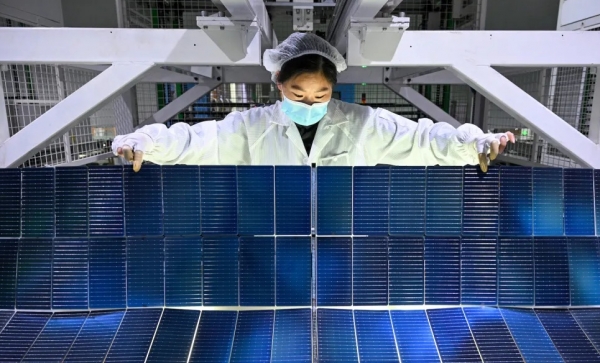
China Restructuring Lithium Battery and Solar Energy Industries
In a globally significant move, China is implementing major tax reforms for its lithium battery and solar energy industries, addressing overcapacity issues, price-cutting competition, and declining profitability following years of rapid expansion. This decision represents Beijing's strategic shift to restructure key industries, focusing on quality enhancement rather than mere scale growth.
Background of the Restructuring
China has long dominated the global markets in both renewable energy and lithium battery sectors. With strong government support, Chinese enterprises have rapidly expanded production capacity over the past decade. However, this overheated growth has led to severe overcapacity, triggering intense price competition and eroding corporate profits.
According to industry analysts, this restructuring is not an indication that China is abandoning its clean energy industries, but rather a necessary adjustment to enhance long-term efficiency and sustainability.
Details of the New Tax Policy
China's Ministry of Finance recently announced a new tax policy package effective from July of this year, focusing on three main areas:
- Import tariffs on raw materials for lithium battery production
- Export tariffs on lithium batteries and solar products
- Special consumption taxes on non-standard quality renewable energy products
This policy aims to reduce the influx of cheap batteries and solar modules flooding global markets while encouraging enterprises to invest in high technology and quality products.
Analysis of the Tax Policy Impact
According to experts, the new tax policy will have multidimensional impacts on the market:
| Stakeholder | Direct Impact | Indirect Impact |
|---|---|---|
| Chinese Enterprises | Increased production costs, reduced short-term profits | Stimulates technological innovation, improves product quality |
| International Market | Reduced supply of low-cost products, higher selling prices | Creates opportunities for other manufacturers, diversifies supply sources |
| Global Industry | More stable market, reduced unhealthy competition | Accelerates global clean energy transition |
Reasons Behind the Restructuring Decision
Three main factors underpin China's decision to restructure these industries:
1. Severe Overcapacity
According to the China Solar Energy Association, China's lithium battery production capacity has far exceeded actual demand. By the end of 2022, China's lithium battery production capacity reached 1.5 million tons/year, while actual demand was only about 800,000 tons/year. Similarly, solar module production capacity exceeded 500 GW/year, more than double global demand.
| Sector | Production Capacity (2022) | Actual Demand (2022) | Overcapacity Rate |
|---|---|---|---|
| Lithium Batteries | 1.5 million tons/year | 800,000 tons/year | 87.5% |
| Solar Modules | 500 GW/year | 240 GW/year | 108% |
2. Fierce Price Competition
The overcapacity situation has led to relentless price wars. Lithium battery prices have decreased by more than 60% over the past two years, while solar module prices have dropped by approximately 40%. Many companies are operating with negative or very low profit margins, threatening the survival of small and medium-sized enterprises.
3. Pressure from Export Markets
Countries such as the United States, EU, and India have increased trade remedy measures against Chinese renewable energy products, accusing unfair subsidies and dumping. This internal restructuring is seen as China's way to mitigate these accusations while maintaining its competitive position in the global market.
Impact on Global Supply Chains
China's restructuring of its lithium battery and solar energy industries will undoubtedly bring significant changes to global supply chains:
- Increased Product Costs: Global manufacturers will face higher input costs due to rising battery and module prices.
- Accelerated Supply Diversification: Countries like Vietnam, India, and Mexico will have opportunities to attract investment in renewable energy manufacturing.
- Technological Innovation Promotion: Pressure from China's policy will compel enterprises to enhance R&D for higher efficiency products.
- Investment Strategy Shifts: Multinational corporations will need to adjust their investment strategies in clean energy supply chains.
Future Outlook
Despite short-term challenges, this restructuring is expected to bring long-term benefits to the global clean energy industry. Eliminating inefficient producers and promoting healthier competition will help the market develop more sustainably.
For China, this represents an opportunity to transition from the "world's factory" to the "world's technology leader" in clean energy. The Chinese government has demonstrated its determination to maintain its leading position through technological innovation rather than price competition.
According to experts, this restructuring will unfold during the 2023-2025 period, with the most significant market impacts expected in 2024. Industry enterprises need to prepare for a rapidly changing global clean energy market.
Conclusion
China's restructuring of its lithium battery and solar energy industries marks a significant turning point in global clean energy development. While it may cause short-term disruptions, this move aims toward a healthier, more sustainable, and technology-driven market.
Countries and businesses worldwide need to proactively adapt to these changes to not miss out on the most important energy transition of the 21st century.