The Future of Iran-Central Asian Relations: Practical Cooperation Under IRGC Leadership
In the evolving geopolitical landscape of Eurasia, the relationship between Iran and the Central Asian republics—Kazakhstan, Kyrgyzstan, Tajikistan, Turkmenistan, and Uzbekistan—is set to maintain a foundation of practical economic and transportation cooperation despite the significant political shift in Tehran toward Islamic Revolutionary Guard Corps (IRGC) dominance. This analysis examines how these relationships will navigate short-term disruptions from the 2026 conflict while maintaining long-term viability through shared interests in connectivity and multipolarity.
The Transition to IRGC Leadership in Iran (From Mid-2026)
Following the assassination of Supreme Leader Ali Khamenei and his family on February 28, 2026, by US/Israeli forces, his son Mojtaba Khamenei assumed leadership with substantial backing from the IRGC. The Pasdaran—particularly under the command of General Ahmad Vahidi—emerged as the dominant force in Tehran. This military entity now controls critical decision-making processes, influences negotiations, and may sideline civilian leaders such as President Masoud Pezeshkian.
Foreign Minister Abbas Araghchi and Parliament Speaker Mohammad Bagher Ghalibaf are both former IRGC members. The IRGC operates as a "state within a state," prioritizing hardline, ideological, and asymmetric approaches—such as regional alliances, sanctions evasion—and potentially controlling up to 50% of Iran's economy. This contrasts with more pragmatic or reformist trends but builds upon Iran's 2005 "Look East" policy aimed at strengthening political, economic, and strategic connections with Asia.
Pre-2026 Relations: Strengthening Practical Cooperation
Prior to the conflict, relations with Central Asia were on an upward trajectory, driven more by economics than ideology. Key developments included:
| Domain | Key Developments |
|---|---|
| Trade Growth |
|
| Connectivity |
|
| Differentiated Relations |
|
Central Asian countries pursue multi-directional policies, engaging with Iran alongside Russia (EAEU), China (Belt and Road Initiative), Turkey, Europe, and the United States. Iran avoids policies that might destabilize the region to maintain good relations with Moscow and Beijing while avoiding stronger US presence.
Immediate Impact of the 2026 Conflict
The war brought significant short-term tensions:
- Economic Disruptions: Iran imposed an export ban on food products in March 2026, affecting importers like Tajikistan. Hormuz Strait tensions and broader instability increased costs and disrupted certain trade flows.
- Central Asian Reactions: Primarily characterized by official neutrality calls and restraint appeals, without unified positions. Tajikistan, Turkmenistan, and Uzbekistan sent humanitarian aid to Iran. No anti-Iran alliances formed, but diversification accelerated as Central Asian states sought alternatives to reduce dependence on Iranian routes.
IRGC's Specific Approach to Central Asia
The IRGC has historically managed influence in the Khorasan region bordering Turkmenistan through intelligence networks, cultural access, and limited economic tools. Unlike its heavy role in the Middle East's "Axis of Resistance," the IRGC's approach to Central Asia has been more pragmatic and cautious, focusing on trade, transportation, and soft power to avoid provoking major powers.
Specific outcomes include:
- Central Asia still needs Iran as a southern gateway. As these countries are landlocked, Iran provides the shortest route to the Indian Ocean via ports like Bandar Abbas and Chabahar (Plan A). Despite tensions between Afghanistan and Pakistan, work continues on railway connections linking Central Asia to Pakistani ports (Plan B).
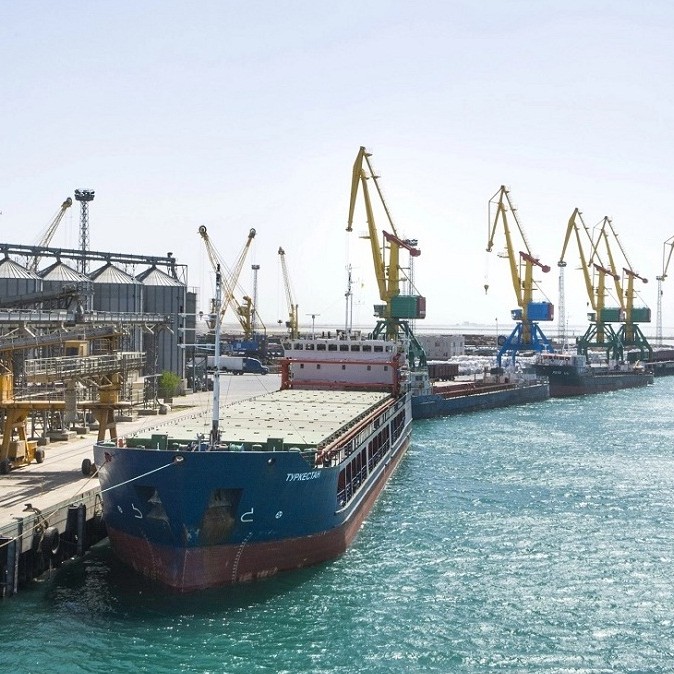
- The war demonstrated the region's trade dependence on Iranian transport routes. Rail links, Caspian shipping, and the International North-South Transport Corridor were all disrupted, harming the region, but this experience may encourage Central Asian republics to restore Iranian routes as quickly as possible, invest in making them more resilient, and diversify rather than abandon them.
- Post-war reconstruction creates opportunities. If sanctions are partially eased and reconstruction begins, Central Asian countries could benefit by providing grain, construction materials, metals, technical services, electricity, and transport and logistics to Iran—a market of 93 million people. Iran, in turn, would continue exporting metals and minerals, petrochemicals, and food products to Central Asia. The extent of this recovery will depend heavily on sanction policies and investor confidence.
Country-Specific Analysis
| Country | Relationship Characteristics with Iran |
|---|---|
| Uzbekistan | Could become one of Iran's closest partners. Uzbekistan consistently pursues a pragmatic foreign policy based on economic connections rather than ideology. The country's leadership has frequently met with Iranian counterparts. Priorities include expanding railway access to the Persian Gulf and Gulf of Oman, increasing regional trade, and strengthening east-west and north-south transport links. |
| Kazakhstan | Has strong incentives to restore trade. Kazakhstan had significantly expanded agricultural exports through Iranian ports before the war. The Presidents of Kazakhstan and Iran have met, and Astana sent a delegation to Iran for Khamenei's funeral. While some projects suspended during the conflict are expected to remain on hold, Kazakhstan still has compelling reasons to restore trade relations as Iranian routes reduce dependence on northern corridors through Russia and provide access to South Asian markets. |
| Turkmenistan | Role set to increase. Turkmenistan shares a 1,100 km border with Iran and serves as the primary overland connection between Iran and Central Asia, with the Sarakhs border crossing being key. Potential areas of cooperation include electricity, gas exchanges, railway transport, and border trade. Turkmenistan's permanent neutrality policy positions it well to expand practical cooperation without becoming entangled in broader geopolitical competitions. |
The Trump administration will place the economic health of the republics under dependence on the anti-Iran war effort, though Uzbekistan and Kazakhstan have joined Trump's Peace Council as an insurance policy. Washington may pressure the republics to overlook opportunities in Iran without compensation, beyond a letter from the US ambassador. And the US is prepared to attack infrastructure that the republics would use for trade.
Future of the Relationship
With IRGC in power, there may be more ideological assertions or deployment of allied groups, raising concerns in secular Central Asian administrations. However, economic pragmatism is likely to continue as the IRGC benefits from stable revenues, sanctions evasion channels, local markets, and quiet borders. Yet, increased militarization or confrontation could spill over borders, through allies, or via instability, pushing Central Asian states toward diversification toward Turkey, the West, or closer Russia/China relations.
The republics do not want the region to become a competitive space as the US attempts to destabilize Iran to cut off China's export-import routes through Europe. Following the violence and stagnation of the Soviet period and the disruption of the US occupation of Afghanistan, the republics' desire is to replace competition with trade and development.
Short-Term (Next 12 Months)
- Trade volumes and transport may remain suppressed or rerouted due to conflict aftermath.
- Central Asia will accelerate diversification (alternative routes, closer engagement with Turkey or the West) but will not abandon connectivity options with Iran.
- Tajikistan may maintain its closest cultural link but with security measures.
- Overall tone will be businesslike but not hostile.
Medium to Long-Term (Assuming Conflict Resolution)
- Potential for strong recovery in economic cooperation and connectivity.
- INSTC and Iranian ports align with Central Asia's southern access needs and Iran's gateway requirements.
- EAEU free trade agreement framework provides institutional momentum.
- Shared concerns about Trump's erratic policies may drive quiet linkage through the Shanghai Cooperation Organization or BRICS.
Key Factors
- Duration and outcome of the conflict.
- Internal IRGC integration versus moderate pressures.
- Balancing policies of Central Asian leaders (Russia/China remain primary partners).
- Dynamics of global sanctions.
Conclusion
Iran and the Central Asian republics will focus on practical relationships based on mutual interests rather than ideology or deep alliances. An IRGC-led Iran will prioritize survival and connectivity over revolutionary zeal in Central Asia to secure Iran's eastern flank. The multi-directional foreign policies of Central Asian states, ensuring no single power—including a more assertive Iran and a erratic Trump administration—determines the future of the republics, will shape the trajectory of these relationships.
Keywords: Iran, Central Asia, IRGC, Kazakhstan, Kyrgyzstan, Tajikistan, Turkmenistan, Uzbekistan, Politics, Economics, Transportation, Multipolarity