Email details in comments
The core lies in 3 points:
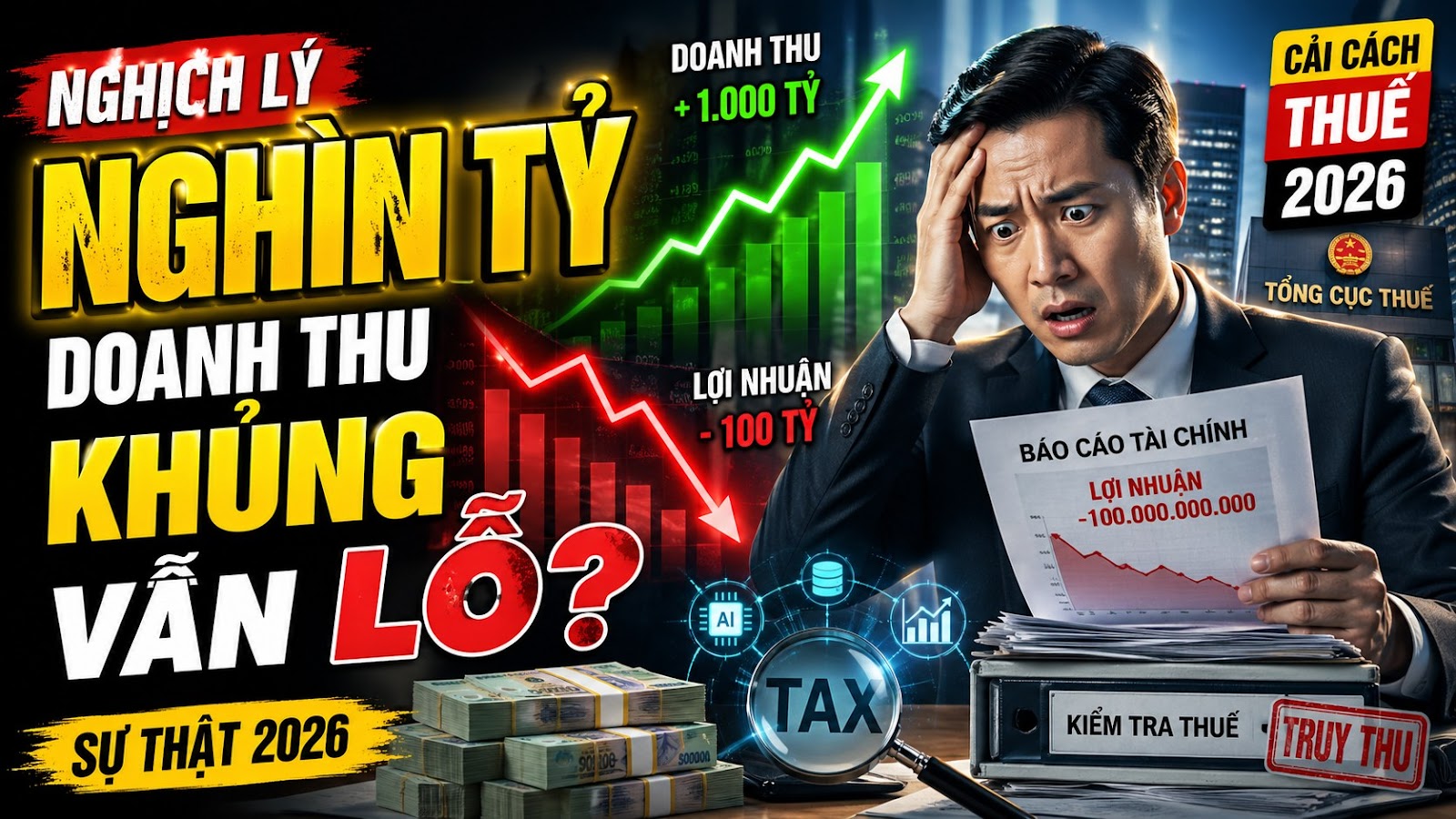
Revenue ≠ profit
Expenses can be “legally adjusted”
The previous control system had many flaws
Important:
Profit is the final result of revenue - costs - financial structure, not simply how much is sold.
2️⃣ Three common loss-making "mechanisms" in large enterprises
(1) Transfer Pricing – Transfer Pricing
Enterprises transfer profits to subsidiaries in low-tax countries
Internal trading prices are "adjusted"
This is a popular technique in multinational corporations
(2) Thin Capitalization
Enterprises borrow capital from the parent company
High interest rates → increased costs → decreased profits
New law tightens: limit of 30% EBITDA
(3) Parallel accounting
Internal reporting ≠ tax reporting
Optimize tax obligations through accounting standards
Not necessarily cheating, but a “gray area”
3️⃣ Tax management revolution: AI & Big Data
From 2026, the tax system will shift to the following model:
Real-time Monitoring
Big difference:
Before: check according to records
Now: continuous data analysis
AI can:
Detect cash flow abnormalities
Compare industries and businesses
Automatic risk scoring
4️⃣ Impact of Global Minimum Tax & new law
6
Global Minimum Tax
Set levelMinimum tax 15%
Prevent transferring profits abroad
Businesses are no longer easy "tax havens".
Vietnam Tax Law 2024–2026
Tighten interest costs
Increase transparency in affiliate transactions
Expand testing according to data
Towards international standards (OECD)
5️⃣ Impact on large businesses
Large corporations such as:
Masan Group
Masterise Homes
SHB Bank
VP Securities
Will be under pressure:
Financial transparency
Standardize reports
Optimal reduction of "opaque" taxes
Any business that does not adapt → high legal risk
6️⃣ Transparency becomes a “survival strategy”
7
In the new context:
Transparency is no longer an option
It's a condition for existence
Businesses need:
Standardize financial data
Synchronize the accounting system
Proactively comply with the law
7️⃣ Strategic perspective – Opportunity or risk?
This is not just “tightening taxes” but:
Restructuring the entire economy
Opportunity:
Create a level playing field
Eliminate unfair competition
Risk:
Weak businesses will be eliminated
Pressure on compliance costs increases
CONCLUSION
The "trillion paradox" is essentially:
Results of the old system
And are being decoded by new technology
In the AI era:
There is no more room for "fake holes"
Only real businesses remain - real values
#Trillion Dollar Paradox, #Tax Reform2026, #VietnamEconomy, #Business, #AI, #BigData, #GlobalTax, #TransferPricing, #FinancialTransparency