#Petrovietnam #JICA #LoBOmon #NangLuongVietNam #LNG #PVN #AnNinhNangLuong #DienKhi #ChuyenDichNangLuong #NhatBan #PetroTimes #CongNgheDauKhi
If the Block B - O Mon gas power chain continues to slow down for a few more years, will Vietnam face the risk of serious electricity shortages and dependence on more expensive imported LNG than ever before?
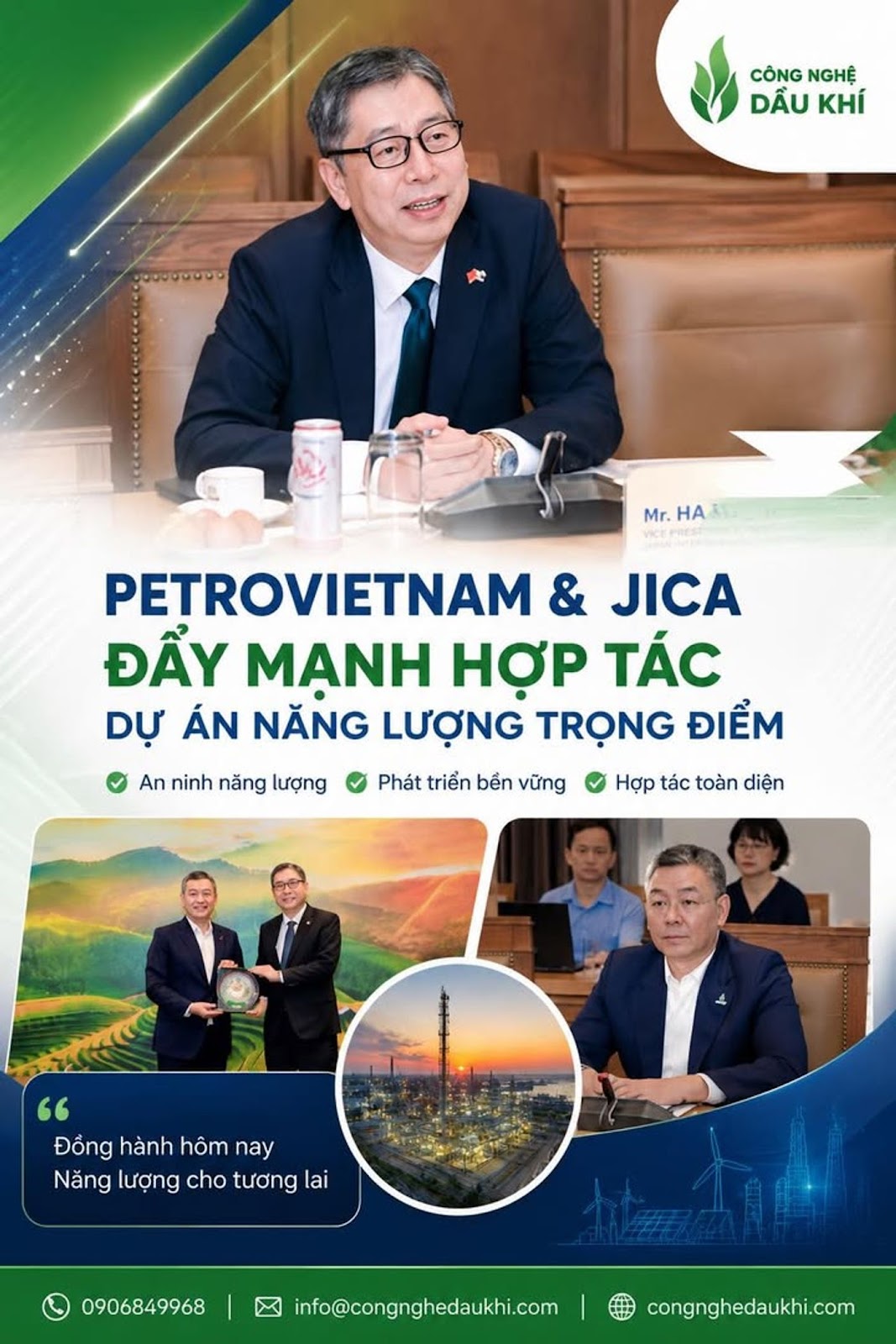
The meeting between Petrovietnam and JICA on May 26 in Hanoi is showing a huge signal behind the Vietnamese energy market. Not simply corporate diplomacy, this could be a preparation step for the strongest acceleration phase of the Block B - O Mon gas power project chain after many years of delay.
The most notable point lies in the statement emphasizing the synchronization between O Mon 3 and O Mon 4. According to Petrovietnam, the two plants can inherit up to about 90% of the main technical configuration and design. This is extremely important because it drastically reduces detailed design time, shortens EPC negotiations and speeds up actual implementation.
Vietnam's biggest problem today is no longer "whether to have a project or not" but "how to make the project run on schedule". In the context of rapidly increasing electricity load, especially in the South, a delay of a few more years could cause pressure to import LNG to increase sharply and lead to an increase in electricity prices.
SUMMARY TABLE OF PROJECT CHAIN LOT B - O MON
Category Role
Block B gas field Provides offshore gas resources
Gas pipeline Connecting gas to shore
O Mon 3 Gas Power Plant
O Mon4 Gas power plants
LNG Infrastructure Supports supply security
PV GAS Gas coordination and operation
According to energy industry analysis, the Block B - O Mon chain has a total investment value of many billions of dollars and is considered a strategic link to ensure electricity for the southern region from the end of this decade.
JICA's continued appearance in energy negotiations also reflects Japan's long-term strategy in Vietnam. Tokyo is looking to expand its influence in the fields of LNG, gas power and low-emission infrastructure to compete with investors from South Korea, China and parts of Russia in the Southeast Asian energy race.
Notably, Petrovietnam is currently not only working with JICA but also promoting cooperation with Russia's Novatek on LNG and new energy. This shows that Vietnam is trying to build a balance between many large energy centers in the world instead of relying on one side.
COMPARISON TABLE OF ENERGY COOPERATION DIRECTIONS
Partner Strengths
JICA Japan ODA capital, electricity technology, infrastructure management
Novatek Russia LNG, gas supply
Malaysia Cooperation in gas exploitation and trade
France Energy and technology transition
Another notable detail is the phrase "energy projects must not be behind schedule, if a special mechanism is required". This is almost a signal that mechanisms to shorten procedures, prioritize capital and separate legal corridors for energy projects may be promoted more strongly in the near future.
If this happens, Vietnam's energy market could enter a rare period of accelerationfrom LNG gas power, LNG terminals, gas infrastructure to low emission electricity.
In the context of Vietnam's continuously increasing electricity demand, especially with the wave of AI, data centers and semiconductor industries, gas power is being considered the most important "bridge power source" before renewable energy is stable enough for large-scale replacement.
No longer just Petrovietnam's story, Block B - O Mon has now become a test of the implementation capacity of the entire Vietnamese energy system.
#LoBOmon #Petrovietnam #JICA #PVGas #LNGVietnam #AnNinhNangLuong #DienKhi #NangLuongSach #VietnamEnergy #CongNghiepNangLuong #ChuyenDichNangLuong #NhatBan #Nga #PVN #PetroTimes