#AMRO #VietnamEconomy #KinhTeVietNam #LamPhat #TangTruongGDP #Hormuz #GiaDau #KinhTeTheGioi #TaiChinh #TimKiemTop
If oil prices continue to escalate because of Strait of Hormuz tensions, will Vietnamese people be about to face a wave of price increases much stronger than current forecasts?
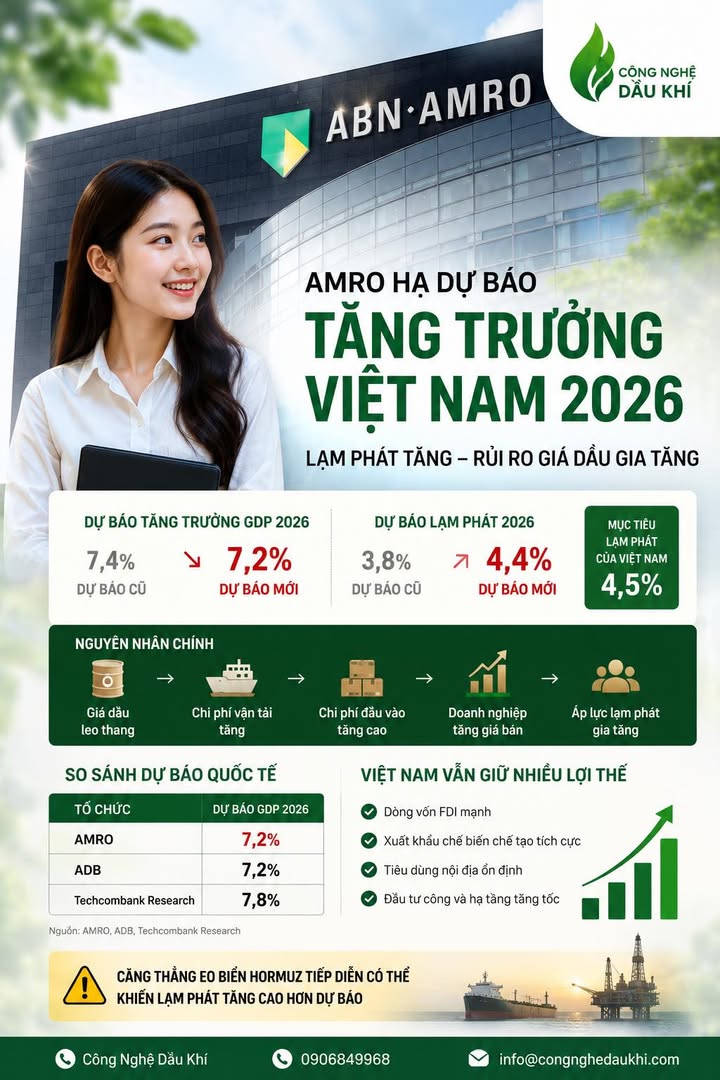
ASEAN+3 AMRO Macroeconomic Research Office has just adjusted Vietnam's economic outlook for 2026 in a more cautious direction. Accordingly, the GDP growth forecast was lowered from 7.4% to about 7.2%, while the inflation forecast was raised from 3.8% to about 4.4%. The main reason comes from the risk of rising energy prices, especially crude oil, in the context of geopolitical instability in the Middle East that has not yet cooled down.
Noteworthy Numbers
Indicators Old forecast New forecast
GDP growth 2026 7.4% 7.2%
Inflation 2026 3.8% 4.4%
Vietnam's inflation control target - 4.5%
The origin of this change does not come from within the Vietnamese economy but mainly from external factors, especially oil prices and global transportation costs.
Why Are Oil Prices So Important?
The Strait of Hormuz is a strategic maritime route that transports about 20% of global oil trade.
When this area appears tense
Oil prices increased
Transportation costs increase
Input raw material prices increased
Businesses increase selling prices
Consumers are under inflationary pressure
For Vietnam, even though it is an oil and gas producing country, the backgroundThe economy still depends significantly on imports of raw materials, chemicals, LNG and many other industrial products, so oil price fluctuations always have a very strong spillover effect.
Compare Forecasts of International Organizations
2026 GDP Forecast Organization
AMRO 7.2%
ADB 7.2%
Techcombank Research 7.8%
It can be seen that AMRO and ADB are quite in agreement about the growth scenario around 7.2%, while some domestic organizations are more optimistic at nearly 7.8%.
Is This Bad News?
The answer is not sure.
The growth rate of 7.2% is still among the highest in the ASEAN region and continues to put Vietnam among the fastest growing economies in Asia. AMRO still evaluates that Vietnam will benefit from
Strong FDI capital flow
Manufacturing and processing exports remain positive
Domestic consumption is stable
Infrastructure and public investment accelerated
It is worth noting that inflation of 4.4% has come very close to the Government's control target of 4.5%. This means that the room for loosening monetary policy will no longer be as large as in the previous period.
What People and Businesses Need to Pay Attention to
Impact target group
Consumers Gasoline, transportation, and food prices may be under increased pressure
Manufacturing enterprises have higher input material costs
Investors are more interested in energy and oil and gas groups
Bank Interest rate policy may be more cautious
Perspective Worth Pondering
What is noteworthy is not that growth decreased from 7.4% to 7.2%, because this is still a very high level.
What's more concerning is that for the first time in many months, organizations...International organizations have begun to emphasize oil prices and geopolitical risks as variables that can directly affect Vietnam's economic prospects.
If the Strait of Hormuz continues to be tense for many months to come, inflationary pressures could be even greater than current forecast models reflect.
Vietnam is still considered one of the fastest growing economies in Asia, but the biggest question in 2026 is probably no longer what percentage growth, but how to maintain a high growth rate while still controlling inflation.
#AMRO #GDPVietnam #LamPhat2026 #GiaDau #Hormuz #KinhTeVietNam #DauKhi #NangLuong #TaiChinh #DauTu #TimKiemTop #ASEAN #FDI #XuatKhau #KinhTeTheGioi