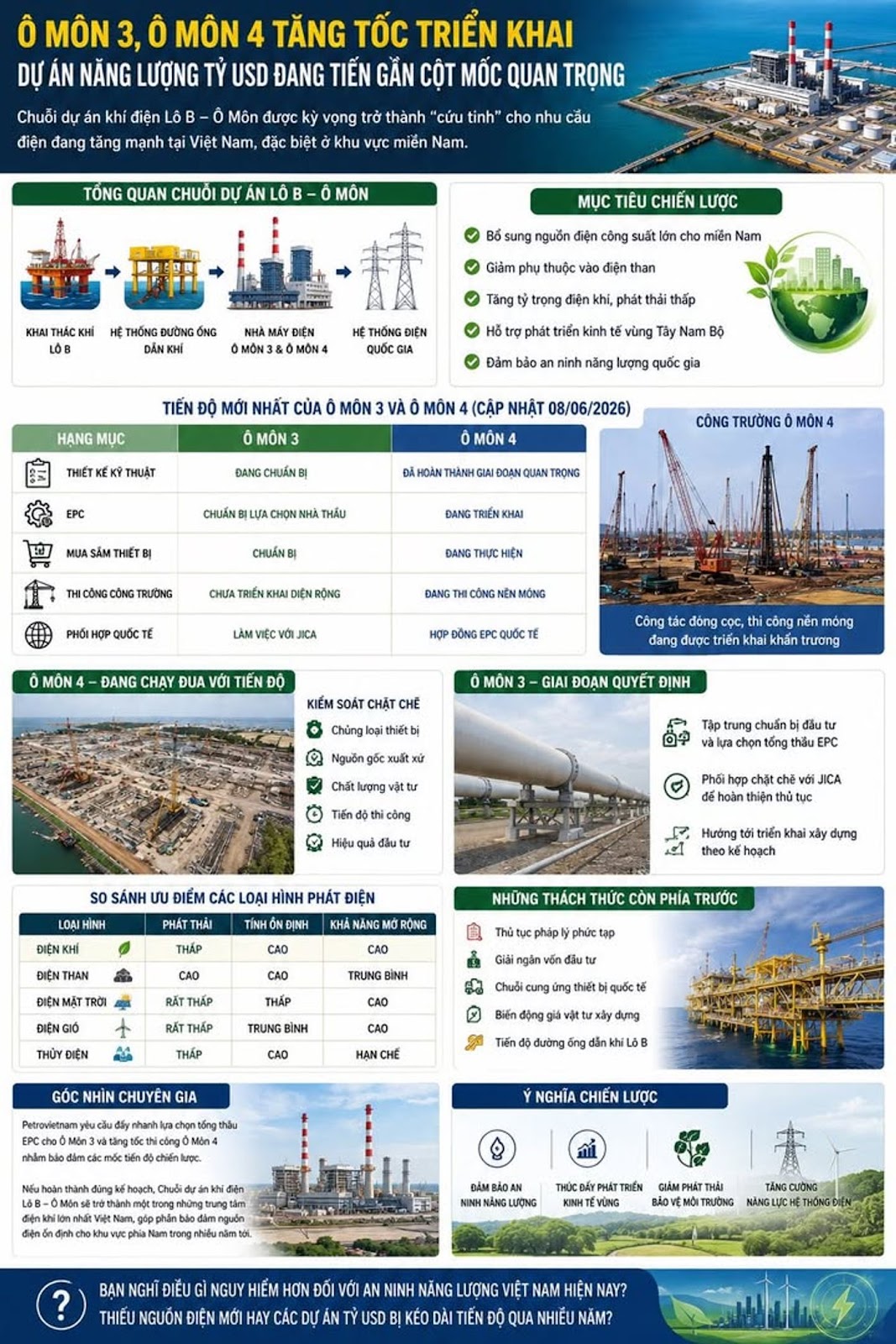
Ô Môn 3 and Ô Môn 4 Accelerate Implementation: Multi-Billion Dollar Energy Project Approaches Key Milestone
In the rapidly evolving energy landscape of Vietnam, the Ô Môn 3 and Ô Môn 4 power plants are entering a critical phase of accelerated development. As the Ban Quản lý dự án chuyên ngành Điện (Specialized Project Management Board) of Petrovietnam intensifies efforts across technical components, equipment procurement, and contractor selection, these two pivotal projects within the Lô B - Ô Môn gas power chain are approaching significant milestones. The question on many minds is whether this ambitious energy initiative will emerge as a crucial solution to Vietnam's surging electricity demands or face delays that could jeopardize billions in investments.
The Strategic Importance of the Lô B - Ô Môn Gas Power Chain
The Lô B - Ô Môn gas power chain represents one of Vietnam's most critical national energy projects, with profound implications for the country's energy security for decades to come. This comprehensive initiative encompasses offshore gas extraction, an integrated pipeline distribution system, and multiple natural gas-fired power plants located in the Mekong Delta region.
The primary objectives of this ambitious project include:
- Significantly augmenting power supply capacity for Southern Vietnam
- Reducing dependency on coal-fired electricity generation
- Increasing the proportion of low-emission gas power in the energy mix
- Supporting economic development in the Southwest region
- Ensuring long-term national energy security
Current Progress Status of the Power Plants
As of the latest update on June 8, 2026, both projects are advancing through different phases of development, with Ô Môn 4 showing more substantial physical progress while Ô Môn 3 focuses on preparatory and contractual arrangements.
| Project Progress Comparison | ||
|---|---|---|
| Hạng mục | Ô Môn 3 | Ô Môn 4 |
| Technical Design | Under preparation | Completed key phase |
| EPC Contractor Selection | Preparing for contractor selection | Currently being implemented |
| Equipment Procurement | In preparation | Currently in progress |
| Site Construction | Not yet widely implemented | Foundation construction underway |
| International Collaboration | JICA EPC international | JICA EPC international |
Ô Môn 4: Racing Against Schedule
At the Ô Môn 4 construction site, activities are proceeding at an accelerated pace, with pile driving, foundation work, main structural construction, and auxiliary facilities being implemented urgently. This phase represents a critical juncture where precision and coordination directly impact the project's ultimate success.
Petrovietnam has mandated strict controls by all participating units on several key aspects:
- Equipment types and specifications
- Country of origin and manufacturing standards
- Material quality assurance
- Construction schedule adherence
- Investment efficiency optimization
These quality control measures are particularly crucial as any deviations during the EPC (Engineering, Procurement, and Construction) phase could potentially increase capital expenditures by hundreds of billions of Vietnamese đồng or extend the commercial operation timeline, significantly impacting the project's economic viability.
Ô Môn 3: Navigating the Decision Phase
In contrast to Ô Môn 4's physical construction progress, the Ô Môn 3 project currently concentrates on investment preparation and EPC contractor selection processes. This preparatory phase is equally critical, as it lays the foundation for the entire project's execution timeline.
One of the most significant current activities is the ongoing collaboration with the Japan International Cooperation Agency (JICA) to finalize necessary procedures and documentation. Should this process proceed smoothly, the project can transition to the construction phase according to the schedules established by both the Vietnamese government and Petrovietnam.
Why This Project Commands Special Attention
In the context of Vietnam's continuously escalating electricity demand, particularly in the southern region, large-scale gas power projects are increasingly viewed as essential solutions to gradually replace traditional power sources. The following comparison illustrates the relative advantages of different power generation technologies:
| Power Generation Technologies Comparison | |||
|---|---|---|---|
| Generation Type | Emissions | Stability | Scalability |
| Gas Power | Low | High | High |
| Coal Power | High | High | Medium |
| Solar Power | Very Low | Low | High |
| Wind Power | Very Low | Medium | High |
| Hydropower | Low | High | Limited |
Gas power generation is increasingly recognized as a balanced solution that addresses both environmental considerations and the need for stable power supply to the national grid. This dual benefit makes technologies like those employed in the Ô Môn plants particularly valuable for Vietnam's energy transition strategy.
Persistent Challenges on the Horizon
Despite the accelerated progress, the Lô B - Ô Môn gas power chain continues to face numerous challenges that could impact its successful implementation:
- Complex legal and regulatory procedures
- Capital disbursement coordination
- International equipment supply chain constraints
- Construction material price volatility
- Synchronization with the Lô B gas pipeline development schedule
The interconnected nature of this comprehensive energy project means that delays in any single component could necessitate adjustments to the operational timelines of both power plants, potentially creating cascading effects throughout the entire energy supply chain.
Expert Perspectives on Strategic Significance
Petrovietnam's emphasis on accelerating EPC contractor selection for Ô Môn 3 and intensifying construction activities at Ô Môn 4 demonstrates a strong commitment to meeting strategic project milestones. This determination reflects the critical importance of these facilities to Vietnam's energy infrastructure.
Industry experts note that if completed according to schedule, the Lô B - Ô Môn gas power chain will emerge as one of Vietnam's largest gas power centers, providing a stable electricity supply to the southern region for decades. This capacity will be essential to support the area's continued economic growth while transitioning toward a more sustainable energy mix.
As Vietnam navigates the complex balance between economic development, environmental responsibility, and energy security, the successful implementation of projects like Ô Môn 3 and Ô Môn 4 becomes increasingly crucial. The nation faces a fundamental question: What poses a greater threat to energy security today—the absence of new power generation capacity or the prolonged delays of multi-billion dollar infrastructure projects that could alleviate this very challenge?