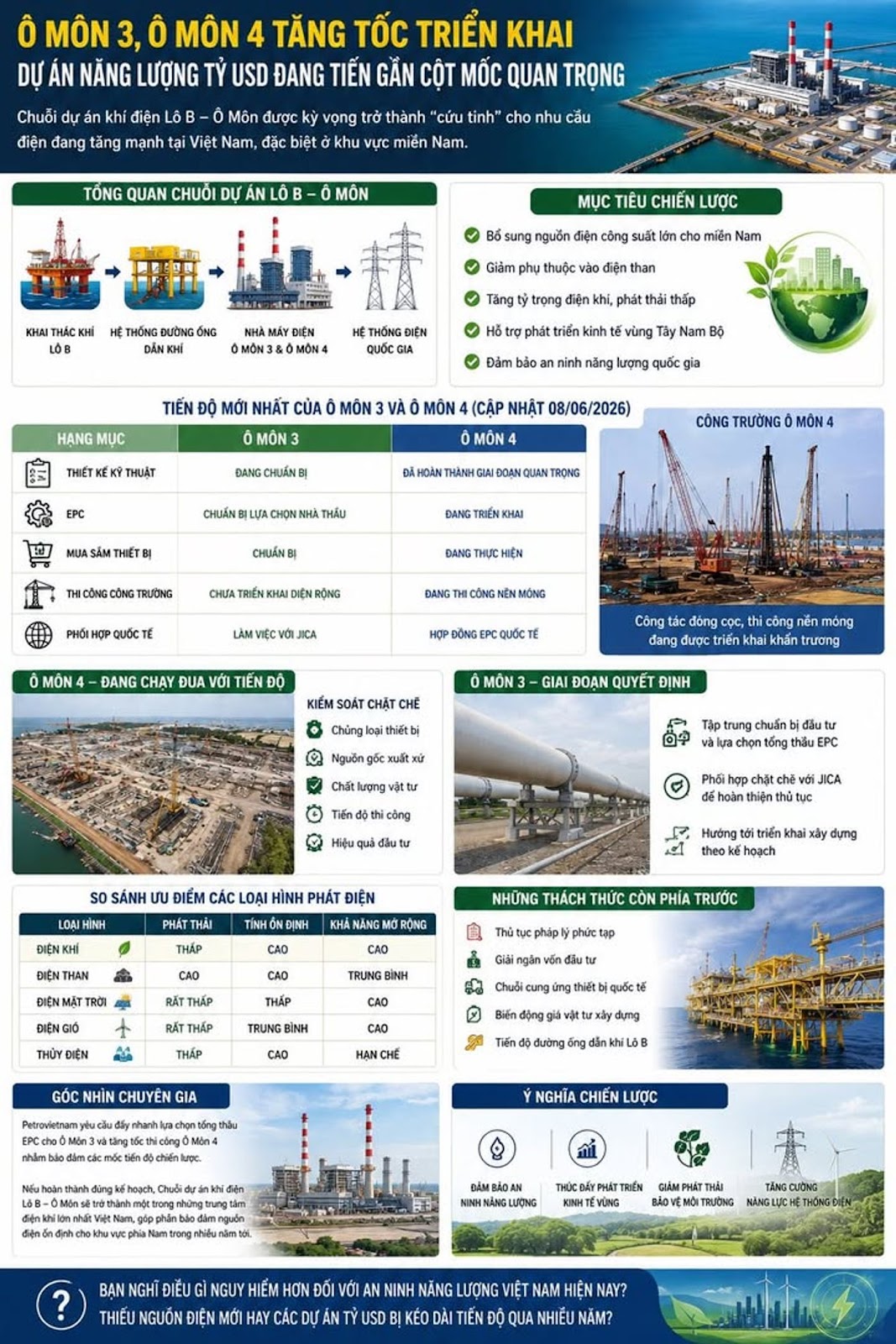
Ô Môn 3 and Ô Môn 4 Projects Accelerate: Multi-Billion Dollar Energy Project Approaching Critical Milestone
In the rapidly evolving energy landscape of Vietnam, the Ô Môn 3 and Ô Môn 4 power plant projects are entering a critical acceleration phase. As the Ban Quản lý dự án chuyên ngành Điện (Specialized Project Management Board) of Petrovietnam intensifies efforts on technical components, equipment procurement, and contractor selection, these two pivotal projects in the Lô B - Ô Môn gas power chain are approaching a significant milestone that could reshape Vietnam's energy future.
These projects represent vital components in one of Vietnam's most significant national energy initiatives, carrying profound implications for the nation's energy security over the coming decades. With electricity demand soaring, particularly in southern Vietnam, the successful implementation of these gas-powered facilities could provide a much-needed solution to the growing power deficit.
The Strategic Importance of the Lô B - Ô Môn Project Chain
The Lô B - Ô Môn project chain represents an integrated approach to energy development, encompassing offshore gas extraction, a comprehensive pipeline distribution system, and multiple natural gas-fired power plants throughout the Mekong Delta region. This ambitious initiative is designed to address several critical energy challenges facing Vietnam.
The primary objectives of this comprehensive energy project include:
- Adding substantial power generation capacity to southern Vietnam
- Reducing dependence on coal-fired power generation
- Increasing the proportion of low-emission gas-fired electricity
- Supporting economic development in the Southwest region
- Ensuring national energy security through diversified sources
Latest Progress Updates on the Two Power Plants
As of June 8, 2026, significant developments have been reported across both projects. While Ô Môn 4 has seen substantial progress in parallel implementation of various components, Ô Môn 3 is currently focused on finalizing procedures and selecting an EPC (Engineering, Procurement, and Construction) contractor to advance to the construction phase.
| Project Component | Ô Môn 3 Status | Ô Môn 4 Status |
|---|---|---|
| Technical Design | Preparation phase | Completed critical phase |
| EPC Contract | Selecting contractor | Implementation underway |
| Equipment Procurement | Preparation phase | Currently in progress |
| Site Construction | Limited implementation | Foundation construction underway |
| International Partnership | JICA international EPC | JICA international EPC |
Ô Môn 4 Racing Against Schedule
At the Ô Môn 4 construction site, intensive work is underway on pile driving, foundation construction, main structural frameworks, and auxiliary facilities. Petrovietnam has emphasized the need for participating units to maintain strict control over several critical factors:
- Equipment specifications and types
- Country of origin for components
- Material quality standards
- Construction timelines
- Investment efficiency
This rigorous oversight is particularly crucial as any discrepancies during the EPC phase could potentially increase capital costs by hundreds of billions of Vietnamese đồng or extend the commercial operation timeline. The project's success hinges on maintaining precise coordination across all aspects of implementation.
Ô Môn 3 in Decision-Making Phase
In contrast to Ô Môn 4, the Ô Môn 3 project is currently focused on investment preparation and EPC contractor selection. A critical aspect of this phase involves ongoing collaboration with JICA (Japan International Cooperation Agency) to finalize necessary procedures.
If this process proceeds smoothly, the project will transition to the construction phase according to the schedule established by the Vietnamese government and Petrovietnam. This transition represents a pivotal moment that could determine the overall success of the entire Lô B - Ô Môn initiative.
Why This Project Receives Special Attention
Against the backdrop of continuously rising electricity demand in Vietnam, particularly in the southern region, large-scale gas power projects are increasingly viewed as essential solutions to gradually replace traditional power sources. The comparative advantages of different power generation methods highlight the strategic positioning of gas-fired electricity in Vietnam's energy mix.
| Power Generation Type | Emissions | Stability | Scalability |
|---|---|---|---|
| Gas Power | Low | High | High |
| Coal Power | High | High | Medium |
| Solar Power | Very Low | Low | High |
| Wind Power | Very Low | Medium | High |
| Hydropower | Low | High | Limited |
Gas power generation represents a balanced solution that addresses both environmental considerations and the need for stable power supply to the national grid. As Vietnam seeks to reduce carbon emissions while maintaining economic growth, gas-fired facilities offer a transitional technology that can bridge the gap between traditional fossil fuels and renewable energy sources.
Persistent Challenges Ahead
Despite the accelerated progress, the Lô B - Ô Môn project chain continues to face significant challenges that could impact implementation:
- Complex legal and regulatory procedures
- Capital disbursement processes
- International equipment supply chains
- Construction material price volatility
- Progress of the Lô B gas pipeline project
The integrated nature of this energy project means that any delay in a single component could potentially require adjustments to the operational schedules of the power plants. This interdependence underscores the importance of maintaining synchronized progress across all elements of the project chain.
Expert Perspectives
Petrovietnam's emphasis on accelerating EPC contractor selection for Ô Môn 3 and intensifying construction at Ô Môn 4 demonstrates a strong commitment to ensuring strategic timeline milestones are met. Industry experts view this as a critical juncture that will determine the project's ultimate success.
If completed according to schedule, the Lô B - Ô Môn gas power chain will become one of Vietnam's largest gas power centers, contributing significantly to ensuring stable power supply for the southern region for decades to come. The project represents not only an investment in infrastructure but also in Vietnam's energy independence and environmental sustainability goals.
As Vietnam continues its economic development, the successful implementation of such large-scale energy projects becomes increasingly crucial. The Lô B - Ô Môn initiative stands as a testament to Vietnam's commitment to developing a diverse, reliable, and increasingly clean energy portfolio capable of supporting the nation's growing industrial and residential electricity demands.
The coming months will be critical in determining whether these multi-billion dollar investments can overcome implementation challenges and deliver on their promise of transforming Vietnam's energy landscape for the better.