Unprecedented Weather Patterns: Vietnam Faces New Extreme Climate Challenges
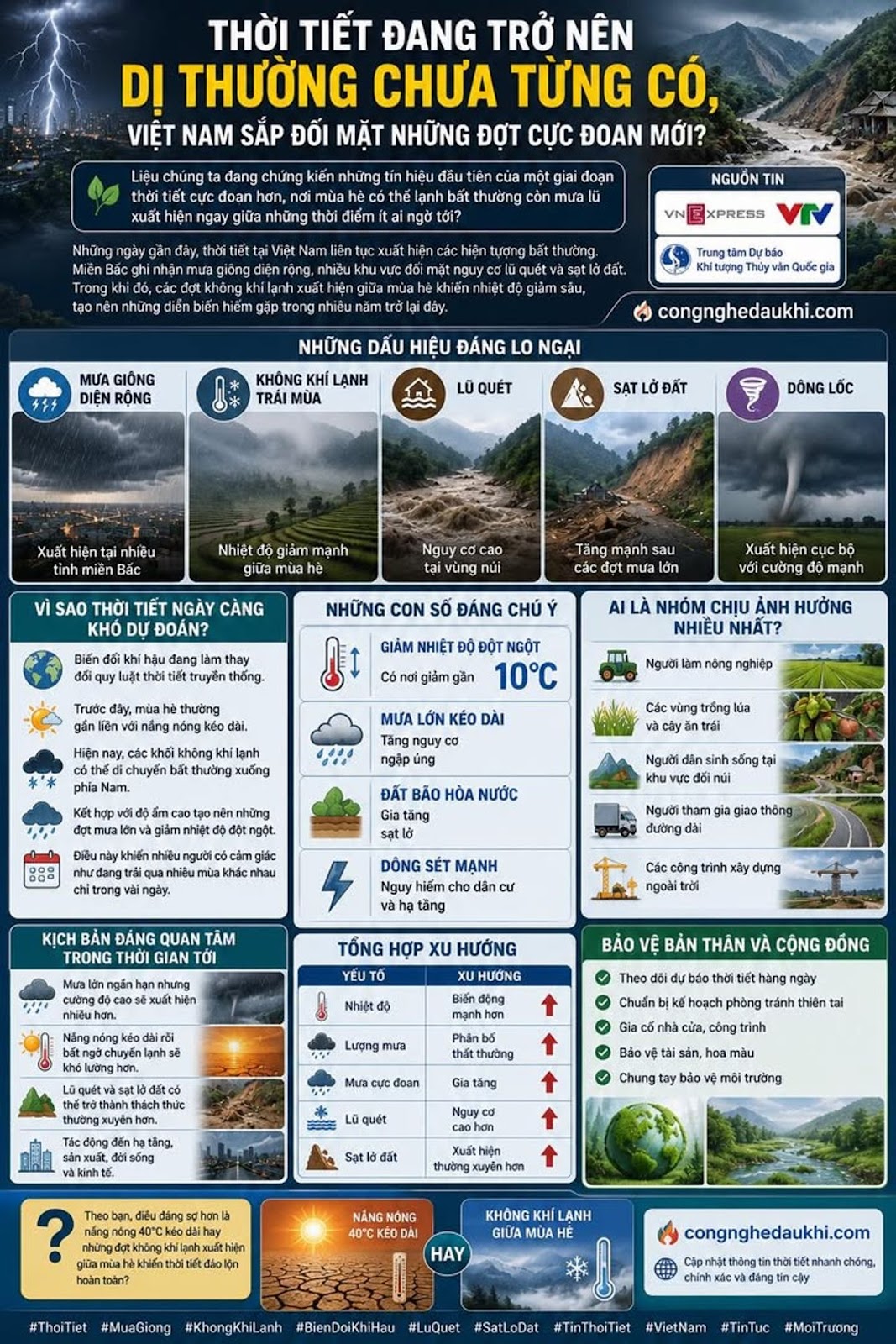
As climate systems worldwide show increasing instability, Vietnam is experiencing weather anomalies that challenge traditional meteorological patterns. The question arises: Are we witnessing the early signs of a new era of extreme weather, where summers bring unexpected cold spells and flooding occurs during unprecedented times?
Recent weeks have brought a series of unusual weather phenomena across Vietnam. Northern provinces have recorded widespread thunderstorms with many areas facing heightened risks of flash floods and landslides. Simultaneously, unseasonal cold air masses have pushed into the region during summer months, causing significant temperature drops that haven't been observed in years.
Major sources including VnExpress, VTV, and numerous meteorological agencies have continuously issued warnings about the increasing frequency of extreme weather events.
Notable Concerning Weather Patterns
| Phenomenon | Description |
|---|---|
| Widespread Thunderstorms | Occurring across multiple northern provinces |
| Unseasonal Cold Air | Significant temperature drops during summer months |
| Flash Flood Risk | High probability in mountainous regions |
| Landslides | Increased frequency following heavy rainfall |
| Severe Thunderstorms | Localized occurrences with intense strength |
Why Weather Patterns Are Becoming Increasingly Unpredictable
Meteorological experts attribute these changing patterns to climate disruption that is altering traditional weather systems. Historically, Vietnamese summers have been characterized by prolonged heat waves. However, cold air masses can now move unusually far south, combining with high humidity to create intense rainfall events and sudden temperature drops.
This atmospheric volatility creates a sense of experiencing multiple seasons within just a few days, leaving both citizens and meteorological services struggling to adapt.
Notable Statistical Indicators
| Indicator | Impact |
|---|---|
| Sudden Temperature Drops | Areas experiencing decreases of nearly 10°C |
| Prolonged Heavy Rain | Increased risk of flooding |
| Saturated Soil Conditions | Heightened landslide potential |
| Intense Thunderstorms | Pose dangers to residents and infrastructure |
Most Affected Groups and Sectors
- Agricultural Workers: Farmers face challenges in crop planning and cultivation cycles
- Rice and Fruit Growing Regions: Areas specializing in these crops are particularly vulnerable
- Mountainous Communities : Residents in high-altitude regions face direct threats from landslides
- Long-distance Transportation: Road travel becomes increasingly hazardous
- Outdoor Construction Projects : Work schedules and safety protocols require constant adjustment
Future Scenarios to Monitor
Forecasting models suggest that extreme weather events may become more frequent in the coming years. Short-duration, high-intensity rainfall events, alternating between prolonged heat waves and sudden cold spells, and increased occurrences of flash floods and landslides could become regular challenges for many localities.
Summary of Emerging Trends
| Climate Factor | Trend Direction |
|---|---|
| Temperature Variability | More extreme fluctuations |
| Rainfall Distribution | More unpredictable patterns |
| Extreme Precipitation | Increasing frequency |
| Flash Flood Risk | Higher probability |
| Landslide Occurrence | More frequent events |
As Vietnam navigates these new climatic realities, the question emerges: What poses greater danger—prolonged 40°C heat waves or unseasonal cold fronts that completely disrupt weather patterns? The answer may lie in our ability to adapt to increasing climate volatility rather than choosing between specific extreme events.
The nation's meteorological services, agricultural sector, and emergency management systems must work together to develop comprehensive strategies for addressing these unprecedented weather challenges.