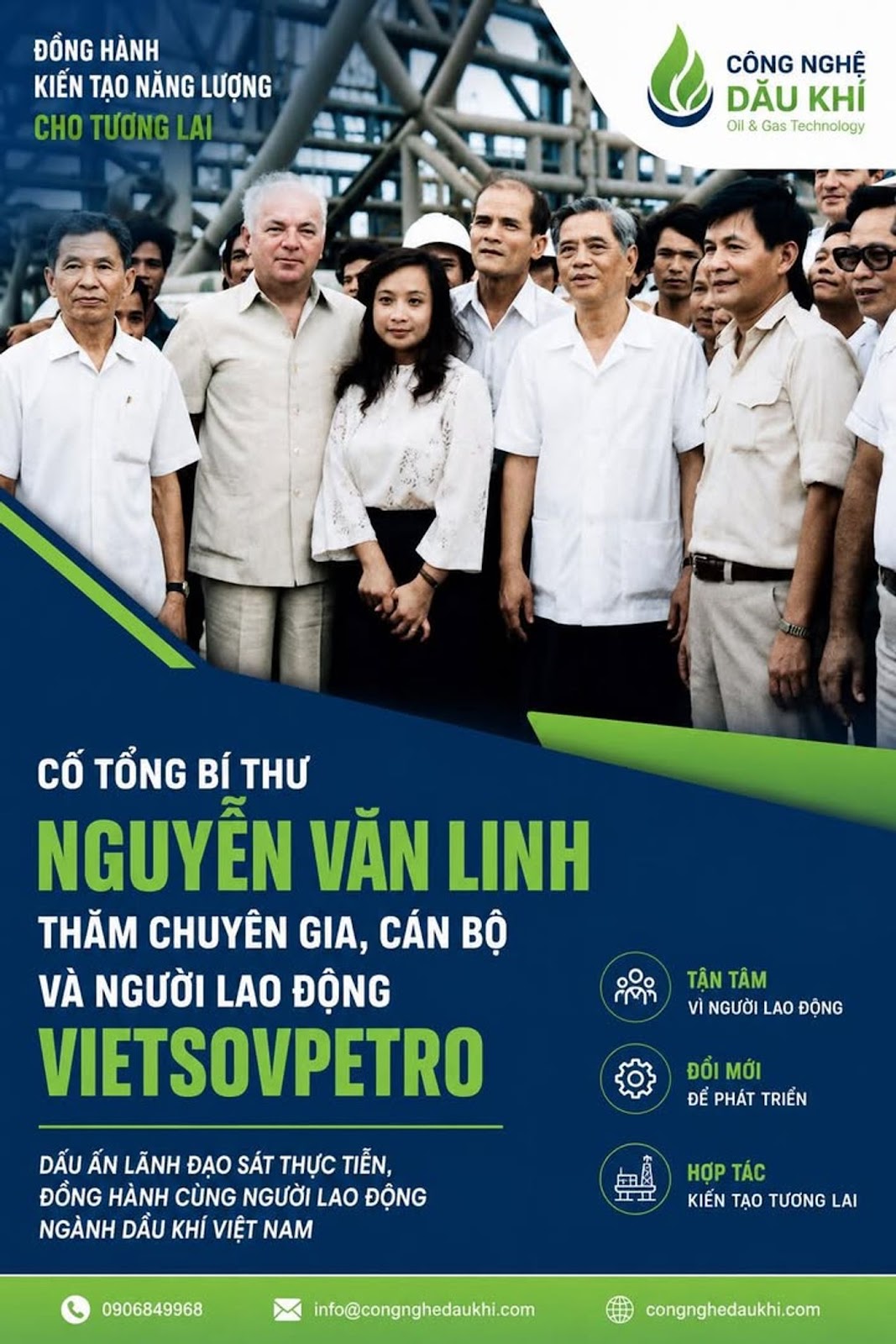
A Legacy of Leadership: Nguyen Van Linh's Historic Visit to Vietsovpetro
In the annals of Vietnam's industrial development, few moments stand out as profoundly as the visit by former General Secretary Nguyen Van Linh to the Vietsovpetro oil and gas joint venture. This historic encounter between a national leader and the workforce at the forefront of Vietnam's energy sector exemplified a leadership philosophy that remains relevant decades later.
The visit occurred during a pivotal moment in Vietnam's history – a time when the nation was navigating through economic challenges while embarking on the Đổi Mới (Renovation) policy that would transform its trajectory. Linh's direct engagement with workers, engineers, and experts on offshore drilling platforms sent a powerful message about the value of labor and the importance of strategic industries in national development.
The Strategic Importance of Vietsovpetro
Established in 1981 as a symbol of economic and technical cooperation between Vietnam and the Soviet Union, Vietsovpetro (Vietnam-Soviet Petroleum) emerged as the cornerstone of Vietnam's oil and gas industry. The joint venture represented more than just a business enterprise; it symbolized technological transfer, international cooperation, and Vietnam's entry into the global energy market.
During the challenging economic landscape of the late 1980s, crude oil from the Bach Ho (White Tiger) field and other offshore operations developed by Vietsovpetro became a strategic resource that helped stabilize Vietnam's macroeconomic situation. The foreign currency generated from these operations proved invaluable to the national budget during a period of severe economic constraints.
| Vietsovpetro: Key Facts and Milestones | |
|---|---|
| Established | 1981 |
| Headquarters | Vung Tau, Vietnam |
| Vietnamese Partner | Petrovietnam |
| Soviet/Russian Partner | Zarubezhneft |
| Core Business | Oil and gas exploration and production |
| Cooperation Extended Until | 2030 |
Nguyen Van Linh: A Leader Connected to the People
General Secretary Nguyen Van Linh's leadership style was characterized by his proximity to ordinary workers and his insistence on understanding ground realities before making policy decisions. His visit to Vietsovpetro exemplified this approach, as he chose to meet directly with the workforce rather than confine himself to administrative offices.
Historical accounts of Linh's tenure consistently portray a decisive yet accessible leader who frequently sought input from基层 (grassroots levels) before implementing major policies. This hands-on approach proved particularly valuable in the oil and gas sector, where technical expertise and operational insights were crucial for success.
The Đổi Mới Policy and Its Impact on Vietnam's Energy Sector
Assuming the role of General Secretary in 1986, Nguyen Van Linh became one of the principal architects of Vietnam's Đổi Mới policy – a series of economic reforms that shifted Vietnam from a centrally planned economy to a "socialist-oriented market economy." This transformation created unprecedented opportunities for development across various economic sectors, including oil and gas.
The policy changes introduced during Đổi Mới had profound effects on Vietnam's energy landscape:
| Policy Aspect | Impact on Oil and Gas Sector |
|---|---|
| Foreign Investment Liberalization | Increased international partnerships and joint ventures |
| Technology Transfer Policies | Access to modern extraction and exploration technologies |
| Export-Oriented Growth | Enhanced foreign exchange earnings through oil exports |
| Human Resource Development | Creation of highly skilled domestic engineering workforce |
| Infrastructure Investment | Expansion of offshore and onshore oil projects |
A Visit That Transcended Protocol
When Nguyen Van Linh visited Vietsovpetro, he engaged in more than just ceremonial duties. The visit included comprehensive briefings on production activities, direct meetings with Vietnamese and Soviet specialists, and interactions with thousands of engineers and oil workers on the front lines of energy production.
This hands-on approach demonstrated Linh's understanding that true leadership requires more than executive decisions – it demands empathy for those implementing those decisions. By meeting workers in their environment, Linh gained firsthand insights into the challenges and opportunities in Vietnam's burgeoning oil sector.
Enduring Legacy in Vietnam's Energy Development
More than three decades after Linh's visit, his leadership philosophy continues to influence Vietnam's approach to industrial development. The values he embodied – innovative thinking, courage to experiment, and faith in the capabilities of Vietnam's workforce – remain central to the nation's energy strategy.
The oil and gas sector that Linh supported has grown into a pillar of Vietnam's economy, with Vietsovpetro remaining a significant contributor to national development. The company's operations have expanded beyond the Bach Ho field to include numerous offshore and onshore projects, reinforcing Vietnam's position in the regional energy landscape.
Linh's visit to Vietsovpetro serves as a reminder of the importance of leadership that remains connected to the people and industries it serves. In an era where technological advancement often creates distance between decision-makers and implementers, Linh's example offers a valuable lesson in the power of direct engagement and understanding operational realities.
As Vietnam continues to develop its energy resources and navigates new challenges in the global energy transition, the legacy of leaders like Nguyen Van Linh – who recognized the strategic importance of energy independence and the value of human capital in achieving it – remains a guiding force for the nation's industrial future.