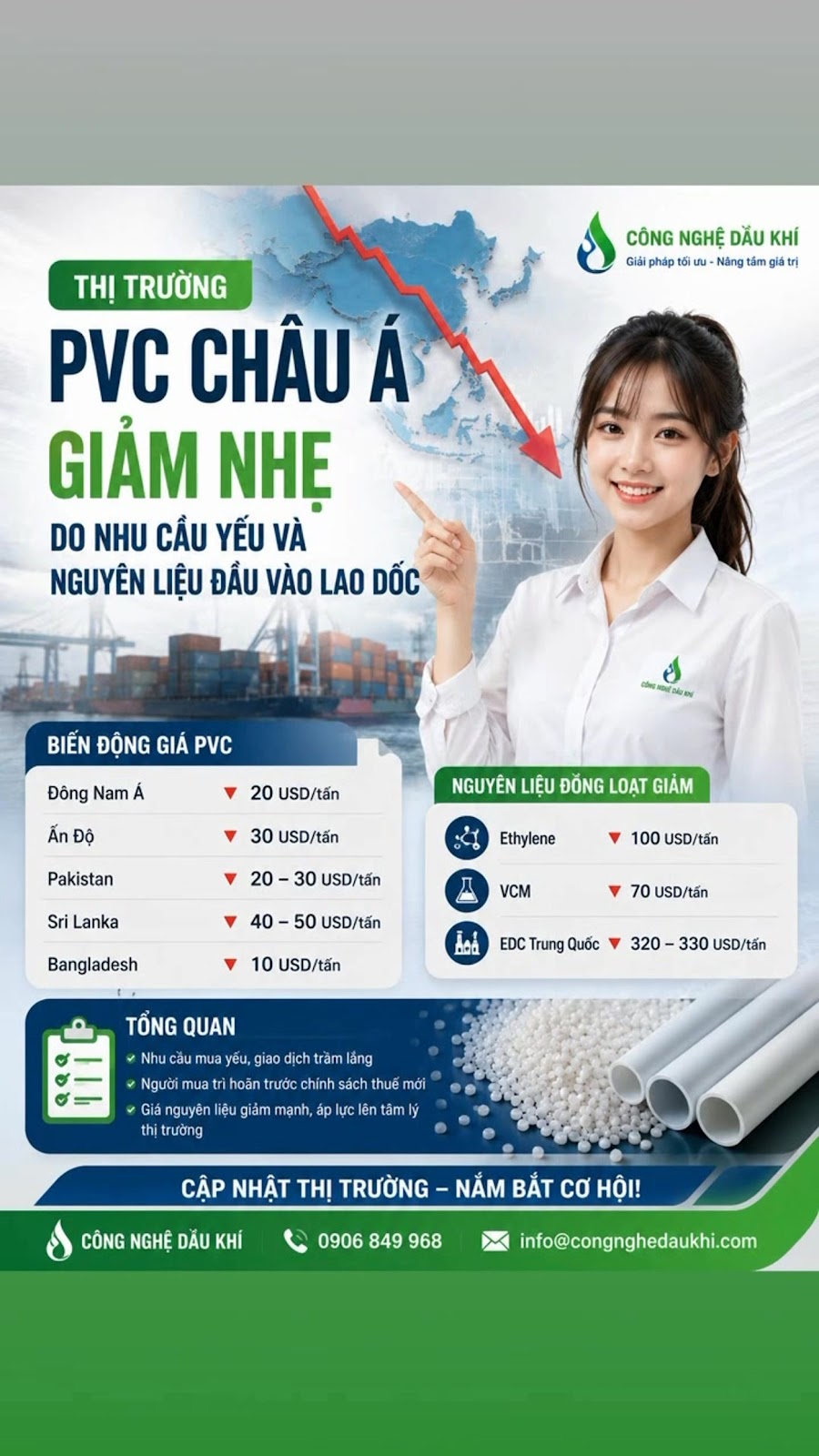
Asian PVC Market Continues Downward Price Trend: Opportunity for Plastic Companies or Preparing for a New Downturn?
The Asian PVC market has experienced another week of declining prices as buying interest remains weak and a wait-and-see mentality dominates most major markets in the region. Importers, particularly in India, Pakistan, and Bangladesh, are maintaining cautious stances amid the deepening downward trend in the petrochemical raw material chain.
According to regional trading sources, PVC suspension prices in Southeast Asia have decreased by approximately $20 per ton compared to the previous week. In India, the decline was more pronounced, with prices dropping around $30 per ton within just one week.
Price Decline in Asian PVC Markets
| Market | Price Decrease |
|---|---|
| Southeast Asia | $20/ton |
| India | $30/ton |
| Pakistan | $20-30/ton |
| Sri Lanka | $40-50/ton |
| Bangladesh | $10/ton |
Notably, offers from major producers in the region have failed to generate significant traction. Actual trading volumes have fallen below expectations as buyers believe prices could continue declining in the coming weeks.
In India specifically, many importers are delaying new contracts to wait for the end of the tax exemption policy for certain petrochemical products at the end of June. This has continued to reduce market liquidity.
Downstream Raw Materials Chain Simultaneously Declining
It's not just PVC that is experiencing price reductions; the entire upstream raw material chain is also witnessing a significant adjustment.
| Raw Material | Price Movement |
|---|---|
| Ethylene | Decreased by approximately $100/ton |
| VCM | Decreased by approximately $70/ton |
| China EDC | Remaining at $320-330/ton |
The simultaneous decline in Ethylene, VCM, and EDC is creating significant pressure on the PVC market. As production costs decrease sharply, suppliers are forced to adjust selling prices to maintain competitiveness.
Why PVC Prices Haven't Recovered
There are three main factors driving the market downward:
- Slow recovery in construction and infrastructure in many countries
- Buyers delaying contracts due to expectations of further price declines
- Weakening oil and petrochemical raw material prices
This creates a vicious cycle that makes it difficult for the market to find upward momentum in the short term.
Impact on Vietnamese Enterprises
For plastic pipe manufacturers, construction material producers, electrical cable companies, and industrial plastic enterprises in Vietnam, the decrease in PVC prices significantly helps reduce raw material costs.
However, the downside is that product prices are also under downward pressure, limiting the expected increase in profit margins if consumption demand remains weak.
Future Outlook
Market analysts suggest that the short-term trend for PVC remains tilted toward decline or stabilization. The market can only recover when:
- Import demand from India returns
- Construction activities accelerate in Southeast Asia
- Ethylene and VCM prices stabilize again
- Inventory levels at factories return to balanced levels
In the current context, most companies are still prioritizing a wait-and-see strategy rather than making large-scale purchases.
If PVC prices continue to decrease by another $50-100 per ton in the next quarter, would this represent a golden opportunity for Vietnam's plastic industry, or would it be a warning sign of regional economic decline?