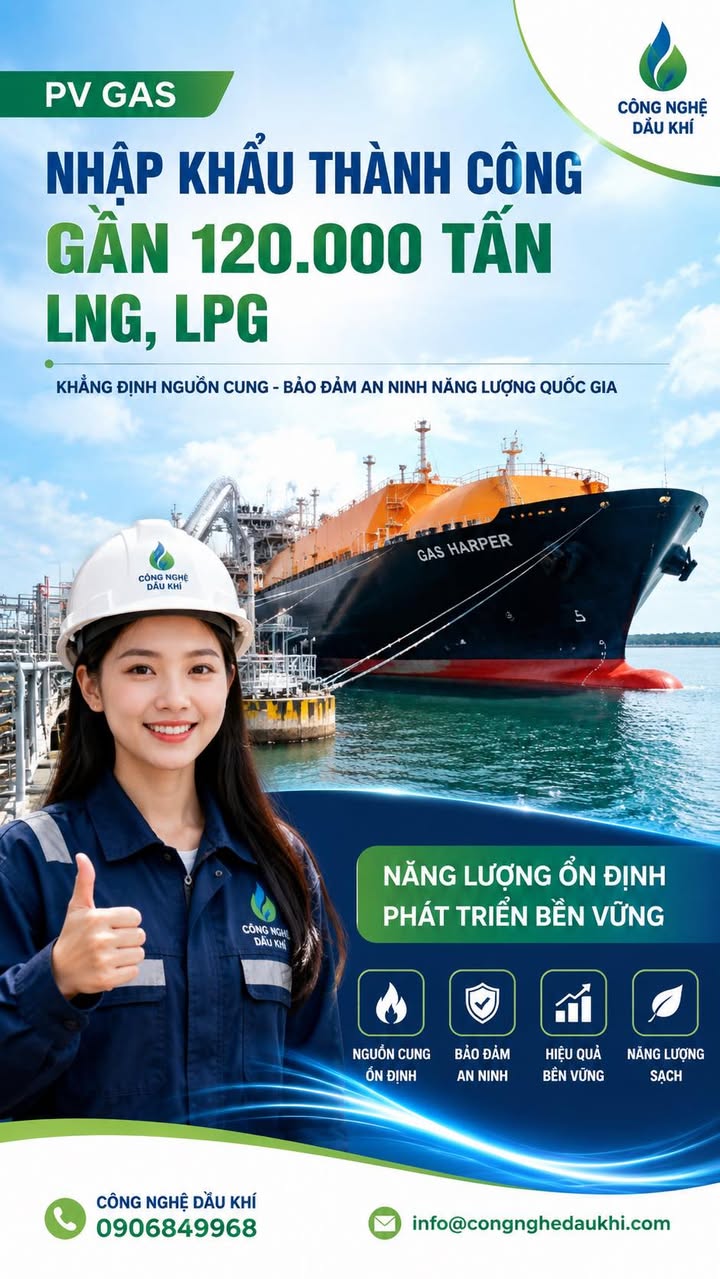
PV GAS Successfully Imports Nearly 120,000 Tons of LNG, LPG, Affirming National Energy Security Capability
In a significant development for Vietnam's energy landscape, the Vietnam Gas Corporation (PVGAS) has successfully completed the import of nearly 120,000 tons of Liquefied Natural Gas (LNG) and Liquefied Petroleum Gas (LPG). This achievement, announced on June 11, 2026, at approximately 13:40, underscores PV GAS's commitment to ensuring stable energy supply amid continued global market volatility driven by geopolitical factors and global supply chain risks.
This import represents one of the largest LNG shipments to date for Vietnam's energy system, arriving at a critical time when electricity, industrial, and domestic consumption is experiencing rapid growth during the 2026 peak season. The successful importation demonstrates PV GAS's capability to maintain energy security despite international challenges.
Event Summary
| Aspect | Details |
|---|---|
| Organization | PVGAS (Vietnam Gas Corporation) |
| Announcement Date | June 11, 2026 |
| Import Volume | Nearly 120,000 tons of LNG and LPG |
| Primary Objective | Ensure stable energy supply |
| Significance | Support power generation and industrial sectors |
| Market Context | Global energy prices in fluctuation |
The Critical Role of LNG in Vietnam's Energy Strategy
LNG, or Liquefied Natural Gas, is natural gas that has been cooled to approximately -162°C ( -260°F) to reduce its volume for transportation. Upon arrival at import terminals, the LNG is regasified and distributed through pipeline networks to power plants, industrial zones, and major consumers.
In the context of declining production from domestic gas fields, imported LNG has emerged as a strategic solution to maintain stable fuel supplies for gas-fired power plants. This transition is particularly crucial as Vietnam continues to develop its industrial base and expand electricity access to meet growing demand.
Evolution of Vietnam's LNG Import Strategy
| Period | Development Stage |
|---|---|
| 2023 | Commencement of commercial-scale LNG imports |
| 2024 | Significant increase in import volumes |
| 2025 | Expansion of LNG port infrastructure |
| 2026 | Accelerated imports to support power generation |
Economic Significance of the Import
Assuming spot LNG prices in the Asian region ranging from approximately 12,000,000 to 14,000,000 VND per ton, the total value of this 120,000-ton shipment can be estimated as follows:
| Price Scenario | Estimated Value |
|---|---|
| 12,000,000 VND/ton | Approximately 1,440,000,000,000 VND |
| 14,000,000 VND/ton | Approximately 1,680,000,000,000 VND |
Actual figures may vary depending on contractual terms, timing of purchase, and international transportation costs. Nevertheless, this substantial investment highlights Vietnam's commitment to securing reliable energy resources for economic development.
Strategic Importance of Recent LNG Imports
Several factors make this recent import particularly noteworthy:
- Power Plant Fuel Security: Ensures uninterrupted operation of gas-fired power plants during periods of high electricity demand
- Industrial Continuity: Reduces the risk of power shortages in key industrial zones that rely on stable electricity supply
- Market Resilience: Enhances Vietnam's ability to respond to fluctuations in global oil and gas markets
- Energy Transition: Supports Vietnam's strategic shift from coal to natural gas, which has lower carbon emissions
Vietnam's Evolving Energy Landscape in 2026
Based on current energy consumption patterns, Vietnam's electricity generation mix in 2026 can be visualized as follows:
| Energy Source | Approximate Share |
|---|---|
| Coal Power | 35-40% |
| Hydropower | 20-25% |
| Gas Power | 25-30% |
| Renewable Energy | 20-25% |
| Imported LNG | 10-15% |
Energy analysts predict that LNG will play an increasingly significant role in Vietnam's energy mix as multiple LNG-powered electricity projects in the southern and central regions commence operations. This transition aligns with Vietnam's commitments to reduce carbon emissions while maintaining economic growth.
Global Context and Strategic Implications
Notably, this import operation occurs during a period of heightened tension in the Middle East and increased scrutiny of the strategically vital Hormuz shipping route. PV GAS's proactive approach to securing large volumes of LNG demonstrates forward planning to mitigate potential supply disruptions in the future.
The successful importation of nearly 120,000 tons of LNG and LPG by PV GAS represents more than just a commercial transaction—it signifies Vietnam's strategic positioning in the global energy market. As the country continues its economic development while addressing environmental concerns, imported LNG serves as a critical bridge fuel in the transition toward a more sustainable energy future.
Looking ahead, Vietnam's increasing reliance on imported LNG reflects both the challenges of domestic resource limitations and the opportunities presented by global energy markets. The question remains whether this trend represents a strategic diversification of energy sources or an indication of greater-than-expected pressure on domestic gas reserves. Regardless of interpretation, PV GAS's capability to secure and manage large-scale LNG imports affirms Vietnam's commitment to energy security and economic stability.