China Approaches Fusion Energy Milestone, Threatening Global Energy Leadership
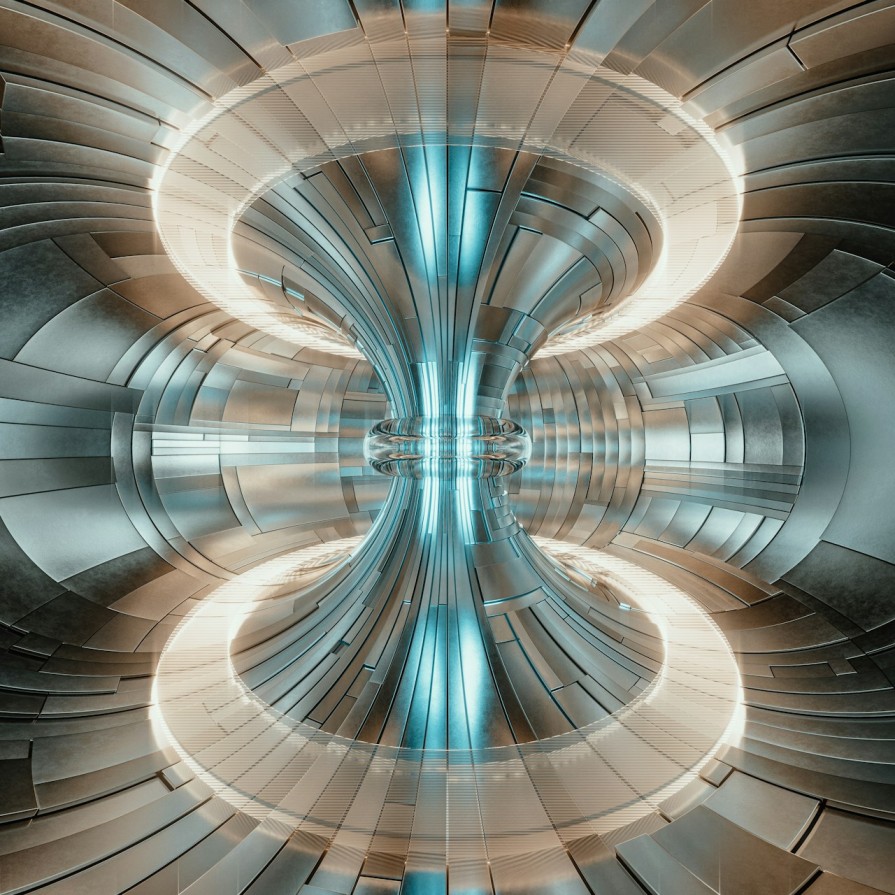
China is advancing toward a significant milestone in nuclear fusion, potentially positioning the country at the forefront of the global race to unlock the "holy grail" of clean energy. The Experimental Advanced Superconducting Tokamak (EAST) is on track to achieve ignition by 2027, potentially becoming the world's first fusion reactor to maintain plasma without requiring external heat sources. This would mark a crucial step toward the commercialization of nuclear fusion energy.
Understanding Nuclear Fusion
Nuclear fusion is the process that powers our sun. This technology is many times more powerful than nuclear fission—the technology currently used in nuclear power plants. Most importantly, nuclear fusion does not produce hazardous radioactive waste.
Against the backdrop of surging global energy demand in the coming years, driven by the artificial intelligence (AI) boom, nuclear fusion has captured attention for its potential to provide nearly limitless energy with zero greenhouse gas emissions. However, achieving stable and sustainable fusion reactions is no simple feat.
Plasma is extremely unstable, and achieving fusion reactions on Earth requires heating this substance to temperatures many times hotter than the sun's core—approximately 150 million degrees Celsius. Therefore, reaching these temperatures over extended periods without additional energy input—known as achieving "ignition"—represents a critical milestone for any fusion project.
The EAST Project and the 2027 Ignition Target
China's Experimental Advanced Superconducting Tokamak (EAST) is on course to achieve ignition by 2027. If successful, EAST would become the world's first fusion reactor to maintain plasma without requiring external heat sources.
Ignition has been achieved before, most notably at the National Ignition Facility (NIF) in Livermore, California. However, that facility is experimental in nature and not a reactor that could become a power plant—instead, it's a research facility designed to advance knowledge toward producing infinite clean energy in the future.
Achieving ignition is a significant breakthrough because most current fusion experiments consume more energy than they produce and require continuous external heating to maintain plasma.
Comparison of Major Fusion Projects
| Project | Location | Projected Ignition Timeline | Key Features |
|---|---|---|---|
| EAST | China | 2027 | Superconducting tokamak reactor, capable of maintaining plasma without external heat sources |
| NIF | United States | Achieved (2022) | Research experiment, not a power-producing reactor |
| Commonwealth Fusion Systems | United States | 2027 | Private venture, aiming for net energy production |
| BEST | China | Unspecified | Expected to become the first successful fusion reactor to generate electricity |
The Energy Race Between China and the United States
If EAST achieves ignition next year, it would represent a major advancement for global nuclear fusion and a significant step forward for China's dominant energy position. China and the United States have alternately achieved breakthroughs in nuclear fusion in recent years as the world's two largest economies compete to claim the title of solving for infinite clean energy.
"Fusion could change the equation for both countries and the world," The New York Times reported last year. "Whoever cracks it could build plants around the world and forge new alliances with energy-hungry nations."
Different Approaches to Fusion Research
However, these two superpowers are approaching fusion research quite differently in terms of funding and industry regulation. In line with their general national characters, China is employing a top-down, government-funded approach, while the United States is allowing private companies to take the lead.
Both approaches have significant advantages and disadvantages. China's projects benefit from abundant financial resources and fewer administrative barriers, while in the United States, startups are increasingly entering the field, bringing diversity, innovation, and flexibility to the industry.
Comparison of China's and US Fusion Approaches
| Factor | China | United States |
|---|---|---|
| Funding Model | Government-funded | Private companies leading |
| Implementation Speed | Faster, fewer barriers | Slower, more regulations |
| Innovation | Focused, directed | Diverse, free-form |
| Risk | Concentrated on a few large projects | Distributed across many companies |
| Commercialization Potential | Largely state-controlled | Strong private sector involvement |
So far, the competition has been neck and neck, but experts say the United States still holds an advantage in advanced fusion research. The United States' most well-funded fusion company, Commonwealth Fusion Systems, also claims its fusion device will achieve net energy production by 2027, the same year as EAST. But EAST isn't even China's most promising fusion experiment.
The BEST Project and China's Energy Position
China's top plasma physics laboratory, the Burning Experimental Superconducting Tokamak (BEST), "is expected to become the world's first successful fusion reactor to generate electricity" according to a recent report from BGR.
However, as China positions fusion as a major national priority in its new five-year plan, Beijing could begin to pull far ahead of competitors very soon. Beijing has identified fusion as one of eight "frontier technologies" that the government will prioritize in the coming five years.
Yet numerous hurdles stand between current science and a commercial fusion industry. Reactors will need to advance considerably, and the specialized supply chains needed to support them will as well. The 15th Five-Year Plan "lays the foundation for further investment," according to BGR. However, "Whether these investments will allow Beijing to achieve its ambitious fusion goals remains to be seen."
The Importance of Nuclear Fusion
Nuclear fusion is considered the "holy grail" of clean energy for several reasons:
- Nearly limitless energy source—based on abundant hydrogen in the oceans
- Zero greenhouse gas emissions during operation
- Does not produce long-lived radioactive waste like nuclear fission
- Safer than fission power plants
- High energy density, requiring less land area than other renewable energy sources
Meanwhile, global energy demand is expected to surge in the coming years, primarily driven by the AI boom. AI data centers consume enormous amounts of electricity, and nuclear fusion could provide a sustainable solution to this growing energy demand.
The Future of Nuclear Fusion
While China may be ahead in some aspects of fusion research, the race is still wide open. Many countries and companies worldwide are investing in this technology, including the UK, EU, Japan, South Korea, and numerous startups in the US.
The biggest challenge remains achieving stable and sustainable ignition, followed by converting it into commercial electricity. Scientists estimate it may take several more decades before nuclear fusion becomes a mainstream energy source.
However, if successful, nuclear fusion could completely transform the global energy landscape, reducing dependence on fossil fuels and providing a nearly infinite clean energy source for future generations.
Conclusion
China's progress toward the 2027 fusion ignition milestone with the EAST project marks a significant step forward in the global race to unlock the "holy grail" of clean energy. While the United States still maintains an advantage in advanced fusion research, China's centralized approach and abundant resources could help it pull ahead in the near future.
Regardless of which country wins the fusion race, ultimate success will benefit all of humanity, promising a sustainable, clean, and nearly infinite energy future. In the context of climate change and increasing energy demands, nuclear fusion could become the key solution to global energy challenges in the 21st century.