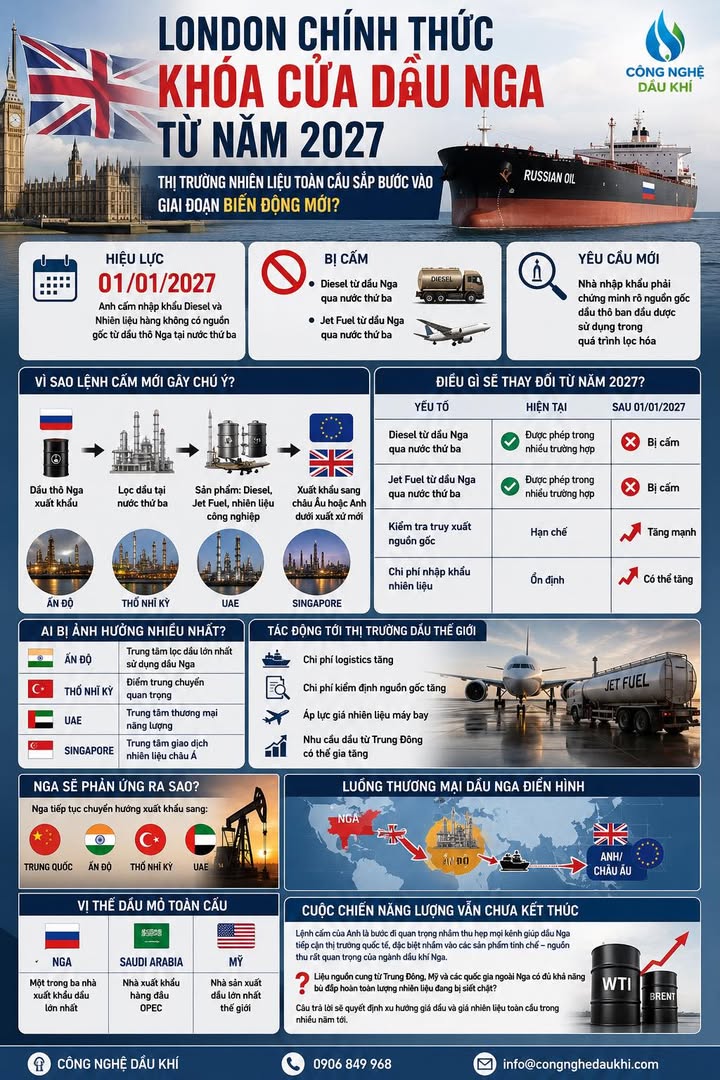
UK Officially Bans Russian Diesel and Jet Fuel Imports from 2027 – Global Fuel Market Entering New Era of Uncertainty?
In a move that could reshape global energy trade flows, the United Kingdom has officially announced a definitive timeline to close one of the most significant remaining loopholes in sanctions against Russian oil. According to the latest announcement, the UK will prohibit the import of diesel and aviation fuel derived from Russian crude oil from third countries no later than January 1, 2027.
This development marks a significant escalation in Western efforts to restrict Russia's energy revenue streams, more than four years since comprehensive sanctions were first implemented. As the global energy market continues to adjust to post-war realities, this decision could trigger unprecedented competition for alternative fuel supplies.
The Significance of the New Ban
For years, despite Western restrictions on Russian crude oil, substantial quantities have continued to reach European markets indirectly through refining centers in several key nations. This sophisticated circumvention mechanism has allowed Russian oil to maintain its presence in the global supply chain despite formal trade barriers.
The primary third-party countries involved in this process have included:
- India
- Turkey
- United Arab Emirates
- Singapore
- Various Middle Eastern nations
The process has been relatively straightforward in its execution:
- Russian crude oil is exported to a third country
- Refineries in these countries transform it into various products including:
- Aviation fuel (jet fuel)
- Diesel fuel
- Industrial fuels
- The refined products are then exported to European or UK markets with new origin certificates
This mechanism has effectively enabled Russian oil to remain embedded in global supply chains without appearing directly in trade documentation.
What Will Change from 2027
Under the new regulation, any diesel or jet fuel derived from Russian crude oil will be prohibited from entering the UK market. This means importers will be required to provide definitive proof of the original crude oil source used in the refining process.
The table below outlines the expected impact of this policy change:
| Factor | Current Situation | After January 1, 2027 |
|---|---|---|
| Diesel from Russian crude via third countries | Permitted in many cases | Prohibited |
| Jet fuel from Russian crude via third countries | Permitted in many cases | Prohibited |
| Origin traceability requirements | Limited | Significantly increased |
| Fuel import costs | Relatively stable | Potentially increased |
Countries Most Affected
Nations with oil refining industries heavily dependent on Russian crude are likely to face the greatest pressure. The table below highlights key refining centers frequently associated with processing Russian oil:
| Country | Role in Russian Oil Processing |
|---|---|
| India | Largest refining center utilizing Russian crude |
| Turkey | Important transit point |
| UAE | Energy trading hub |
| Singapore | Asian fuel trading center |
Many businesses operating in these regions will need to implement sophisticated traceability systems to verify that their products are not derived from Russian crude oil.
Impact on the Global Oil Market
Industry experts suggest that the direct impact on global oil supplies may not be substantial, as Russian oil has already found customers in Asian markets. However, the diesel and jet fuel sectors may experience notable fluctuations:
- Increased logistics costs
- Rising costs for origin verification
- Upward pressure on jet fuel prices
- Potentially increased demand for Middle Eastern oil
Against the backdrop of continued strong recovery in air travel demand following pandemic disruptions, any changes to jet fuel supply could have significant ripple effects throughout the aviation industry and related sectors.
Russia's Potential Response
Russia remains one of the world's largest oil exporters, as shown in the table below:
| Country | Global Oil Export Position |
|---|---|
| Russia | One of the top three oil exporters |
| Saudi Arabia | Leading OPEC exporter |
| United States | World's largest oil producer |
In recent years, Moscow has significantly redirected its oil exports to:
- China
- India
- Turkey
- UAE
This strategic shift has helped maintain vital revenue streams for Russia's energy sector despite Western restrictions.
The Energy Battle Continues
The UK's decision demonstrates that Western nations are continuing to seek ways to eliminate all channels through which Russian oil can access international markets. Although the ban will not take full effect until 2027, energy companies, airlines, and oil traders have already begun preparing for significant changes in the global fuel supply chain.
Many analysts consider this one of the most significant moves since energy sanctions were first imposed, as it targets not just crude oil but refined products that represent crucial revenue sources for Russia's oil and gas industry.
Meanwhile, the most significant question facing the market remains whether supply sources from the Middle East, the US, and other non-Russian nations can adequately compensate for the tightened restrictions. The answer may determine oil and fuel price trends globally for years to come.
As the 2027 deadline approaches, all market participants will be closely watching how refiners, traders, and governments adapt to this new phase of energy geopolitics, with potentially profound implications for global energy security and economic stability.