Global Energy Markets at a Crossroads: Geopolitical Shifts and AI-Driven Demand Reshape Industry Landscape
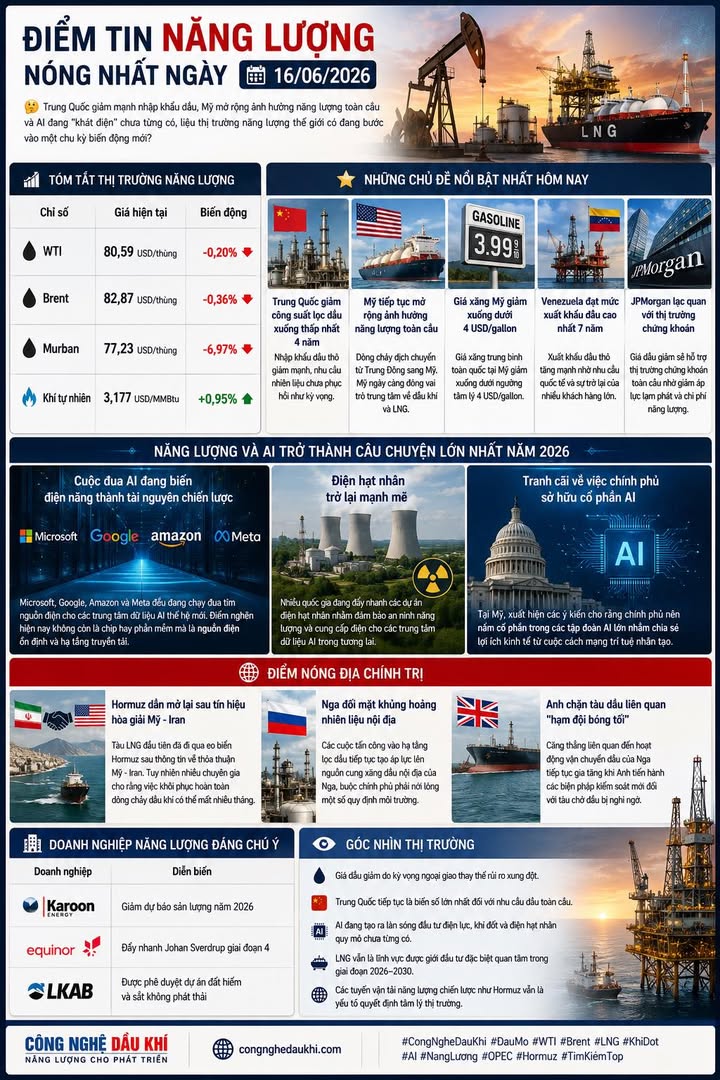
The global energy landscape is undergoing profound transformations as China's oil imports plummet, the United States expands its energy influence worldwide, and artificial intelligence creates unprecedented electricity demands. These developments signal a potential new cycle of volatility in energy markets that could reshape the global economic order in 2026 and beyond.
Current Energy Market Snapshot
| Commodity | Current Price | Daily Change |
|---|---|---|
| WTI Crude | $80.59/barrel | -0.20% |
| Brent Crude | $82.87/barrel | -0.36% |
| Muran Crude | $77.23/barrel | -6.97% |
| Natural Gas | $3.177/MMBtu | +0.95% |
Key Market Developments
China's Refining Capacity Hits Four-Year Low
China's refining operations continue to weaken as crude oil imports decline significantly. This signals that fuel consumption demand in the world's second-largest economy has yet to recover as expected. The reduction in refining capacity reflects broader economic challenges facing China, with industrial production and manufacturing activities showing persistent weakness that directly impacts energy consumption patterns.
The slowdown in China's oil demand comes at a critical time when global markets are already balancing supply concerns. As China accounts for approximately 14% of global oil demand, any significant reduction in its consumption patterns has ripple effects across the entire energy value chain.
United States Expands Global Energy Influence
Energy flows are shifting dramatically from the Middle East toward the United States. Many experts now view the U.S. as playing an increasingly central role in the global oil and LNG supply chains, particularly as transportation routes in the Middle East face heightened geopolitical risks.
This shift is evidenced by several factors: increased U.S. crude oil exports, the expansion of LNG export terminals on the Gulf Coast, and growing American influence in global energy diplomacy. The U.S. has effectively leveraged its shale revolution and energy infrastructure investments to position itself as a swing producer capable of influencing global markets.
U.S. Gasoline Prices Drop Below Psychological $4/Gallon Mark
The national average gasoline price in the United States has fallen below the psychologically significant $4/gallon threshold. This price point receives particular attention from consumers and policymakers alike, especially as the peak summer travel season approaches.
The decline in gasoline prices can be attributed to several factors: reduced crude oil prices, increased refining capacity, and seasonal demand patterns. Lower energy prices provide relief to American consumers and businesses, potentially boosting economic activity during the critical summer travel period.
Venezuela Achieves Seven-Year High in Oil Exports
Venezuela's crude oil exports continue to surge, driven by international demand and the return of major customers to the market. This increase represents a significant development in the global oil supply picture, particularly as other producers face various constraints.
The Venezuelan oil industry, despite years of challenges, has managed to increase production through improved operational efficiency and renewed international relationships. This has helped alleviate some supply concerns in global markets, particularly in regions seeking alternatives to traditional suppliers.
JPMorgan Bullish on Stock Markets Amidst Oil Price Declines
JPMorgan has issued a positive outlook for global stock markets, suggesting that falling oil prices will serve as a positive catalyst. The bank anticipates that reduced pressure from inflation and energy costs will benefit equity markets.
This perspective reflects a broader view among financial institutions that moderating energy prices could create a more favorable environment for economic growth and corporate profitability. Lower input costs across various sectors may help contain inflationary pressures and support consumer spending.
The Energy-AI Nexus: Defining a New Paradigm
The AI Race Transforms Electricity into a Strategic Resource
The global race in artificial intelligence is transforming electricity into a strategic resource. Major tech companies including Microsoft, Google, Amazon, and Meta are competing aggressively to secure power sources for next-generation AI data centers. The current bottleneck is no longer chips or software, but stable electricity supply and transmission infrastructure.
The energy demands of AI systems are unprecedented. Advanced AI models require massive computational power, translating directly to substantial electricity consumption. This has created a fundamental shift in how technology companies approach energy planning and procurement, with many now prioritizing access to affordable, reliable power above other considerations.
| Company | AI Energy Strategy | Recent Developments |
|---|---|---|
| Microsoft | Nuclear partnerships, renewable PPAs | Expansion of nuclear-powered data centers |
| 24/7 carbon-free energy goal | AI-optimized energy management systems | |
| Amazon | Renewable energy investments | Custom-designed AI chips for efficiency |
| Meta | On-site generation projects | Underwater data center for cooling efficiency |
Nuclear Energy Experiences Strong Revival
Many countries are accelerating nuclear power projects to ensure energy security and provide electricity for future AI data centers. This represents a significant shift in energy policy, with nuclear power emerging as a preferred solution for both baseload power and AI-specific energy needs.
The nuclear revival is driven by several factors: its ability to provide consistent, carbon-free power; its high energy density; and its suitability for locations requiring massive, uninterrupted electricity supply. Countries including the United States, France, and several Asian nations are revisiting their nuclear strategies with renewed urgency.
Debate Emerges Over Government Ownership Stakes in AI Companies
In the United States, a new perspective has emerged suggesting that the government should hold equity stakes in major AI corporations. This idea aims to ensure that the economic benefits from the artificial intelligence revolution are shared broadly across society.
Proponents argue that such ownership would allow the government to guide AI development in alignment with national interests, while opponents raise concerns about government overreach and potential market distortions. This debate reflects broader discussions about the governance of transformative technologies and their economic implications.
Geopolitical Hotspots Impacting Energy Markets
Hormuz Strait Gradually Reopens Following U.S.-Iran Reconciliation Signals
The first LNG vessel has passed through the Strait of Hormuz following indications of a potential U.S.-Iran agreement. However, many experts believe that the full restoration of oil and gas flows could take several months.
The Strait of Hormuz remains a critical chokepoint in global energy markets, with approximately 20% of world oil trade passing through this waterway. Any developments affecting its operations have immediate implications for global energy prices and supply security.
Russia Faces Domestic Fuel Crisis
Continued attacks on refining infrastructure continue to pressure Russia's domestic fuel supply, forcing the government to relax certain environmental regulations. This situation creates a complex challenge for Russia, which must balance domestic energy needs with its export commitments.
The targeting of Russian refining facilities represents a significant development in the broader conflict, with potential long-term implications for Russia's refining capacity and export capabilities. Domestic fuel shortages could also impact Russian military operations and economic stability.
UK Blocks Oil Vessels Related to "Shadow Fleet"
Tensions surrounding Russian oil shipping activities continue to escalate as the UK implements new control measures against suspected oil tankers. These measures reflect broader international efforts to enforce sanctions and regulate maritime trade related to Russian energy exports.
The "shadow fleet" of aging tankers used to transport Russian oil has become a growing concern for maritime safety and environmental protection. International regulatory bodies are increasingly focusing on this fleet, which operates with minimal oversight and often employs deceptive practices.
Notable Energy Companies
| Company | Recent Development |
|---|---|
| Karoon Energy | Reduced 2026 production forecast |
| Equinor | Accelerating Johan Sverdrup Phase 4 |
| LKAB | Approved rare earth and zero-emission iron project |
Market Outlook
Several key themes are shaping the energy market outlook for the remainder of 2026:
- Oil prices declining due to diplomatic expectations replacing conflict risks
- China remaining the largest variable for global oil demand
- AI creating unprecedented investment waves in electricity, natural gas, and nuclear power
- LNG remaining a particularly attractive investment area for the 2026-2030 period
- Strategic energy transportation routes like Hormuz continuing to determine market sentiment
Conclusion
The global energy landscape is undergoing a fundamental transformation driven by geopolitical realignments and technological disruption. As AI creates unprecedented electricity demands and traditional power dynamics shift, market participants must navigate an increasingly complex environment. The interplay between these factors will likely define energy markets for years to come, creating both challenges and opportunities for producers, consumers, and investors alike.