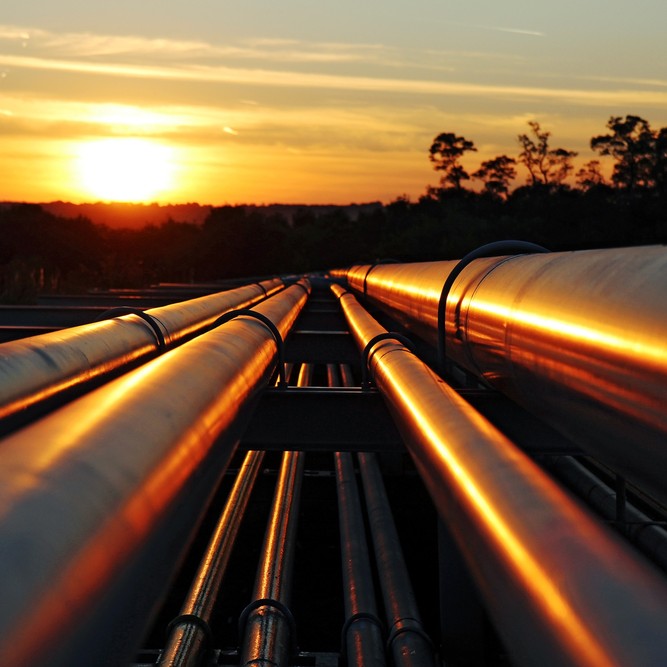
The $10 Billion Energy Journey: A Strategic Route Around the Strait of Hormuz
The prolonged conflict between the United States and Iran has underscored the urgent need to diversify energy export routes to reduce dependence on transportation through the Strait of Hormuz. A new initiative launched by the Washington, DC-based New Lines Institute aims to develop Syria and Turkey into major energy distribution hubs, potentially reshaping the geopolitical landscape of energy in the Middle East and beyond.
Challenges in US-Iran Relations and the Need for New Energy Export Routes
The ongoing tensions between Washington and Tehran have repeatedly highlighted the vulnerability of global energy supplies passing through the strategically critical Strait of Hormuz. This narrow waterway, through which approximately 20% of the world's petroleum passes, has become a geopolitical flashpoint that threatens global energy security. In response, a comprehensive strategy is emerging to create alternative land-based transportation networks that could bypass this chokepoint entirely.
The initiative comes at a time when European nations are actively seeking to reduce their energy dependence on Russia following the conflict in Ukraine, creating an opportunity to establish new supply corridors that serve multiple strategic objectives simultaneously.
The Four Seas Initiative
The Four Seas Initiative represents a broad programmatic framework designed to redirect energy export flows, thereby reducing Europe's dependence on Russian and Iranian oil and gas while directing investments from Gulf states into infrastructure projects linked with Western partners. This ambitious plan envisions creating a network of energy corridors that connect multiple regions and seas.
- Relevant Seas: Persian Gulf, Black Sea, Caspian Sea, and Mediterranean Sea.
- Primary Objective: Expand export routes overland from the Gulf toward Syria and Turkey, passing through Iraq and Jordan.
A complementary component of this initiative involves connecting the new export routes with existing networks in the Caspian and Black Sea basins, creating a comprehensive energy distribution system that spans multiple continents.
The Opportunity for Syria's Reconstruction
According to a concept paper published by the New Lines Institute, "Post-Assad stability in Syria presents a narrow but historically significant opportunity to transform the Levant from an energy conflict stage into an intercontinental energy corridor." This perspective suggests that the resolution of the Syrian conflict could open unprecedented possibilities for regional development.
The Four Seas Initiative promises four strategic benefits:
- Enhance European energy sovereignty by reducing dependence on Russia and Iran.
- Maintain America's commercial position at the most strategically critical infrastructure in the Middle East.
- Revitalize Syria's economy through transit revenue.
- Provide a sustainable geopolitical solution that rewards alignment with the West.
Comparison with the Three Seas Initiative
The Four Seas Initiative is modeled after a similar framework in which 13 European Union member countries participate, known as the Three Seas Initiative. Launched in 2015, the Three Seas Initiative promotes connectivity across multiple economic sectors, including energy, transportation, and digital infrastructure.
| Initiative Name | Launch Year | Number of Participating Countries | Main Objectives |
|---|---|---|---|
| Three Seas Initiative | 2015 | 13 | Enhanced connectivity in energy, transportation, and digital infrastructure |
| Four Seas Initiative | 2023 | Undetermined | Diversify energy export routes and develop Syria's economy |
Potential and Challenges
The Four Seas plan calls for establishing an infrastructure alliance capable of mobilizing up to $10 billion to construct pipelines along the Gulf-Mediterranean corridor. Upon completion, the new export routes are expected to transport up to 4 million barrels of oil per day and up to 50 billion cubic meters of gas annually to Mediterranean and European markets.
This would enable Syria to generate $8 to $12 billion annually from production and transit revenue, providing a stable income stream to rebuild the nation.
At the launch event on June 11 in Washington, experts praised the Four Seas Initiative as visionary. However, some also pointed out that implementation faces significant challenges.
"We need to find alternative routes for energy transportation," said Robert F. Cekuta, a former U.S. diplomat who served as ambassador to Azerbaijan. "This is also a way to bring Syria back into the international community; it has isolated itself for too long." He emphasized that "What's essential is to get people to sit down and talk about the practicalities, the details to help realize this, not just in the oil and gas sector but in construction companies as well."
The initiative represents a bold attempt to address multiple geopolitical and economic challenges simultaneously, potentially reshaping energy flows and international relations in one of the world's most volatile regions. While significant obstacles remain, the potential rewards—in terms of energy security, economic development, and geopolitical stability—make this a strategy worth serious consideration by international stakeholders.