#NamCuc #BangTan #BienDoiKhiHau #GlobalWarming #ClimateChange # KhoaHoc #MoiTruong #Penguin #TraiDat #TinNong
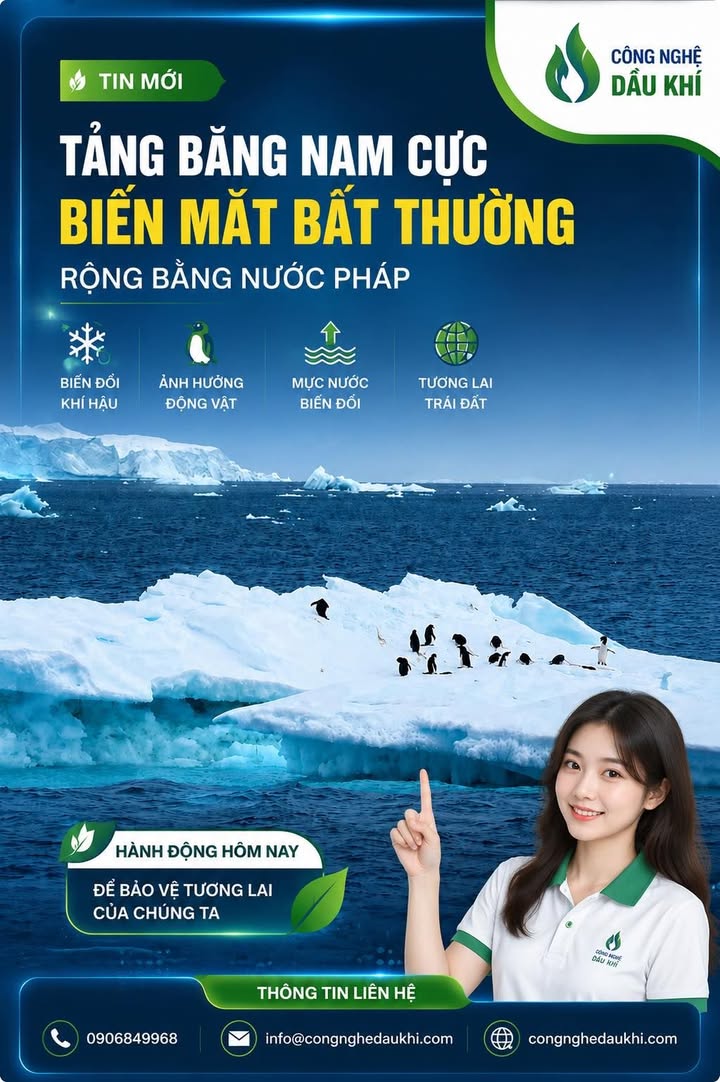
An area of sea ice up to 650,000 km² wide suddenly does not appear in the middle of the Antarctic winter. Is this just a natural fluctuation or a sign that the Earth's ecosystem is entering a period of irreversible change?
On June 13, 2026, many international climate research agencies simultaneously issued warnings about a serious sea ice shortage in the Bellingshausen Sea in West Antarctica. Satellite data shows that the area that should have been covered with thick ice during the winter is almost completely empty, with an area of "disappearing" ice amounting to about 650,000 km², equivalent to the area of France.
What worries scientists is not a single iceberg but a long-term decline trend. This is the third time in four years that this area has recorded unusually low sea ice.
Event Information
Value Content
Bellingshausen Sea area, West Antarctica
Recording time June 2026
The area of ice shortage is about 650,000 km²
The size is equivalent to FranceAbnormal temperature More than 20°C higher than average
Maximum temperature recorded 15.4°C at Argentina's Esperanza base
Number of unusual occurrences 3 times in the last 4 years
What's Happening in Antarctica
Normally from March to September every year, Antarctica enters winter and sea ice expands very rapidly around the continent. However, in 2026, the freezing process almost failed in a very large area of the Bellingshausen Sea.
Scientists such as Dr. Will Hobbs of the University of Tasmania and Dr. Phil Reid of the Australian Bureau of Meteorology believe that the cause may come from a combination of changing ocean currents, warming ocean waters and the impact of global warming.
Why Shooting Stars Don't Form
Cause Impact
Rising ocean temperatures Melt ice from below
Warm deep water intrusion prevents new ice from forming
Atmospheric circulation changes Bring warm air to Antarctica
Greenhouse effect Increase in average global temperature
Reduces the area of ice that reflects light. Increases heat absorption
Antarctic Animals Are Paying The Price
It's not just a story about ice.
Krill, an important food source for whales, penguins and seals, depend greatly on sea ice.Winter to survive. When ice disappears, the entire food chain is affected.
In 2022, thousands of Emperor penguins died in a breeding disaster caused by premature ice melt. The current situation makes researchers worry that a similar scenario may repeat.
The Real Danger to Humans
Many people believe that melting sea ice does not cause sea level rise because it itself is floating on the water's surface.
That's true but not complete.
An important role of sea ice is to protect giant glaciers behind it such as Pine Island Glacier and Thwaites Glacier. As the protective ice cover disappears, land-based glaciers could melt faster and dump huge amounts of water into the ocean over the coming decades.
Numbers Worth Thinking About
Value Index
Antarctic sea ice June 10, 2026 11.4 million km²
Average for many years is 12.6 million km²
Shortage of 1.2 million km²
Biggest shortage area Bellingshausen
Extreme temperature difference Over 20°C
Conclusion
What's worrying is not an iceberg breaking away from Antarctica, because that phenomenon has been happening for thousands of years.
What alarms the scientific community is that a sea ice area as large as France could not form in the middle of the coldest winter.2026. If this trend continues, Antarctica could enter a “new ice-less” period, with far-reaching impacts on global ecosystems, climate and sea levels for decades to come.
#NamCuc #Bellingshausen #BangBien #BangTan #ClimateChange #GlobalWarming #Penguin #Krill #ThwaitesGlacier #PineIslandGlacier #MoiTruong # KhoaHoc #TinNong