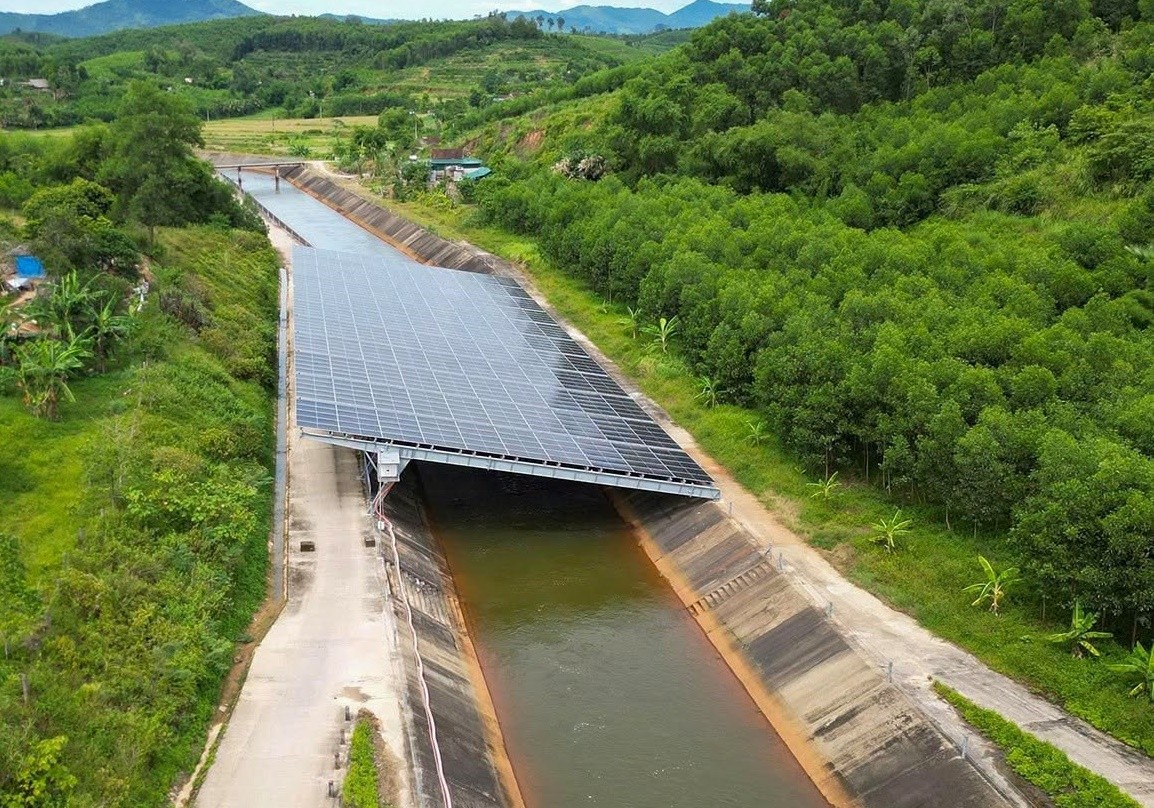
Solar Power on Irrigation Canals: Positive Results from Pilot Project in Ha Tinh Province
The first solar power project on irrigation canals in Vietnam, implemented in Vu Quang commune, Ha Tinh province, has not only created a source of green energy but has also awakened the potential of existing infrastructure. This innovative approach offers a creative solution to the energy and sustainable development challenges facing the province. The project is considered a pioneering model that harmoniously combines irrigation infrastructure development with renewable energy production, opening a new direction for Vietnam's energy sector.
Introduction to the Pilot Project
The solar power project on irrigation canals in Vu Quang commune, Vu Quang district, Ha Tinh province was implemented on an existing irrigation canal system spanning approximately 2km in length. This project is recognized as a pioneering model in Vietnam, utilizing the space above irrigation canals to install solar panels, generating clean electricity without occupying agricultural land.
According to the plan, the project has an installed capacity of approximately 1MW, with over 3,000 solar panels installed on special mounting structures designed to suit the canal environment. These panels not only generate electricity but also reduce water evaporation, limit algae bloom, and prevent weed growth along the canal banks.
Positive Results from the Pilot Project
After a period of operation, the project has delivered positive results that exceeded expectations. Below are the impressive figures from the project:
| Indicator | Achieved Result |
|---|---|
| Installed Capacity | 1.2 MW |
| Annual Electricity Production | 1.5 million kWh |
| Utilized Canal Surface Area | 2km |
| Annual CO2 Reduction | 1,200 tons |
| Payback Period | 7-8 years |
According to the Project Management Board's assessment, the solar power system on irrigation canals not only produces clean electricity but also provides additional benefits. The solar panel surface directly shades the canal, reducing water evaporation by 20-30%, while simultaneously limiting algae bloom and weed growth along the canal banks, thereby reducing maintenance costs for the irrigation infrastructure.
Economic Benefits
The project has created a stable revenue stream by selling electricity to the grid at preferential rates for solar power. With an annual production of 1.5 million kWh, the project generates approximately 3.3 billion VND in annual revenue (based on EVN's purchase price of 2,200 VND/kWh). Additionally, this model helps reduce canal maintenance costs due to limited weed growth and algae bloom.
Environmental Benefits
By generating electricity from renewable energy sources, the project contributes to reducing greenhouse gas emissions by approximately 1,200 tons of CO2 annually. This represents a significant contribution to Vietnam's sustainable development goals and emission reduction commitments made at the COP26 conference.
Development Potential and Expansion
The success of the pilot project in Ha Tinh opens new avenues for renewable energy development in Vietnam. In Ha Tinh province alone, there are over 500km of irrigation canals that could accommodate similar solar power systems, with a total potential capacity reaching up to 250MW.
Mr. Nguyen Van Hung, Director of the Department of Agriculture and Rural Development of Ha Tinh province, stated: "We are developing a plan to implement this model throughout the province, with plans to install at least an additional 10km of irrigation canals with solar panels in 2023. This is a win-win model that both develops clean energy and enhances the efficiency of irrigation infrastructure."
Technology Application
The project utilizes high-efficiency solar panels capable of resisting corrosion from the water environment. The mounting structures are specially designed to withstand water forces and the harsh weather conditions of central Vietnam.
A remote monitoring system has been installed to track the power plant's performance and provide early warnings for technical issues. This technology enables remote operation and maintenance, reducing labor costs.
Significance for Sustainable Development
The solar power project on irrigation canals in Ha Tinh holds particular significance in the context of Vietnam's efforts to transition to clean energy and sustainable development. This model addresses the challenge of limited land for solar panel installation by utilizing space on existing infrastructure.
Additionally, the project contributes to local energy security, reducing dependence on the national power grid, especially during peak hours. The combination of agricultural production and energy generation creates a high-efficiency circular economy model.
Lessons Learned
From the pilot project, Ha Tinh has drawn several valuable lessons:
- Specific technical standards are needed for installing solar panels on irrigation infrastructure
- The approval process should be flexible to encourage innovative models
- Financial support mechanisms are required to scale up the model
- Technical human resources need to be trained for system operation and maintenance
Conclusion
The solar power project on irrigation canals in Ha Tinh is a clear demonstration of innovation in solving Vietnam's energy challenges. By leveraging existing infrastructure, the project has created a source of clean electricity, providing economic and environmental benefits while opening new directions for renewable energy development.
The success of this project is not only significant for Ha Tinh but also serves as a reference for other localities, particularly provinces with developed irrigation systems. This represents an important step on Vietnam's path to achieving net-zero commitments and long-term sustainable development.