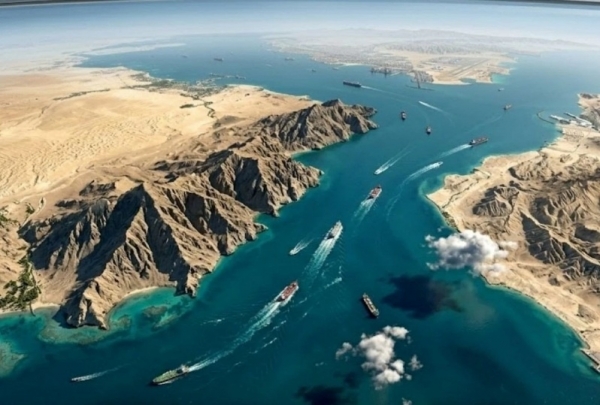
Over 12 Million Barrels of Oil Transit Strait of Hormuz: Sign of Recovery Following US-Iran Agreement
The Strait of Hormuz, the world's vital maritime artery, is witnessing a significant recovery as over 12 million barrels of oil have passed through the region since shipping companies began resuming operations. This development comes amid a framework agreement between the United States and Iran aimed at easing tensions, paving the way for more stable energy trade.
The Strategic Importance of the Strait of Hormuz
The Strait of Hormuz is a narrow strait between the Gulf of Oman and the Persian Gulf, connecting the Arabian Sea to the Persian Gulf. It is the only sea passage to the Persian Gulf, which contains approximately 40% of the world's seaborne oil shipments and 20% of global oil demand. The strait's strategic significance cannot be overstated, as any disruption to shipping through this narrow waterway would have immediate and profound effects on global energy markets.
| Parameter | Value |
|---|---|
| Minimum width | 21 nautical miles (39 km) |
| Daily oil transportation volume | 17-20 million barrels |
| Global oil percentage | 40% |
| Dependent countries | China, Japan, South Korea, India |
The US-Iran Agreement and Its Impact on Oil Transportation
The framework agreement between the United States and Iran, reached after months of tensions, has opened the door for resuming oil transportation through the Strait of Hormuz. The agreement focuses on reducing sanctions and creating conditions for more normal energy trade. While not a comprehensive final accord, this breakthrough has already had tangible effects on global shipping patterns.
Major global shipping companies like Maersk, CMA CGM, and COSCO have begun adjusting schedules and resuming routes through the Strait of Hormuz following positive signals from the agreement. This has led to a stable return of oil flow, with over 12 million barrels of oil transported through the area in recent days. The resumption of these routes represents a significant shift from the previous period when many vessels opted to take longer, more expensive routes to avoid potential security risks.
Impact on the Global Energy Market
The restoration of stability in the Strait of Hormuz is of significant importance to the global energy market:
- Oil price stabilization: The resumption of transportation through the Strait of Hormuz has helped stabilize oil prices, which had fluctuated significantly during the period of US-Iran tensions. The Brent crude benchmark, which had experienced volatility of around 10-15% during peak tensions, has now returned to more predictable trading patterns.
- Ensuring supply for Asian countries: Asian nations such as China, Japan, and South Korea, the world's largest oil importers, will have more stable supplies. These countries, which together import over 15 million barrels per day, are particularly sensitive to disruptions in the Strait of Hormuz.
- Global economic growth: Stable oil prices will support global economic growth, reducing the burden of energy costs for developing economies. The International Energy Agency estimates that every $10 per barrel decrease in oil prices can increase global GDP by approximately 0.2%.
| Stakeholder | Main Impact | Forecast |
|---|---|---|
| Oil producers | Increased exports, revenue | 5-7% growth in next quarter |
| Oil importers | Reduced import costs | 2-3% savings in energy costs |
| Shipping companies | Increased shipping revenue | 10-12% revenue growth |
Future Outlook
Although the framework agreement between the United States and Iran brings positive signals, several challenges remain ahead:
- Sustainability of the agreement: The agreement needs to be maintained and effectively implemented to ensure long-term stability. History has shown that diplomatic breakthroughs in the Middle East can be fragile and subject to rapid changes in political dynamics.
- Regional geopolitical factors: Other tensions in the Middle East could still affect maritime security and oil transportation. The ongoing conflicts in Yemen and the broader rivalry between Saudi Arabia and Iran continue to pose potential risks to shipping lanes.
- Global energy transition: The long-term trend of shifting from fossil fuels to renewable energy may reduce the importance of the Strait of Hormuz. However, this transition is expected to take decades, and the strait will remain critical for global energy security in the foreseeable future.
Conclusion
The transit of over 12 million barrels of oil through the Strait of Hormuz is an important sign of the restoration of stability in this strategic maritime route following the US-Iran agreement. This event not only impacts the global energy market but also contributes to economic growth and ensures energy security for countries dependent on imported oil.
However, to maintain long-term stability, continuous diplomatic efforts from all stakeholders and addressing the root causes of regional tensions are necessary. Only then can the Strait of Hormuz continue to serve as the lifeline of global energy trade sustainably.