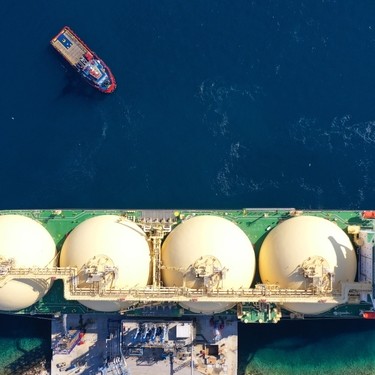
India Receives First LNG Vessel Through Strait of Hormuz Following US-Iran Agreement
On Friday, India welcomed the first liquefied natural gas (LNG) carrier to transit through the Strait of Hormuz since the announcement of an agreement between the United States and Iran over the weekend. This event marks a significant step in restoring a critical global energy transportation route.
The Disha Vessel Arrives at Dahej Port
The LNG carrier named Disha Petronet LNG chartered this LNG vessel, which is managed by an India-led shipping consortium. This development is crucial for India's energy security, a nation heavily dependent on LNG imports. The Disha vessel passed through the Strait of Hormuz on Monday, June 15th, just hours after the United States and Iran announced an agreement to reopen the strait more than 100 days after it was closed. Notably, the Disha vessel loaded LNG from Qatar at Ras Laffan in early March, precisely when the Gulf nation halted LNG production and exports due to the strait's closure and missile attacks on Iran's LNG infrastructure at Ras Laffan. According to Opesh Kumar Sharma, a director in India's Ministry of Ports, Shipping and Waterways, since the Disha vessel passed through the Strait of Hormuz on June 15, no Indian-flagged vessels have departed from the Persian Gulf. "So far, no Indian-flagged vessels have moved out after Disha," the official stated during a press conference on Thursday. Ship owners and operators are awaiting permits to continue their journeys and are not in a hurry to test the strait transit until safety guarantees are in place. Qatar, the world's second-largest LNG exporter, has begun sending LNG vessels back to the Middle East in anticipation of the Strait of Hormuz reopening, allowing the country to resume LNG production and transportation. This development is significant for the global energy market, as Qatar is a primary LNG supplier to many countries, including India. The restoration of Qatar's export activities will help stabilize global LNG supplies. The situation took further developments on Friday morning after Switzerland confirmed that planned US-Iran negotiations in Geneva have been postponed. This announcement creates uncertainty about the full reopening of the Strait of Hormuz and the restoration of commercial shipping activities in the region. The arrival of the Disha vessel in India holds significant importance for the country's and global energy security. India is one of the world's largest LNG markets, and ensuring stable supply is a top priority. The closure of the Strait of Hormuz caused significant disruptions in the global energy supply chain, affecting LNG prices and availability. The reopening of this route will help alleviate global energy market tensions. The arrival of the Disha vessel in India marks a positive step in restoring energy transportation through the Strait of Hormuz. However, the situation remains uncertain, particularly following the announcement of postponed US-Iran negotiations in Geneva. Closely monitoring the situation in the Strait of Hormuz and related diplomatic developments will be crucial for LNG-importing nations like India to ensure energy security and price stability.Important Context
Detailed Information About the Disha Vessel Vessel Name Disha Flag Malta Destination Dahej Port, India Hormuz Transit Date Monday, June 15 Loading Location Ras Laffan, Qatar Loading Time Early March Charterer Petronet LNG Shipping Situation Post-Agreement
Response from Qatar
Latest Diplomatic Developments
Impact on the Energy Sector
Timeline of the Strait of Hormuz Situation Closure Timeframe Over 100 days ago Closure Reasons Regional conflicts, missile attacks US-Iran Agreement Timing Sunday, before Disha's transit Disha's Transit Date Monday, June 15 Current Status One vessel has passed through, others awaiting safety guarantees Future Outlook Pending results of US-Iran negotiations Conclusion