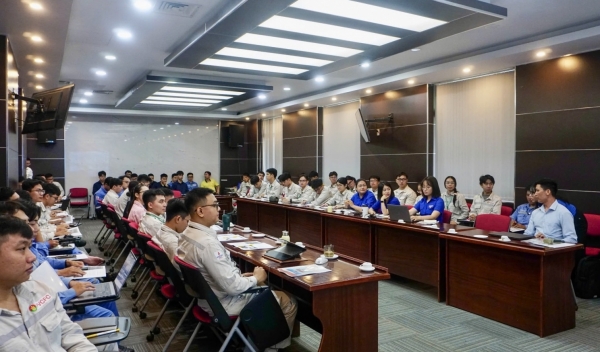
Tuổi trẻ Phân bón Cà Mau Organizes Training Course on Oil and Gas Industry and Energy Transition Trends
In an effort to enhance professional competence and update employees with the latest industry information, particularly for young union members, the Youth Union of Fertilizer Company Ca Mau (PVCFC) recently collaborated with the Ca Mau Fertilizer Plant and Petroleum College (PVCollege) to successfully organize a comprehensive training program titled "The Oil and Gas Industry and Energy Transition Trends." The event took place at the administrative office of the Ca Mau Fertilizer Plant in Khanh An Commune, Ca Mau Province, marking a significant initiative in workforce development within Vietnam's energy sector.
Background and Significance of the Training Program
The oil and gas industry plays a crucial role in Vietnam's economy, contributing significantly to the nation's energy security and industrial development. However, the global energy landscape is undergoing unprecedented transformation with the rise of renewable energy sources and increasing environmental concerns. In this context, equipping industry professionals with up-to-date knowledge about both traditional oil and gas operations and emerging energy transition trends has become imperative.
The collaboration between PVCFC's Youth Union, the Ca Mau Fertilizer Plant, and Petroleum College represents a strategic partnership aimed at addressing these evolving industry demands. This training program specifically targets young professionals who will shape the future of Vietnam's energy sector, preparing them to navigate the challenges and opportunities of the energy transition.
Training Objectives and Curriculum Design
The training program was meticulously designed with several primary objectives:
- To provide in-depth knowledge about the oil and gas industry's operations, technologies, and global significance
- To enhance understanding of current energy transition trends and their implications for the oil and gas sector
- To develop professional skills and competencies among young union members
- To foster critical thinking about the future of energy in Vietnam and globally
The curriculum was structured to balance theoretical knowledge with practical applications, ensuring participants gained both conceptual understanding and applicable skills. The training was delivered through a combination of lectures, case studies, group discussions, and practical exercises to maximize learning outcomes.
Expert Instruction and Course Content
The training was led by Mr. Le Hong Lam, a Master's degree holder and distinguished expert in the oil and gas field with extensive industry experience. His expertise brought valuable real-world insights to the program, bridging academic knowledge with practical industry applications.
The comprehensive course content covered several critical areas:
- A thorough overview of the oil and gas industry in Vietnam, including its history, current status, and future prospects
- Global oil and gas industry trends, market dynamics, and technological innovations
- In-depth analysis of current energy transition trends, including the rise of renewable energy, carbon capture technologies, and decarbonization strategies
- Discussion of challenges and opportunities within the oil and gas sector amid the energy transition
- Practical skills training applicable to daily work in the fertilizer and energy sectors
The Energy Transition: Context and Implications
The training program placed special emphasis on the global energy transition, one of the most significant developments in the energy sector in recent decades. This transition involves a fundamental shift from fossil fuel-based energy systems to renewable and low-carbon alternatives, driven by climate change concerns, technological advancements, and policy changes.
For Vietnam, the energy transition presents both challenges and opportunities. As a country with substantial oil and gas reserves and a growing energy demand, Vietnam must balance its traditional energy resources with the need to develop sustainable energy solutions. The training program provided participants with a comprehensive understanding of these complex dynamics, enabling them to contribute meaningfully to Vietnam's energy strategy.
Key aspects of the energy transition covered in the training included:
| Energy Transition Component | Current Status in Vietnam | Future Outlook |
|---|---|---|
| Renewable Energy | Rapid growth in solar and wind power capacity | Continued expansion with potential for offshore wind |
| Energy Efficiency | Improving but still below regional standards | Significant potential for improvement |
| Carbon Capture | Early stages of development | Growing interest and investment opportunities |
| Electric Vehicles | Emerging market with government support | Rapid growth expected in coming decade |
Participant Feedback and Learning Outcomes
The training program received enthusiastic feedback from participants, who expressed appreciation for the valuable knowledge and insights gained. Many young union members highlighted the relevance of the content to their professional development and the changing landscape of the energy industry.
"This training has provided me with a comprehensive understanding of both the traditional oil and gas operations and the emerging trends in energy transition," commented one participant. "As a young professional in the fertilizer industry, this knowledge will help me contribute more effectively to our company's strategy and adapt to the changing energy landscape."
Key outcomes reported by participants included:
- Enhanced understanding of the oil and gas value chain and its relationship to the fertilizer industry
- Improved awareness of global energy trends and their implications for Vietnam's energy sector
- Development of critical thinking skills to evaluate energy transition opportunities and challenges
- Practical skills applicable to daily work in the energy and fertilizer sectors
- Networking opportunities with industry experts and peers
Impact on Organizational Development and Industry Preparedness
The successful implementation of this training program represents a significant investment in human capital development within PVCFC and the broader energy sector. By equipping young professionals with knowledge about both traditional operations and emerging trends, the organization is better positioned to navigate the energy transition and maintain competitiveness in a changing market.
For the Ca Mau Fertilizer Plant specifically, the training supports operational excellence by enhancing employee understanding of the energy inputs critical to fertilizer production. As energy costs and availability directly impact fertilizer production efficiency, this knowledge contributes to improved operational performance and strategic decision-making.
Moreover, the program aligns with Vietnam's broader energy development strategy, which aims to diversify the energy mix while ensuring energy security. By preparing the next generation of energy professionals with comprehensive knowledge of both traditional and emerging energy technologies, the training contributes to the sustainable development of Vietnam's energy sector.
Future Directions and Continuing Education
The success of this initial training program has paved the way for future educational initiatives within PVCFC and the broader energy sector. Plans are underway to develop advanced training modules that build upon the foundation established in this program, with potential topics including:
- Advanced renewable energy technologies and their applications in industrial settings
- Carbon management strategies for energy-intensive industries
- Digital transformation in the energy sector
- Sustainable practices in fertilizer production
- Leadership development for energy transition
Additionally, the collaboration between PVCFC's Youth Union, the Ca Mau Fertilizer Plant, and Petroleum College is expected to expand, with potential for joint research projects, industry forums, and exchange programs that further enhance professional development in the energy sector.
Conclusion: A Strategic Investment in Vietnam's Energy Future
The training program on "The Oil and Gas Industry and Energy Transition Trends" organized by PVCFC's Youth Union represents a significant step in preparing Vietnam's energy sector for the challenges and opportunities of the future. By providing young professionals with comprehensive knowledge about both traditional operations and emerging trends, the program contributes to the development of a skilled workforce capable of driving innovation and sustainability in the energy sector.
As Vietnam continues to develop its energy strategy amid global climate commitments and economic development goals, initiatives like this training program play a crucial role in ensuring the country's energy security while supporting the transition to a more sustainable energy future. The collaboration between industry stakeholders and educational institutions exemplifies a best practice in workforce development that could serve as a model for other sectors undergoing transformation.
Ultimately, the success of this program demonstrates the importance of continuous learning and adaptation in the rapidly evolving energy landscape. By investing in the knowledge and skills of young professionals, Vietnam is not only enhancing its current industry capabilities but also building the foundation for a sustainable and competitive energy sector in the decades to come.