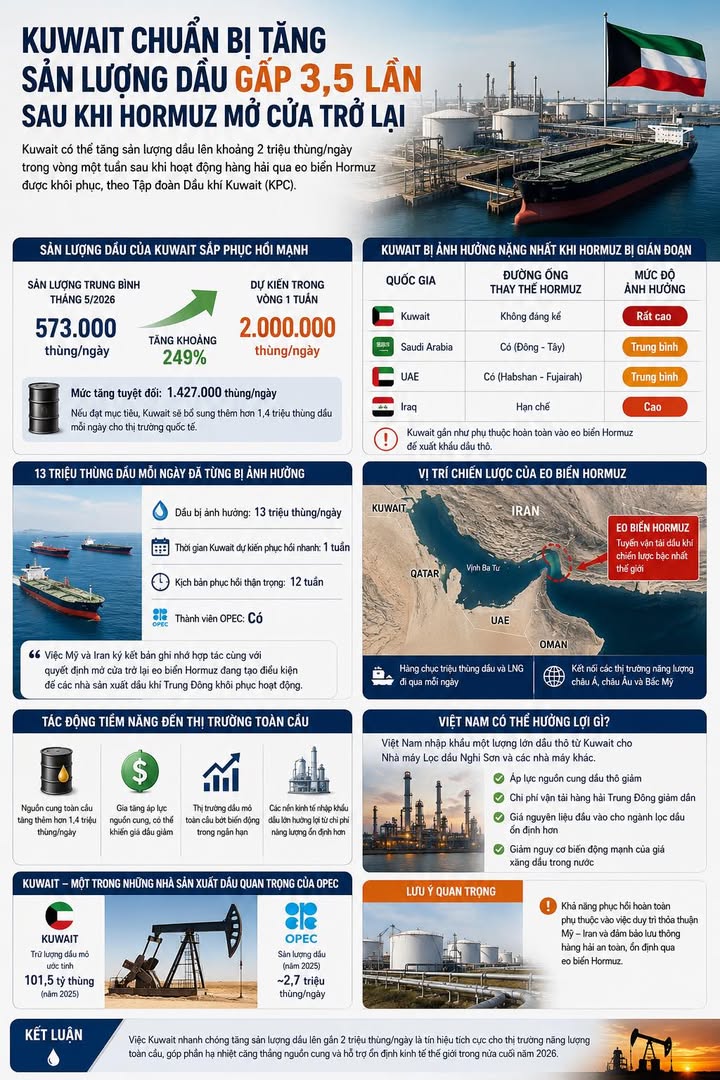
Kuwait Oil Production Set to Triple After Strait of Hormuz Reopening
In a significant development for global energy markets, Kuwait has announced plans to dramatically increase its crude oil production, aiming to raise output from approximately 573,000 barrels per day to 2 million barrels per day within just one week. This remarkable surge comes following the restoration of maritime activities through the strategically vital Strait of Hormuz, which had been disrupted due to geopolitical tensions between the United States and Iran.
The announcement by Kuwait Petroleum Corporation (KPC) leadership marks a potential turning point in the global oil market, which has been grappling with supply constraints since the Hormuz crisis began in February 2026. The planned increase of nearly 1.5 million barrels daily represents more than a 249% jump in Kuwait's production capacity.
Unprecedented Production Increase
Kuwait's planned production leap represents one of the most significant short-term increases by any OPEC member in recent history. The state-owned oil company appears confident in its ability to rapidly scale up operations now that the critical shipping lane has reopened.
| Production Metric | May 2026 Level | Planned New Level |
|---|---|---|
| Daily Oil Production | 573,000 barrels | 2,000,000 barrels |
| Absolute Increase | - | 1,427,000 barrels |
| Percentage Increase | - | +249% |
Visualizing the scale of this recovery:
573,000 barrels/day ██████
2,000,000 barrels/day ████████████████████
This substantial increase means Kuwait is preparing to reintroduce over 1.4 million barrels of oil to global markets daily—a volume sufficient to significantly influence the global supply-demand balance.
Why Kuwait Was Most Severely Affected
Unlike other major Middle Eastern producers such as Saudi Arabia and the United Arab Emirates, Kuwait lacks significant alternative export routes. This geographical vulnerability made it particularly susceptible to Hormuz disruptions.
| Country | Alternative Export Routes |
|---|---|
| Kuwait | Not significant |
| Saudi Arabia | Yes |
| United Arab Emirates | Yes |
When the Strait of Hormuz faced disruptions due to heightened U.S.-Iran tensions, Kuwait was forced to reduce production to below 600,000 barrels per day—a remarkably low level for a key OPEC member with substantial reserves and production capacity.
The Hormuz Crisis Global Impact
The geopolitical tensions that led to Hormuz disruptions had far-reaching consequences for global oil markets. Industry analysts estimate that approximately 13 million barrels of oil per day were affected during the crisis period.
| Impact Metric | Value |
|---|---|
| Affected Oil Volume | 13 million barrels/day |
| Conflict Start Date | February 28, 2026 |
| Expected Recovery Timeframe | 1-12 weeks |
| Primary Country of Concern | Kuwait |
The resolution came through a cooperation agreement between the United States and Iran, which helped restore normal maritime traffic for international oil tankers and cargo vessels.
Benefits for Vietnam and Importing Nations
As one of Kuwait's crude oil import customers, Vietnam stands to benefit from this production recovery. The increased supply may lead to several positive outcomes for the Vietnamese economy:
- More stable oil supply sources
- Reduced pressure on global oil prices
- Lower energy import costs
- Decreased risk of fuel supply chain disruptions
If Kuwait fully restores its production capacity and other Middle Eastern nations accelerate their export activities, the supply shortages that have concerned markets for months could quickly alleviate, potentially stabilizing or even reducing global oil prices.
The Recovery Race Begins
Despite the optimistic outlook, experts remain divided on the pace of recovery. Some analysts suggest Kuwait may require up to 12 weeks to return to maximum production levels seen before the conflict. However, the fact that Kuwait has already begun offering crude oil to Asian customers indicates that the actual recovery process has commenced.
In the context of continued global oil price sensitivity to geopolitical fluctuations, Kuwait's moves are being viewed as a crucial test of the global energy market's stability potential for the latter half of 2026.
The swift restoration of Kuwait's production capacity could mark a significant shift in the global energy landscape, potentially easing inflationary pressures worldwide and providing importing nations like Vietnam with more predictable and affordable energy supplies in the coming months.