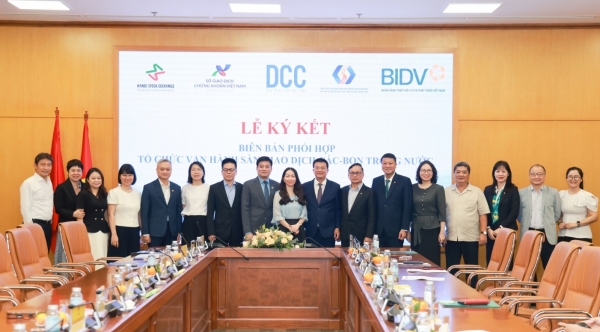
BIDV Partners to Operate Domestic Carbon Trading Platform
On June 22, 2026, in Hanoi, the Joint Stock Commercial Bank for Investment and Development of Vietnam (BIDV) participated in a signing ceremony for a cooperation agreement to organize and operate a domestic carbon trading platform. This event marks a significant development in promoting Vietnam's carbon market and represents a crucial step toward the nation's environmental and economic sustainability goals.
Understanding the Carbon Trading Platform Initiative
The establishment of a domestic carbon trading platform represents Vietnam's commitment to addressing climate change while fostering economic growth. This initiative creates a structured marketplace where carbon credits—representing the right to emit one ton of carbon dioxide—can be bought and sold. By formalizing this market, Vietnam aims to create economic incentives for businesses to reduce their carbon footprint and invest in sustainable practices.
The carbon trading platform will operate under a cap-and-trade system, where the government sets a limit on total emissions (cap) and allows companies to trade emission permits (trade). Companies that can reduce emissions below their allocated limit can sell their excess credits to companies that exceed their limits, creating a financial incentive for emission reductions across the economy.
Objectives and Strategic Benefits
The carbon trading platform initiative serves multiple strategic objectives for Vietnam's economic and environmental development:
- Accelerating Sustainable Development: The platform will contribute significantly to achieving Vietnam's sustainable development goals, aligning with the country's commitments under the Paris Agreement and its National Climate Change Strategy.
- Economic Transformation Opportunities: By creating a new asset class in carbon credits, the platform will unlock innovative business models and investment opportunities in renewable energy, energy efficiency, and other low-carbon technologies.
- International Commitment Fulfillment: The platform will help Vietnam meet its international climate commitments, including the Nationally Determined Contributions (NDCs) pledged under the Paris Agreement, which aim to reduce greenhouse gas emissions by 9% by 2030 (potentially up to 27% with international support).
- Attracting Green Investment: The formal carbon market will enhance Vietnam's attractiveness to international climate finance and green investment, positioning the country as a leader in Southeast Asia's transition to a low-carbon economy.
- Industrial Competitiveness: Early adoption of carbon market mechanisms will help Vietnamese industries prepare for potential future carbon pricing mechanisms and border carbon adjustments that may be implemented by trading partners.
Key Stakeholders and Institutional Framework
The signing ceremony brought together a diverse coalition of stakeholders, reflecting the collaborative approach to developing Vietnam's carbon market. Key participants included:
- Government agencies such as the Ministry of Natural Resources and Environment, Ministry of Industry and Trade, and the State Bank of Vietnam
- International organizations including the World Bank, Asian Development Bank, and UN Development Programme
- Financial institutions and commercial banks beyond BIDV
- Energy and environmental companies from both the public and private sectors
- Representatives from Vietnam's business associations and chambers of commerce
This multi-stakeholder approach ensures that the carbon trading platform will incorporate diverse perspectives and expertise, creating a robust and effective market mechanism that balances environmental objectives with economic development needs.
Implementation Framework and Timeline
The development of Vietnam's carbon trading platform follows a phased approach, with clear milestones and responsibilities:
| Phase | Timeline | Key Activities | Responsible Entities |
|---|---|---|---|
| Foundation | 2026-2027 | Legal framework development, stakeholder engagement, capacity building | Ministry of Natural Resources and Environment, BIDV |
| Piloting | 2027-2029 | Voluntary pilot program with selected sectors, market testing, refinement of mechanisms | BIDV, participating enterprises, international partners |
| Scaling | 2029-2031 | Expansion to additional sectors, development of carbon credit standards, market integration | Regulatory authorities, market operators, financial institutions |
| Full Operation | 2031 onwards | Comprehensive carbon market with mandatory participation, international linkage development | Full market ecosystem |
Market Mechanisms and Operational Structure
The carbon trading platform will be governed by a comprehensive set of rules and mechanisms designed to ensure environmental integrity while providing market efficiency:
- Carbon Credit Standards: The platform will establish clear methodologies for measuring, reporting, and verifying emissions and reductions, ensuring the integrity of carbon credits traded.
- Market Oversight: An independent regulatory body will oversee market operations, prevent fraud and manipulation, and ensure fair and transparent trading practices.
- Financial Infrastructure: BIDV will leverage its financial expertise to develop secure payment systems, settlement mechanisms, and risk management tools for carbon credit transactions.
- Technology Platform: A digital trading platform will facilitate real-time transactions, provide market data, and support compliance requirements.
Economic and Environmental Impact Assessment
The introduction of a domestic carbon trading platform is expected to generate substantial economic and environmental benefits for Vietnam:
| Impact Category | Short-term Effects (2026-2028) | Long-term Effects (2029-2035) |
|---|---|---|
| Economic Growth | New business opportunities in carbon consulting and verification; increased investment in clean technologies | Transformation of high-emission sectors; emergence of new green industries; increased international competitiveness |
| Environmental | Raise awareness of carbon footprint among businesses; establish baseline emissions data | Significant reduction in greenhouse gas emissions; improved air quality; enhanced ecosystem services |
| Financial Sector | Development of specialized carbon finance products; enhanced risk management capabilities | Integration of carbon pricing into mainstream financial products; development of carbon-linked securities |
| International Position | Strengthened relationships with international climate finance institutions |
Challenges and Mitigation Strategies
While the carbon trading platform initiative holds significant promise, several challenges must be addressed to ensure its success:
- Data Accuracy and Verification: Ensuring reliable measurement and reporting of emissions requires robust monitoring systems and third-party verification capabilities. The government plans to invest in measurement technologies and develop standardized protocols.
- Market Liquidity: A new market may initially face liquidity challenges. Strategies to address this include phased implementation starting with voluntary participants and the development of market-maker mechanisms.
- Price Volatility: Carbon prices may experience significant fluctuations, potentially affecting investment planning. The platform will implement price stabilization mechanisms and forward markets to mitigate this risk.
- Equity and Competitiveness: Carbon pricing may disproportionately affect certain sectors and regions. The government will design appropriate allocation mechanisms and support programs to ensure a just transition.
- International Market Integration: As carbon markets develop globally, Vietnam will need to ensure compatibility with international standards and potential linkages to maximize market opportunities.
BIDV's Strategic Role and Commitment
As the lead financial institution in organizing and operating the carbon trading platform, BIDV has demonstrated its commitment to Vietnam's sustainable development agenda. The bank's involvement extends beyond providing financial services to include:
- Developing specialized financial products for carbon trading and green investment
- Building capacity among businesses to participate in the carbon market
- Facilitating international climate finance and technology transfer
- Promoting environmental, social, and governance (ESG) criteria in lending decisions
BIDV's Chairman, Mr. Nguyen Quoc Hung, stated: "The carbon trading platform represents a transformative opportunity for Vietnam's economy. By leveraging our financial expertise and network, BIDV aims to catalyze private investment in sustainable development while helping businesses navigate the transition to a low-carbon economy. This initiative aligns with our core mission to support Vietnam's economic development while addressing global climate challenges."
Conclusion
BIDV's partnership to organize and operate a domestic carbon trading platform marks a pivotal moment in Vietnam's environmental and economic development journey. This initiative not only demonstrates the bank's commitment to sustainable development but also creates new opportunities for domestic businesses to participate in the growing global green economy.
As Vietnam continues to develop its carbon market, the platform will play an increasingly important role in helping the country meet its climate commitments while fostering innovation and competitiveness in key sectors. The successful implementation of this initiative will position Vietnam as a leader in Southeast Asia's transition to a sustainable, low-carbon future.
The carbon trading platform represents more than just a market mechanism—it embodies a fundamental shift in how Vietnam approaches economic development, one that balances growth with environmental stewardship and creates lasting value for current and future generations.