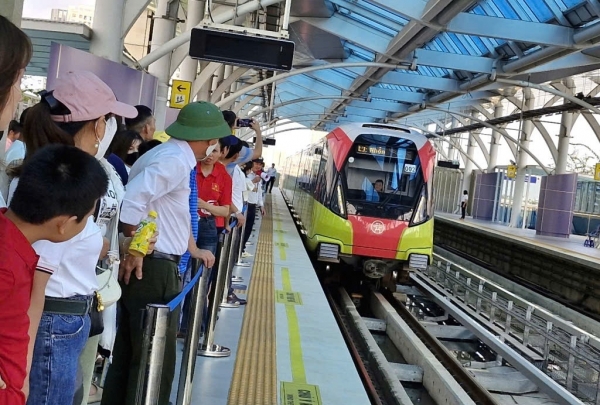
Hanoi Implements Breakthrough Mechanism to Promote Green Transportation for Citizens
The Vietnamese government has recently issued Resolution No. 158/NQ-CP on the action program to implement Politburo Resolution No. 02/NQ-TW on building and developing Hanoi capital in the new era. Among the notable provisions is the orientation to build a modern transportation system, develop urban areas according to a green sustainable model, and implement breakthrough mechanisms to support citizens' transition to green transportation and public transit.
1. Background and Significance of the Program
With a population of over 8 million people and continuously expanding area, Hanoi faces numerous challenges in transportation infrastructure development. Traffic congestion, environmental pollution, and the need for sustainable development urgently require a transition to a green transportation model.
The implementation of Resolution No. 158/NQ-CP not only responds to the Party's development orientation but also represents a strategic step to build Hanoi into a smart, modern, civilized, and environmentally friendly city.
2. Main Content of the Resolution
Resolution No. 158/NQ-CP clearly defines key tasks and solutions to develop Hanoi capital in the new era, with a focus on developing green and sustainable transportation. The main contents include:
- Building a modern, efficient public transportation system
- Developing green transportation, minimizing personal vehicles
- Applying information technology in transportation management and operations
- Completing smart transportation infrastructure, connecting various areas
- Promoting clean energy use in transportation
3. Breakthrough Mechanisms to Support Green Transportation Transition
To realize the goal of transitioning to green transportation, the Resolution proposes the following breakthrough mechanisms:
| Policy | Detailed Content | Implementation Timeline |
|---|---|---|
| Financial Support | Tax incentives, fees, and charges exemption for citizens using electric vehicles, hybrids | 2023-2025 |
| Infrastructure | Building electric charging stations, dedicated lanes for electric vehicles | 2023-2027 |
| Public Transportation | Expanding electric bus networks, subway systems | 2023-2030 |
| Technology | Applying AI, IoT in smart traffic management | 2023-2025 |
4. Benefits for Citizens and Society
The implementation of these breakthrough mechanisms promises to bring many practical benefits:
- Environmental Pollution Reduction: Decreasing emissions from motor vehicles, improving air quality
- Traffic Congestion Mitigation: Promoting public transportation use, reducing personal vehicles
- Cost Savings: Reducing travel expenses for citizens through incentives and higher operational efficiency
- Improved Quality of Life: Cleaner living environment, less noise pollution
- Economic Development: Driving the electric vehicle industry and smart transportation technology sector
5. Challenges and Solutions
Despite numerous benefits, the transition to green transportation still faces several challenges:
| Challenges | Proposed Solutions |
|---|---|
| Inadequate infrastructure | Investing in comprehensive charging station systems, dedicated lanes |
| High electric vehicle prices | Tax incentives, financial support, subscription policies |
| Public mindset | Public awareness campaigns, pilot implementations |
| Imperfect technology | Strengthening research and development, international cooperation |
6. Implementation Plan
According to the plan, Hanoi will implement specific phases:
- Phase 2023-2025: Completing policies, piloting electric bus routes, building charging stations at key points
- Phase 2026-2030: Expanding public transportation networks, increasing green vehicle ratio, completing infrastructure
- Phase 2031-2035: Achieving high green vehicle ratio, efficient smart transportation system operations
7. Expectations and Prospects
The implementation of these breakthrough mechanisms is expected to create significant transformation in Hanoi's transportation system. With coordinated policies, infrastructure, and technology, Hanoi will gradually become a green, sustainable city, reducing dependence on fossil fuels and improving citizens' quality of life.
However, the program's success depends on the collective effort of the entire community, from authorities, businesses, to each citizen. Only with active participation and changing awareness can the green transportation model truly become an inevitable trend for the capital in the new era.