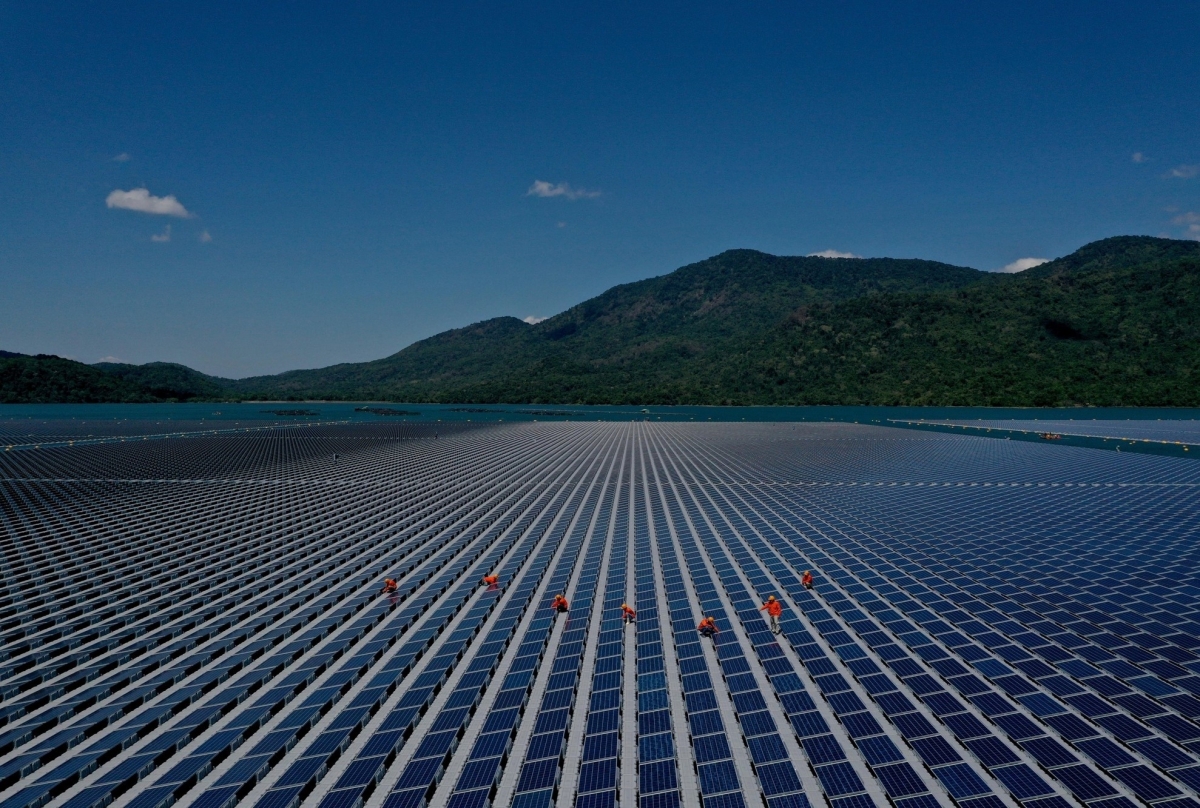
Ground-Mounted and Floating Solar Power with BESS Integration: EVN's Questions and the Path Forward
The ongoing debate surrounding the effectiveness of ground-mounted and floating solar power projects integrated with Battery Energy Storage Systems (BESS) has raised critical questions about how to evaluate investments serving Vietnam's energy transition. As the country accelerates its renewable energy ambitions, understanding the technical, economic, and grid integration implications of these hybrid projects becomes increasingly important.
Background of Solar Power Development in Vietnam
Vietnam has achieved remarkable success in developing renewable energy, particularly solar power, in recent years. According to official statistics, the country's total installed solar power capacity has exceeded 16,000 MW, with ground-mounted solar installations constituting the largest share. Concurrently, floating solar power is gradually emerging as a promising technology with significant potential in coastal areas and large water reservoirs.
This rapid development, however, has presented numerous challenges for the national power system, particularly regarding supply stability during periods when solar generation is unavailable—such as nighttime or adverse weather conditions. These intermittency concerns have highlighted the need for complementary technologies to ensure a reliable energy supply.
The Emergence of BESS in Solar Projects
To address these challenges, many energy developers have integrated Battery Energy Storage Systems (BESS) into their solar power projects. BESS enables the storage of electricity generated during daylight hours for use when needed, effectively mitigating the intermittent nature of solar power and enhancing grid stability.
However, the integration of BESS significantly increases a project's initial capital investment, impacting its financial viability. This factor has become a central point of discussion, prompting Vietnam Electricity (EVN) to request clarification on the actual effectiveness of these integrated projects.
EVN's Perspective on BESS-Integrated Projects
In its proposal, EVN has called for comprehensive studies and evaluations of the actual performance of ground-mounted and floating solar power projects with BESS integration. The utility emphasizes that such assessments should consider technical, economic, and grid-wide impacts to ensure informed decision-making.
From a power system operation perspective, BESS is recognized as a critical solution to address stability challenges as the share of renewable energy in the national electricity mix increases. Nevertheless, the economic evaluation of BESS remains a subject of intense debate among stakeholders.
Costs and Benefits of BESS
The integration of BESS into solar power projects substantially increases initial investment costs. Battery storage systems can account for 20-30% of a project's total capital investment, reducing the price competitiveness of these integrated projects compared to traditional solar installations.
Table 1: Cost Comparison Between Traditional Solar Projects and BESS-Integrated Projects
| Factor | Traditional Solar Projects | BESS-Integrated Solar Projects |
|---|---|---|
| Initial Investment | Lower | 20-30% Higher |
| Operating Costs | Low | Higher due to battery maintenance |
| Financial Returns | Higher | Lower |
| System Stability | Weather-dependent | Enhanced through storage capability |
| Grid Services | Limited | Frequency regulation, voltage support |
Conversely, BESS offers numerous benefits to the power system:
- Provides stable energy supply, particularly during nighttime or when solar irradiance is insufficient
- Helps balance supply and demand within the power system
- Offers ancillary services to the grid such as frequency regulation and voltage support
- Reduces dependence on conventional power sources
- Enables better utilization of renewable energy resources
Impact on Energy Development Policies
The ongoing discussion about the effectiveness of BESS-integrated solar power projects is influencing Vietnam's energy development policies. There is a growing need for appropriate policy mechanisms to encourage the development of renewable energy combined with energy storage, while ensuring economic viability for investors.
EVN has proposed conducting in-depth studies on the actual performance of these projects to inform the development of electricity pricing policies, investment incentive mechanisms, and future power system planning. Such research would provide a solid foundation for evidence-based policymaking in the rapidly evolving energy landscape.
Future Development Prospects
Despite challenges related to costs and effectiveness, the trend of integrating BESS into solar power projects is expected to continue. According to industry experts, as battery storage technology advances and costs decline, BESS will become an indispensable component of renewable energy projects.
In Vietnam, with its substantial potential for both ground-mounted and floating solar power, combined with increasing demand for clean and stable energy, BESS-integrated projects are viewed as a promising direction for the future. The country's favorable geographic conditions, including extensive coastlines and numerous reservoirs, provide ideal locations for floating solar installations with storage capabilities.
Conclusion
The debate over the effectiveness of ground-mounted and floating solar power projects with BESS integration extends beyond EVN's concerns to encompass Vietnam's entire energy transition. A comprehensive evaluation of both the benefits and challenges of BESS is essential to ensure sustainable development of the power sector and achievement of clean energy goals.
Close coordination between regulatory authorities, EVN, energy developers, and technical experts is needed to develop appropriate policies and mechanisms that encourage effective and sustainable development of renewable energy combined with energy storage. As Vietnam continues to pursue its ambitious renewable energy targets, finding the right balance between technological innovation, economic viability, and system reliability will be crucial to the success of its energy transition journey.