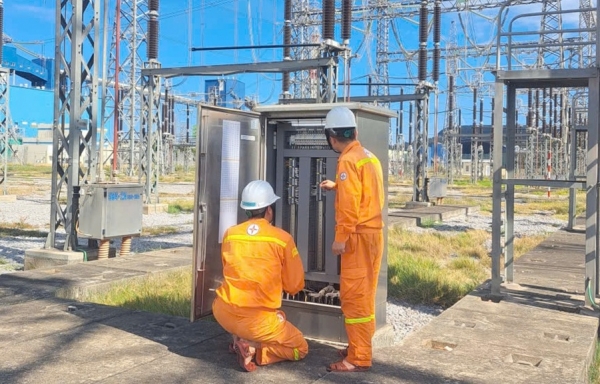
Four 500kV North-South Transmission Lines Supply Nearly 20% of Power to Northern Vietnam During Peak Heatwave
During the recent intense heatwave, the power system in Northern Vietnam continued to record a surge in load demand. To ensure safe and continuous power supply to the Northern region, the four 500kV North-South transmission lines, particularly at the North-Central interface, played a crucial role as vital arteries by transmitting large power capacities from Central and Southern Vietnam to the North.
Background: Heatwave and Rising Electricity Demand
The prolonged hot weather has caused a sharp increase in electricity consumption in Northern Vietnam. Temperatures in many areas exceeded 35°C, with some places reaching 38-40°C, leading to a significant rise in the use of cooling devices such as air conditioners and fans. According to statistics from Vietnam Electricity (EVN), the maximum load of the Northern power system in recent days reached nearly 11,000 MW, an increase of over 15% compared to the average level.
In response to this situation, EVN has mobilized all resources to ensure stable power supply, with optimizing the operation of the national transmission system playing a pivotal role.
The Role of Four 500kV North-South Transmission Lines
The 500kV North-South transmission system is considered a "vital artery" in coordinating power sources between regions. During the recent peak heatwave, the four 500kV transmission lines supplied nearly 20% of the total power to Northern Vietnam, making a significant contribution to ensuring energy security in the region.
Specifically, these 500kV lines operated near their permitted capacity, continuously transmitting large amounts of electricity from power plants in Central and Southern Vietnam to the North, which was facing a supply shortage due to increased demand and some hydropower plants having to reduce output due to drought.
Operation and Coordination Mechanisms
To ensure stable system operation, the National Power System Operation Command (SOE) has enhanced 24/7 monitoring of the entire transmission system. In particular, the 500kV North-South lines have been prioritized for regular inspection and maintenance to eliminate the risk of failures that could disrupt the power supply.
According to Mr. Nguyen Van Loc, Head of the National Power System Operation Department, SOE has implemented flexible coordination measures: "We have increased power transmission from Central and Southern Vietnam to the North through the 500kV transmission lines. At the same time, we have requested power plants in the region to increase production, while adjusting the production schedules of some large industrial plants to reduce pressure on the system."
Impact of Cross-Regional Power Transmission
The mobilization of the four 500kV North-South lines to transmit electricity from Central and Southern Vietnam has yielded significant results. Power sources from thermal power plants and solar power in Central Vietnam and large hydropower plants in Southern Vietnam have been promptly delivered to the North, helping to balance supply and demand and avoiding localized power outages.
Additionally, cross-regional power coordination has helped reduce the load on Northern hydropower plants, which are facing decreasing water levels in reservoirs due to drought. This not only ensures system safety but also contributes to water conservation for production, livelihood, and agriculture.
Challenges and Future Solutions
Although achieving positive results in ensuring power supply in recent times, Vietnam's power system still faces numerous challenges, especially in the context of increasingly complex climate change. The increasing frequency and intensity of heatwaves may continue to put pressure on the power system in the future.
To address these challenges, EVN is implementing many comprehensive solutions:
- Investing in upgrading and modernizing the transmission power system, particularly the 500kV North-South transmission lines
- Developing renewable energy sources, especially solar and wind power, to diversify supply sources
- Improving demand side management, encouraging efficient and economical electricity use
- Perfecting the electricity market mechanism to better coordinate power sources
Operation Data of 500kV North-South Transmission Lines During Peak Heatwave
| Indicator | Value | Unit |
|---|---|---|
| Total transmission capacity | ~2,200 | MW |
| Contribution ratio to Northern region's output | ~20% | % |
| Maximum capacity per line | ~600 | MW |
| Total length of all lines | ~1,200 | km |
| Number of transmission towers | ~3,000 | towers |
Conclusion
The seamless coordination between regions through the 500kV North-South transmission system has proven effective in ensuring national energy security. In the context of climate change and increasing electricity demand, continuing to invest in, upgrade, and operate the transmission system efficiently will be a crucial factor in ensuring stable, safe, and economical power supply for the country's economy.
According to the plan, EVN will continue to invest in upgrading and constructing additional 500kV and 220kV transmission lines to enhance transmission capacity between regions, while developing advanced technological solutions to improve the efficiency of the national power system operation.