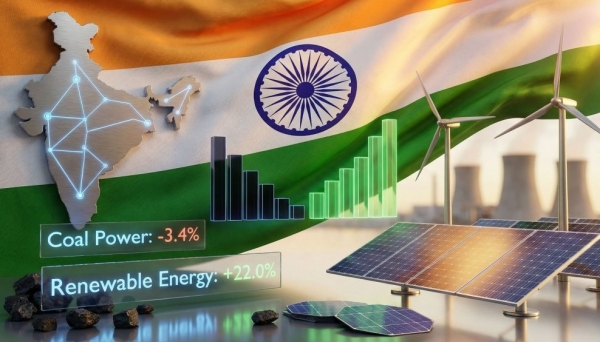
India's Energy Imports Projected to Surge Significantly Over the Next Two Decades
In an era of continuously rising energy demand, India faces a significant challenge in securing adequate energy supplies to fuel its economic development. According to recent forecasts, the country's energy import costs are expected to reach approximately $300 billion annually by the 2050s, despite the rapid advancement of electric vehicles and renewable energy solutions.
Growing Energy Demand in a Developing Economy
As one of the world's fastest-growing major economies, India's energy consumption has been increasing at an unprecedented rate. The combination of population growth, rapid urbanization, and rising living standards has led to a substantial increase in energy consumption across all sectors. Despite ambitious investments in renewable energy, the transition from fossil fuels to green energy sources has proven to be slower than initially anticipated.
India's energy landscape is characterized by a complex mix of traditional biomass, coal, oil, natural gas, and increasingly, renewable sources. The country's economic expansion has been accompanied by a corresponding increase in energy demand, which has outpaced domestic production capabilities, leading to greater reliance on imported energy resources.
The Continued Critical Role of Oil and Gas
Despite global momentum toward cleaner energy alternatives, oil and gas remain indispensable components of India's energy mix. While renewable energy sources are gradually gaining prominence in electricity generation, the dependence on imported oil and gas remains unavoidable. This situation presents a considerable challenge for policymakers attempting to balance the development of renewable energy with continued reliance on traditional energy sources.
The transportation sector, in particular, remains heavily dependent on petroleum products, with limited penetration of electric vehicles compared to other major economies. Industrial processes and residential consumption also continue to rely significantly on natural gas and petroleum derivatives, further entrenching the demand for imported hydrocarbons.
Impact of Electric Vehicles and Renewable Energy Adoption
Although electric vehicles are becoming increasingly prevalent and renewable energy development is accelerating, this transition is not occurring at a pace sufficient to substantially reduce dependence on oil and gas. The demand for energy from fossil fuels is expected to persist for decades to come, particularly in sectors where electrification faces technical or economic challenges.
The Indian government has implemented various initiatives to promote renewable energy adoption, including ambitious targets for solar and wind capacity, incentives for electric vehicles, and grid modernization efforts. However, implementation challenges, infrastructure limitations, and economic considerations have slowed the pace of transformation.
To mitigate the negative impacts of energy import dependence, policies and investments in renewable energy must be significantly strengthened. This includes not only expanding generation capacity but also addressing storage solutions, grid integration, and creating an enabling regulatory environment for clean energy technologies.
Projected Energy Import Costs for India
| Year | Energy Import Cost (Billion USD) | Key Contributing Factors |
|---|---|---|
| 2025 | 150 | Transportation sector demand, industrial growth, limited renewable penetration |
| 2030 | 200 | Economic expansion, partial EV adoption, increasing renewable capacity |
| 2050 | 300 | Continued industrial demand, hard-to-abate sectors, demographic pressures |
Strategic Implications and Policy Recommendations
The projected increase in energy imports presents both economic and strategic challenges for India. The growing import bill contributes to the country's trade deficit and exposes the economy to global price volatility and supply disruptions. Energy security has become a critical concern, with implications for economic stability and geopolitical positioning.
To address these challenges, India should consider implementing a comprehensive energy strategy that includes:
- Diversification of energy sources: Reducing reliance on any single energy source by developing a balanced portfolio of domestic renewables, nuclear energy, and improved fossil fuel utilization.
- Enhanced energy efficiency: Implementing stricter efficiency standards across all sectors to reduce overall energy consumption.
- Strategic reserves: Building strategic petroleum reserves to buffer against supply disruptions and price shocks.
- Technology innovation: Investing in research and development of next-generation energy technologies, including advanced storage solutions and carbon capture.
- International cooperation: Strengthening partnerships with energy-producing and technology-leading nations to secure supply chains and access advanced technologies.
Conclusion
As India navigates the complex challenges of energy security and sustainable development, the country must develop a long-term strategic vision that addresses both immediate needs and future transitions. The shift from fossil fuels to renewable energy requires accelerated efforts and innovative approaches to reduce import dependence and associated economic vulnerabilities.
The projected trajectory of energy imports underscores the importance of decisive policy action, technological innovation, and substantial investment in clean energy infrastructure. By taking proactive measures today, India can transform its energy challenges into opportunities for sustainable economic growth, technological leadership, and environmental stewardship in the decades ahead.