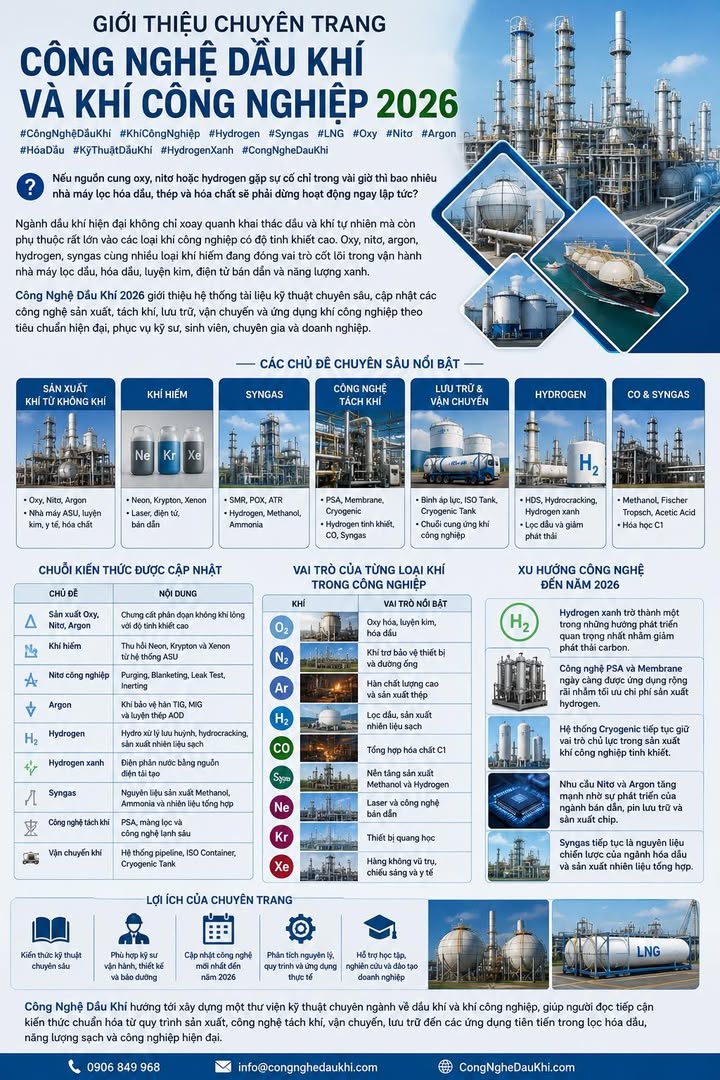
Industrial Gas Technology in Oil & Gas: The Critical Infrastructure of Modern Industry
The modern oil and gas industry extends far beyond mere extraction of crude oil and natural gas. It relies heavily on a complex ecosystem of high-purity industrial gases that serve as the lifeblood of countless manufacturing processes. When oxygen, nitrogen, or hydrogen supplies are disrupted for even a few hours, numerous petroleum refineries, steel plants, and chemical facilities may be forced to halt operations immediately. This critical dependency underscores the importance of specialized technical resources like the Oil and Gas Technology 2026 platform, which provides comprehensive documentation on industrial gas technologies.
The Critical Role of Industrial Gases in Modern Industry
Industrial gases have evolved from simple commodities to strategic components that enable advanced manufacturing processes. The oil and gas sector, in particular, depends on a sophisticated supply chain of gases including oxygen, nitrogen, argon, hydrogen, syngas, and various rare gases. These gases are fundamental to operations across petroleum refining, petrochemical production, metallurgy, semiconductor manufacturing, and green energy development.
The reliability and purity of these gases directly impact production efficiency, product quality, and environmental compliance. As industries increasingly focus on decarbonization and sustainable practices, the role of industrial gases—particularly green hydrogen—has become even more critical in the transition toward cleaner energy systems.
Key Industrial Gases and Their Applications
Each industrial gas serves specific functions across various sectors. Understanding these applications is essential for engineers, operators, and decision-makers in the oil and gas industry.
| Gas Type | Primary Industrial Applications | Industry Impact |
|---|---|---|
| Oxygen | Gasification, steel production, chemical synthesis, medical applications | Essential for combustion processes and oxidation reactions |
| Nitrogen | Inerting, blanketing, leak testing, purging, cryogenic applications | Critical for safety and preventing unwanted reactions |
| Argon | TIG/MIG welding, stainless steel production (AOD process), electronics | Vital for high-quality welding and metallurgical processes |
| Hydrogen | Hydrodesulfurization, hydrocracking, clean fuel production, ammonia synthesis | Key for refining operations and energy transition |
| Carbon Monoxide | Methanol production, Fischer-Tropsch synthesis, acetic acid manufacturing | Foundation of C1 chemical industry |
| Syngas | Methanol production, ammonia synthesis, synthetic fuels | Versatile feedstock for chemical industry |
| Neon | Laser technology, semiconductor manufacturing | Critical for advanced electronics production |
| Krypton | Optical equipment, laser technology, lighting | Specialized applications in high-tech industries |
| Xenon | Aerospace, lighting, medical imaging, anesthesia | Premium applications requiring specialized properties |
Production Technologies for Industrial Gases
The production of industrial gases relies on sophisticated technologies that ensure purity, efficiency, and scalability. Different gases require specialized production methods tailored to their unique properties and industrial requirements.
| Gas Type | Production Method | Key Technology | Purity Level |
|---|---|---|---|
| Oxygen, Nitrogen, Argon | Air Separation Units (ASU) | Cryogenic distillation | 99.5% - 99.999% |
| Hydrogen | Steam Methane Reforming (SMR) | Catalytic reforming | 99.9% - 99.999% |
| Hydrogen | Partial Oxidation (POX) | Thermal oxidation | 95% - 98% |
| Hydrogen | Autothermal Reforming (ATR) | Catalytic autothermal process | 97% - 99% |
| Hydrogen (Green) | Water Electrolysis | PEM or Alkaline electrolysis | 99.9%+ |
| Rare Gases (Ne, Kr, Xe) | Cryogenic extraction | Low-temperature separation | 99.999%+ |
Gas Separation and Purification Technologies
Once produced, industrial gases often require further separation and purification to meet specific application requirements. Several technologies have been developed to achieve the desired purity levels efficiently.
| Technology | Principle | Applications | Advantages |
|---|---|---|---|
| Pressure Swing Adsorption (PSA) | Selective adsorption under pressure variations | Hydrogen purification, oxygen/nitrogen production | Lower energy consumption, modular design |
| Membrane Separation | Differential permeation through selective membranes | Gas drying, nitrogen generation, hydrogen recovery | Compact size, continuous operation, low maintenance |
| Cryogenic Separation | Low-temperature distillation | Air separation, LNG production, rare gas extraction | High purity, large-scale production |
| Temperature Swing Adsorption (TSA) | Selective adsorption with temperature variations | Gas drying, CO2 removal | Effective for moisture removal, high-capacity adsorbents |
Storage and Transportation of Industrial Gases
The efficient storage and transportation of industrial gases are critical components of the supply chain, ensuring reliable delivery to end-users while maintaining product quality and safety.
| Storage Method | Gas Types | Capacity Range | Applications |
|---|---|---|---|
| Pressure Vessels | Gaseous O2, N2, Ar, H2 | 10 - 10,000 m³ | On-site storage, smaller industrial users |
| ISO Tanks | Liquefied gases, dissolved gases | 20 - 40 m³ | Transportation, bulk delivery |
| Cryogenic Tanks | Liquefied O2, N2, Ar, CH4 | 100 - 200,000 m³ | Large-scale storage, peak shaving |
| Pipelines | Gaseous H2, N2, O2, CO2 | Continuous flow | Industrial gas networks, large consumers |
Future Trends in Industrial Gas Technology until 2026
The industrial gas sector is evolving rapidly in response to global sustainability initiatives, technological advancements, and changing industrial demands. Several key trends are shaping the industry's trajectory toward 2026.
Green Hydrogen Revolution
Green hydrogen production through electrolysis using renewable electricity is emerging as one of the most significant developments in industrial gas technology. By 2026, electrolyzer capacity is expected to increase substantially, driven by declining renewable energy costs and growing demand for clean hydrogen in refining, ammonia production, and transportation.
The integration of green hydrogen with existing infrastructure poses both challenges and opportunities. Innovations in hydrogen storage, transportation, and utilization technologies will be critical to scaling up the hydrogen economy.
Advanced Separation Technologies
Pressure Swing Adsorption (PSA) and membrane technologies are becoming increasingly sophisticated, offering improved efficiency, selectivity, and cost-effectiveness. These technologies are particularly important for hydrogen purification and carbon capture applications.
By 2026, we can expect to see next-generation adsorbents with higher capacities and selectivities, as well as advanced membrane materials with enhanced separation properties. These advancements will enable more efficient production of high-purity gases while reducing energy consumption.
Cryogenic Technology Enhancements
Cryogenic separation will continue to play a dominant role in producing high-purity industrial gases, particularly oxygen, nitrogen, and argon. Innovations in heat exchanger design, process optimization, and energy integration are improving the efficiency and economics of air separation units.
Additionally, cryogenic technologies are being adapted for new applications, including the recovery of rare gases (neon, krypton, xenon) from air separation units, which are increasingly valuable for high-tech industries.
Nitrogen and Argon Expansion
The demand for nitrogen and argon is growing significantly, driven by expansion in the semiconductor industry, battery manufacturing, and food processing. By 2026, the semiconductor sector alone is expected to account for a substantial portion of industrial gas consumption, particularly high-purity nitrogen and argon.
This growth is creating new challenges in gas supply, purity requirements, and delivery systems. Air separation producers are investing in capacity expansion and purity enhancement technologies to meet these evolving demands.
Syngas and Chemical Feedstocks
Syngas (synthesis gas) remains a critical feedstock for the chemical industry, particularly for methanol production, ammonia synthesis, and Fischer-Tropsch processes. The development of more efficient syngas production methods, including autothermal reforming and plasma gasification, will be important trends through 2026.
Additionally, the integration of carbon capture technologies with syngas production is enabling the development of more sustainable chemical processes, reducing the carbon footprint of methanol and ammonia production.
Benefits of the Oil and Gas Technology 2026 Platform
The Oil and Gas Technology 2026 platform serves as a comprehensive technical resource for professionals in the industrial gas sector. Its benefits include:
- Technical Depth: In-depth documentation on production technologies, separation methods, and industrial applications
- Targeted Content: Resources specifically designed for engineers, operators, designers, and maintenance professionals
- Current Information: Regular updates on the latest technologies and industry developments through 2026
- Practical Analysis: Detailed examination of principles, processes, and real-world applications
- Educational Support: Resources for learning, research, and corporate training programs
Comprehensive Technical Coverage
The platform covers the entire industrial gas value chain, from production and separation to storage, transportation, and utilization. Key focus areas include:
| Technical Area | Key Topics Covered |
|---|---|
| Air Separation Technology | Cryogenic distillation, high-purity oxygen/nitrogen/argon production, rare gas recovery |
| Hydrogen Technologies | Steam methane reforming, electrolysis, hydrodesulfurization, hydrocracking, green hydrogen |
| Gas Separation Methods | PSA, membrane separation, cryogenic separation, temperature swing adsorption |
| Industrial Applications | Petroleum refining, chemical production, metallurgy, electronics, healthcare, food processing |
Industry-Specific Knowledge
The platform provides specialized content tailored to different industry segments:
- Petroleum Refining: Hydrogen applications in hydroprocessing, sulfur removal, and fuel upgrading
- Chemical Industry: Syngas utilization, methanol and ammonia production, Fischer-Tropsch synthesis
- Metallurgy: Oxygen in steelmaking, argon in stainless steel production, nitrogen in heat treatment
- Electronics: High-purity gases for semiconductor manufacturing, rare gas applications in lasers
- Healthcare: Medical oxygen, nitrous oxide, anesthetic gases, and cryogenic applications
Conclusion
As industries continue to evolve and face new challenges, the importance of industrial gases in the oil and gas sector will only grow. The Oil and Gas Technology 2026 platform serves as an essential resource for professionals navigating this complex and rapidly changing landscape.
By 2026, we expect to see significant advancements in green hydrogen production, gas separation technologies, and industrial gas applications across various sectors. The platform's comprehensive documentation and technical insights will be invaluable for engineers, operators, and decision-makers working to implement these innovations efficiently and effectively.
In an industry where reliability, purity, and efficiency are paramount, having access to specialized technical knowledge can make the difference between operational success and costly failures. The Oil and Gas Technology 2026 platform aims to bridge this knowledge gap, providing professionals with the information they need to stay at the forefront of industrial gas technology.