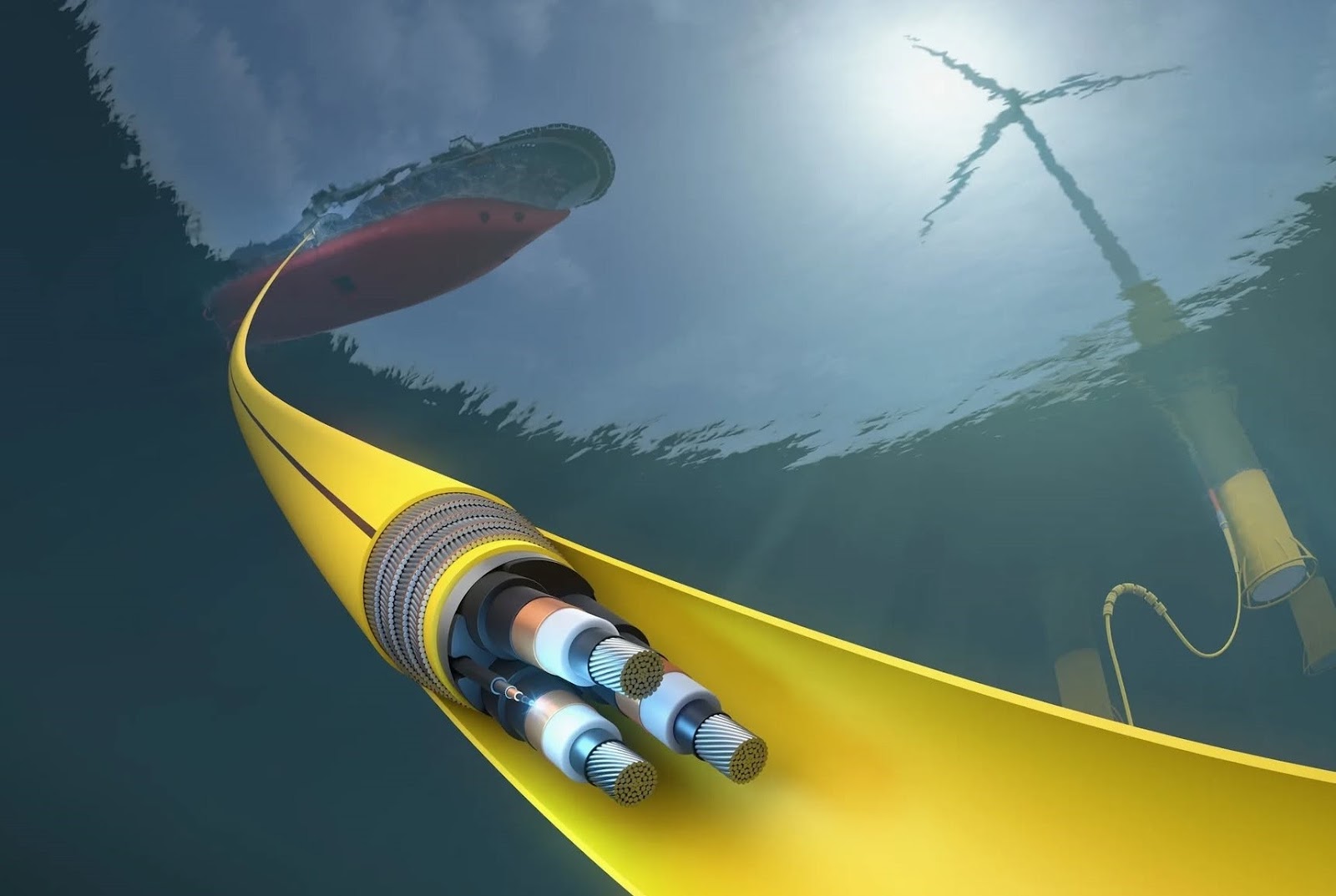
Offshore Wind Power Development: Why Submarine Cables Have Become Strategic Infrastructure
In the context of Vietnam's new wave of investment in renewable energy and offshore wind power, the narrative is no longer solely focused on power generation capacity or investment scale. One issue increasingly drawing attention from experts and enterprises is the development of a sufficiently robust technical ecosystem to ensure long-term operational efficiency for offshore energy projects.
The Breakthrough of Offshore Wind Power in Vietnam
Vietnam is witnessing the rapid development of offshore wind power projects, marking a significant transition in the national energy strategy. With an estimated offshore wind energy potential of approximately 475 GW, particularly in the area from Binh Thuan to Ca Mau, Vietnam possesses ideal conditions for large-scale offshore wind development.
According to reports from the Department of Electricity and Renewable Energy (Ministry of Industry and Trade), the total approved wind power capacity in Vietnam has reached nearly 6,000 MW, with offshore wind power accounting for an increasing proportion. It is projected that by 2030, offshore wind power will contribute about 10-15% of the country's total electricity output.
Transmission Infrastructure Challenges
However, the rapid development of offshore wind power presents significant challenges for transmission infrastructure. Offshore wind turbines are typically located tens to hundreds of kilometers from the coast, requiring efficient transmission systems to deliver electricity to the mainland.
This is precisely where submarine power cables play a pivotal role, becoming an indispensable component in offshore wind power systems.
The Strategic Role of Submarine Power Cables
Submarine power cables are not merely technical components but have evolved into strategic infrastructure that determines the success or failure of offshore wind power projects. This role is manifested in multiple aspects:
- Efficient Power Transmission: Submarine power cables enable the transmission of electricity from offshore wind turbines to the mainland with minimal energy loss
- Ensuring Reliability: Submarine cable systems are designed to operate stably in the harsh conditions of the marine environment
- Grid Interconnection: Create a bridge between wind turbine clusters and the national power grid
- Supporting Renewable Energy Integration: Help efficiently integrate other renewable energy sources into the power grid
Submarine Cable Technology for Offshore Wind
The types of submarine cables used in offshore wind power projects typically include:
| Cable Type | Characteristics | Application |
|---|---|---|
| AC (Alternating Current) Cables | Transmit alternating current, suitable for medium distances | Connection between wind turbine clusters |
| DC (Direct Current) Cables | Transmit direct current, efficient for long distances | Transmission from sea to land |
| Export Cables | Withstand deep-sea water pressure | Resist marine environment corrosion |
Export cables must also ensure mechanical durability and maintain performance under various marine conditions.
Building a Technical Ecosystem for Offshore Wind Power
To develop offshore wind power sustainably, Vietnam needs to build a comprehensive technical ecosystem that not only focuses on submarine cables but includes many other elements:
Submarine Cable Supply Chain
Developing the domestic submarine cable manufacturing industry is a crucial factor to reduce dependence on imports and lower costs. However, Vietnam still heavily relies on international suppliers such as Prysmian (Italy), Nexans (France), and ABB (Sweden).
| Supplier | Market Share | Strengths |
|---|---|---|
| Prysmian | ~35% | High technology, diverse product range |
| Nexans | ~25% | International experience, after-sales service |
| ABB | ~20% | Advanced grid technology solutions |
Challenges and Solutions
The implementation of submarine cable systems for offshore wind power in Vietnam faces numerous challenges:
- High Investment Costs: Installation costs of submarine cables constitute a significant portion of total project capital
- Technical Complexity: Requires advanced technology and implementation experience
- Environmental Risks: Potential impact on marine ecosystems during installation and operation
- Lack of Technical Experts: Limited availability of highly skilled human resources
To address these challenges, proposed solutions include:
- Developing supportive policies for the marine energy industry's auxiliary sectors
- Enhancing international cooperation for technology transfer and workforce training
- Developing innovative financial models to reduce investment pressure
- Establishing a comprehensive legal framework for offshore wind power projects
Development Prospects
According to experts, the market for submarine cables for offshore wind power in Vietnam has strong growth potential in the coming decade. By 2030, demand for submarine cables for offshore wind power could reach approximately 2,000-3,000 km, with total investment valued at billions of USD.
To realize this potential, Vietnam needs a balanced development strategy combining foreign investment attraction and domestic industrial capacity building. Establishing a domestic submarine cable manufacturing industry will not only reduce costs but also create added value and high-quality employment opportunities.
Conclusion
Submarine power cables have become and are continuing to be strategic infrastructure, playing a decisive role in the success of offshore wind power projects in Vietnam. For sustainable development, substantial investment in the technical ecosystem is required, from research, development, and manufacturing to installation and operation.
The development of offshore wind power not only brings economic benefits but also contributes significantly to the goal of developing clean energy, reducing carbon emissions, and fulfilling commitments made at COP26. With great potential and appropriate attention from management levels, offshore wind power promises to become an important pillar in Vietnam's energy structure in the future.