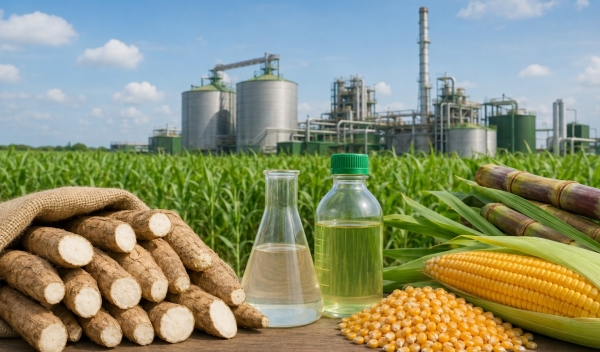
Driving Technology Investment to Diversify Ethanol Production Raw Materials
In an era of escalating demand for biofuels, ensuring a stable supply of raw materials for ethanol production has emerged as a critical challenge for industry stakeholders and experts. Cassava, currently the primary raw material, faces potential shortages, raising significant concerns about long-term energy security and sustainability in the biofuel sector.
Current Challenges in Raw Material Supply
Recent research indicates that the cassava supply chain is under increasing pressure from multiple fronts. Climate change has disrupted traditional farming cycles, leading to unpredictable yields and harvest quality. Additionally, emerging plant diseases and pests have compromised crop health in several key production regions. Furthermore, cassava now faces stiff competition from other high-value agricultural crops, which offer more attractive returns for farmers, creating a resource allocation dilemma in agricultural communities.
The cumulative effect of these challenges has resulted in a noticeable decline in cassava availability for ethanol production. This shortage not only threatens production targets but also creates volatility in the domestic biofuel market, potentially undermining Vietnam's ambitious renewable energy goals.
Technology Investment and Raw Material Diversification Strategies
To address these challenges, industry experts strongly advocate for increased investment in technological innovation aimed at diversifying the raw material base for ethanol production. This strategic approach offers multiple benefits, including enhanced operational efficiency for enterprises and improved long-term energy security for the nation.
The diversification strategy encompasses several key components: developing conversion technologies for alternative feedstocks, optimizing production processes, and creating integrated supply chains that can leverage multiple raw material sources based on seasonal availability and regional strengths.
| Factor | Current Status | Proposed Solutions |
|---|---|---|
| Primary Raw Material | Cassava | Diversification with sugarcane, corn, and agricultural by-products |
| Supply Risk | High | Investment in advanced production technologies |
| Technological Innovation | Limited | Encouraged research and development initiatives |
| Energy Security | Risk of imbalance | Ensure stable supply from multiple sources |
Benefits of Strategic Technology Investment
The implementation of a technology-driven diversification strategy offers numerous advantages for the ethanol industry and the broader energy sector:
- Enhanced Competitiveness: Investment in new technologies improves production efficiency and reduces operational costs, making ethanol production more economically viable in the marketplace.
- Environmental Protection: Diversification of raw materials reduces pressure on single natural resources, promotes sustainable agricultural practices, and minimizes the environmental footprint of biofuel production.
- Energy Security Assurance: A stable supply chain from multiple sources prevents production disruptions and reduces vulnerability to market fluctuations or climate-related supply shocks.
- Sustainable Development Promotion: This approach benefits not only enterprises but also contributes to rural development, job creation, and environmental conservation, creating a holistic ecosystem for sustainable growth.
Technological Solutions for Diversification
Several technological innovations are particularly promising for ethanol production diversification. Advanced enzymatic processes can efficiently convert various starch-based materials into fermentable sugars, expanding the range of viable feedstocks. Meanwhile, improvements in fermentation technology allow for more efficient conversion of sugars into ethanol across different raw material types.
Lignocellulosic ethanol technology represents another frontier, enabling the use of non-food biomass such as agricultural residues, energy crops, and forestry by-products. This technology significantly broadens the raw material base while addressing concerns about food-versus-fuel competition.
Additionally, integrated biorefinery approaches that co-produce ethanol with other valuable chemicals from the same feedstock can improve overall economic viability and resource utilization efficiency.
Implementation Challenges and Pathways Forward
Despite the clear benefits, implementing a diversified ethanol production strategy presents several challenges. Initial capital investment requirements can be substantial, particularly for new technologies and processing facilities. Technical expertise must be developed to operate and maintain advanced systems. Furthermore, establishing reliable supply chains for multiple feedstocks requires coordination among various stakeholders across the agricultural and industrial sectors.
To overcome these obstacles, a multi-pronged approach is necessary. Public-private partnerships can help share the financial burden of technology development and deployment. Government incentives, including tax breaks and research grants, can stimulate innovation and adoption. Educational programs can build the human capital needed to support the transition to more diversified production systems.
International Perspectives and Best Practices
Globally, several countries have successfully implemented ethanol production diversification strategies. Brazil, a biofuel leader, has developed a robust system utilizing both sugarcane and corn as primary feedstocks, with increasing investment in cellulosic technologies. The United States has established a comprehensive framework supporting ethanol production from multiple sources, including corn, sorghum, and emerging cellulosic feedstocks.
These international experiences offer valuable lessons for Vietnam, including the importance of supportive policy frameworks, long-term planning perspectives, and continuous technological innovation. Learning from both successes and challenges in other markets can help Vietnam develop a more effective and efficient diversification strategy tailored to its specific context and resources.
Conclusion: A Strategic Imperative for Sustainable Development
In the current global energy transition context, investing in technology and diversifying raw materials for ethanol production is not merely an option but a strategic imperative for Vietnam's biofuel industry. This approach addresses immediate supply challenges while positioning the sector for long-term sustainability and competitiveness.
Industry leaders, policymakers, and research institutions must collaborate to realize this vision. The transition to diversified ethanol production represents a fundamental shift in how Vietnam approaches biofuel development—one that balances economic, environmental, and social considerations while ensuring energy security for future generations.
By embracing technological innovation and strategic diversification, Vietnam can establish itself as a leader in sustainable biofuel production, contributing both to domestic energy security and global efforts to combat climate change through renewable energy solutions.