## Global Energy Security at Risk as Vessel Attack in World's Most Strategic Maritime Chokepoint
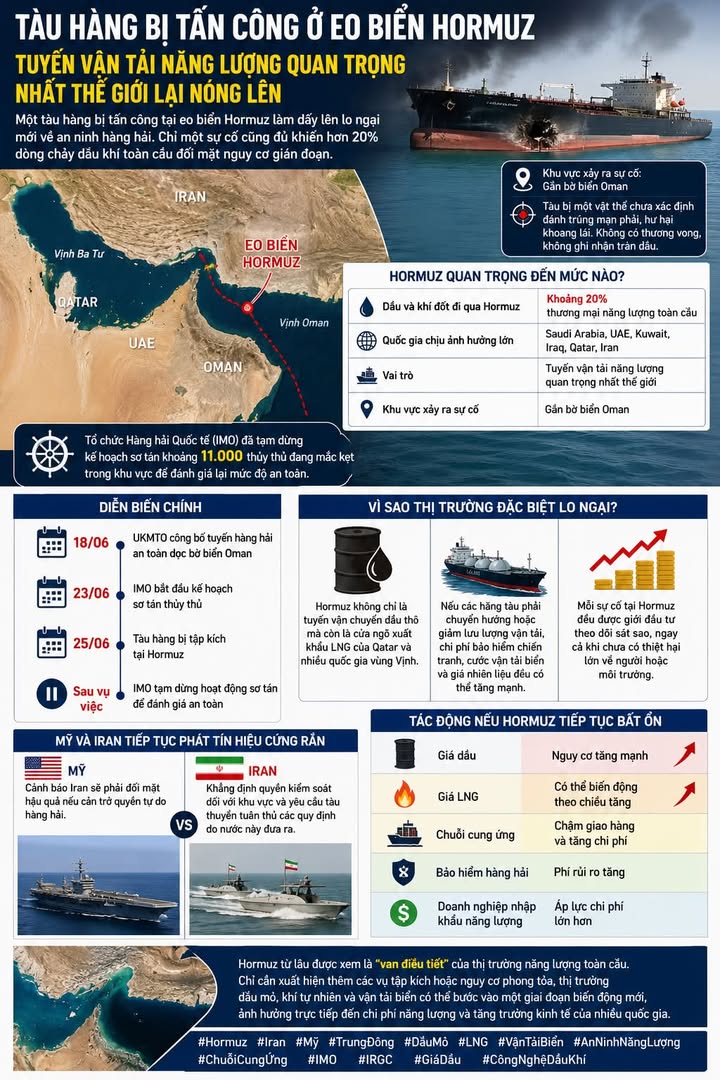
In a development sending shockwaves through global energy markets, a commercial vessel came under attack in the Strait of Hormuz, the world's most critical maritime energy transit route. The incident has reignited concerns about the vulnerability of this strategic waterway, through which approximately 20% of global energy commerce flows. As tensions escalate, international stakeholders are bracing for potential disruptions that could ripple through global energy markets and supply chains.
### The Attack: What Happened
According to security sources, the vessel sustained damage to its starboard side after being struck by an unidentified object while navigating near the coast of Oman. The impact occurred in the navigational bridge area, though fortunately, no casualties were reported and no oil spill was detected.
Eyewitness accounts and preliminary assessments suggest the attack may have been carried out by an unmanned aerial vehicle (UAV), highlighting the evolving nature of maritime security threats in the region. The incident occurred just hours after Iran's Islamic Revolutionary Guard Corps (IRGC) announced that all vessels must comply with newly designated maritime routes and warned of consequences for non-compliance.
In response to the deteriorating security situation, the International Maritime Organization (IMO) has temporarily suspended its plans to evacuate approximately 11,000 seafarers who have been stranded in the region. This decision underscores the rapidly escalating risks to maritime safety in one of the world's busiest shipping lanes.
### The Indispensable Strait of Hormuz
The strategic importance of the Strait of Hormuz cannot be overstated. This narrow waterway serves as the primary conduit for energy exports from major Middle Eastern producers to global markets. Its significance is reflected in the following data:
| Metric | Value |
|--------|-------|
| Global energy commerce passing through | Approximately 20% |
| Major oil exporters dependent on the route | Saudi Arabia, UAE, Kuwait, Iraq, Qatar, Iran |
| Global oil consumption served | Roughly one-third |
| LNG exports through the strait | Qatar's primary export route |
The strait connects the Persian Gulf with the Gulf of Oman and the Arabian Sea, providing access to international markets for oil and liquefied natural gas (LNG) from the region's most significant energy producers. Any disruption to this transit route immediately threatens global energy security and economic stability.
### Timeline of Escalating Tensions
The recent attack did not occur in isolation but represents the latest escalation in a series of concerning developments in the region:
| Date | Event |
|------|-------|
| June 18 | UKMTO (United Kingdom Maritime Trade Operations) announces safe shipping lanes near Oman's coast |
| June 23 | IMO begins planning for evacuation of approximately 11,000 stranded seafarers |
| June 25 | Commercial vessel comes under attack in the Strait of Hormuz |
| Post-attack | IMO suspits evacuation plans to reassess safety conditions |
This timeline reveals a rapidly deteriorating security environment that has prompted international maritime authorities to reconsider operations in the region, potentially leading to increased insurance costs and rerouting of vessels.
### Why Markets Are Particularly Concerned
The market's heightened vigilance regarding the Strait of Hormuz stems from several critical factors beyond the immediate disruption to vessel traffic:
1. **Dual Commodities at Risk**: The strait serves not only as a transit route for crude oil but also as the primary export gateway for LNG from Qatar and other Gulf producers. This dual significance means disruptions could impact both oil and natural gas markets simultaneously.
2. **Insurance and Freight Implications**: Any sustained instability in the region would likely trigger significant increases in war insurance premiums, higher freight rates, and elevated bunker fuel costs. These additional expenses would eventually be passed on to consumers through higher energy prices.
3. **Supply Chain Vulnerabilities**: The just-in-time nature of modern global supply chains means even relatively brief disruptions can have cascading effects on industries worldwide, from manufacturing to retail.
4. **Geopolitical Signaling**: Each incident in the Strait of Hormuz represents more than a localized security issue; it serves as a geopolitical signal that can influence market sentiment and trigger preemptive price adjustments.
### Geopolitical Posturing: US-Iran Tensions
The incident occurs against a backdrop of heightened tensions between the United States and Iran. Washington has consistently warned Tehran against obstructing freedom of navigation in international waterways, with officials stating that Iran would face consequences for such actions.
In contrast, Iranian authorities continue to assert their sovereignty over adjacent waters and insist that all vessels comply with maritime regulations they have established. The fundamental disagreement over navigation rights and regional influence remains unresolved, ensuring that the potential for confrontation persists.
This geopolitical standoff creates an environment of uncertainty that markets dislike, often leading to risk premia being built into energy prices even before actual disruptions occur.
### Potential Consequences of Continued Instability
Should the security situation in the Strait of Hormuz deteriorate further, the global economy could face several significant challenges:
| Economic Sector | Potential Impact |
|-----------------|------------------|
| Energy Prices | Sharp increases in crude oil and LNG prices |
| Transportation | Higher shipping costs and potential route diversification |
| Insurance | Elevated war risk premiums for vessels transiting the region |
| Manufacturing | Increased production costs due to higher energy prices |
| Consumer Spending | Reduced disposable income as energy costs rise |
| Global Growth | Potential slowdown in economic activity worldwide |
The Strait of Hormuz has long been described as the "global energy thermostat." Any additional attacks or threats of blockade could push oil markets into a new phase of volatility, directly impacting energy costs and economic growth across multiple nations. Even the perception of increased risk can trigger market reactions, as demonstrated by the price movements following the recent incident.
### Conclusion: A Critical Juncture for Global Energy Security
The attack on a commercial vessel in the Strait of Hormuz serves as a stark reminder of the vulnerabilities inherent in global energy infrastructure. As the world transitions through various energy paradigms, the continued importance of this strategic chokepoint remains undeniable.
International stakeholders, including energy producers, consumers, shipping companies, and insurance providers, are now facing critical decisions about risk management and route optimization. The IMO's temporary suspension of evacuation plans underscores the severity of the current situation and the need for coordinated international responses.
In the coming weeks, all eyes will be on the Strait of Hormuz as markets assess whether this incident represents an isolated occurrence or the beginning of a more sustained period of instability. The answer could have profound implications for global energy security and economic stability in the months and years ahead.