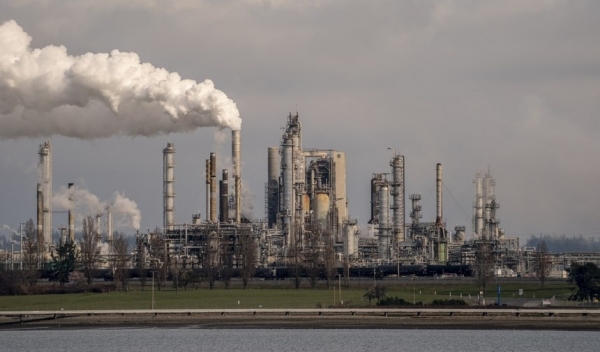
US Diesel Refining Industry Continues to Benefit Amid Market Volatility
In the context of continued complex developments in the global energy market, the US diesel refining industry is witnessing a significant wave of profits as the price spread between crude oil and diesel futures reached its highest level in three weeks. This increase in profit margins is projected to continue in the coming period, even with potential progress in negotiations to end conflicts in the Middle East region.
Price Fluctuations and Impressive Profit Margins
According to market analysts, the price spread between crude oil and diesel futures - an important metric measuring refinery profits - has increased significantly in recent days. The profit margin from refining crude oil into diesel has reached a three-week high, creating favorable conditions for major refining companies in the United States.
This price spread reflects the imbalance between relatively stable crude oil supplies and high demand for diesel products, especially against the backdrop of peak energy use seasons in many countries. The shortage of diesel supply has become a key factor driving diesel prices higher than crude oil prices.
Summary of Diesel Price Fluctuations Over the Past 3 Weeks
| Time Period | Crude Oil Price (USD/barrel) | Diesel Futures Price (USD/gallon) | Price Spread (USD) |
|---|---|---|---|
| 3 weeks ago | 75.20 | 2.45 | 18.30 |
| 2 weeks ago | 76.80 | 2.58 | 19.20 |
| 1 week ago | 77.50 | 2.72 | 20.80 |
| Current | 78.20 | 2.85 | 22.10 |
Causes of Supply Shortage
The diesel market is facing a supply shortage due to various objective and subjective factors. According to industry analysts, the primary factor contributing to this shortage is ongoing geopolitical tensions in the Middle East, particularly the potential resolution of conflicts with Iran.
While reaching a preliminary agreement to end the war with Iran could be seen as positive news for the global energy market, analysts predict that the actual impact on diesel supply will not be immediate. The process of implementing the agreement and Iran's reintegration into the international energy market will take time, while demand for diesel products remains high.
In addition, other factors have contributed to the supply shortage, including:
- Increased demand for transportation and logistics post-COVID-19 pandemic
- Long-term transition from petroleum to other energy sources
- Production capacity limitations at some refineries worldwide
- Energy policies of major governments
Impact on Global Energy Markets
The increase in profit margins in the US diesel refining industry is creating profound effects on the global energy market. Major US refining companies such as ExxonMobil, Chevron, and Phillips 66 are leveraging this situation to increase production and expand market share.
However, this profit increase also comes with challenges. Higher diesel prices are putting pressure on transportation and production costs for many businesses, particularly energy-dependent sectors such as transportation, agriculture, and construction. This could lead to secondary inflation and affect global economic growth.
Comparison of Economic Impact from High Diesel Prices
| Economic Sector | Direct Impact | Indirect Impact | Impact Level |
|---|---|---|---|
| Transportation | Increased fuel costs | Higher freight rates | High |
| Agriculture | Increased machinery costs | Higher agricultural product prices | Medium |
| Construction | Increased equipment costs | Higher construction costs | Medium |
| Manufacturing | Increased operating costs | Higher product prices | Low |
Future Outlook for the Diesel Refining Industry
The future outlook for the US diesel refining industry depends on multiple factors, including negotiations with Iran, global energy demand, and US government policies. Nevertheless, many analysts predict that industry profits will continue to remain at high levels in the short to medium term.
According to reports from energy consulting firms, demand for diesel products is expected to continue increasing in the coming years, particularly in emerging markets and heavy industries. This creates significant opportunities for US refineries to expand capacity and increase production.
However, in the long term, the trend toward clean energy sources and electrification technologies may impact diesel demand. Refining companies need to prepare for this transition by investing in advanced refining technologies and developing higher-value-added products.
Conclusion
The US diesel refining industry is in a favorable development phase with profits reaching a three-week high. The diesel supply shortage is expected to continue in the coming period, creating favorable conditions for refining companies to increase production and expand market share.
Nevertheless, challenges from geopolitical fluctuations, price pressures, and global energy transition trends remain. Producers need long-term strategies to adapt to market changes and maintain competitive positions in the new context.
The development of the diesel refining industry not only affects the energy market but also impacts various other economic sectors and consumer livelihoods. Close monitoring of market developments will help businesses and investors make appropriate decisions in the volatile global energy landscape.