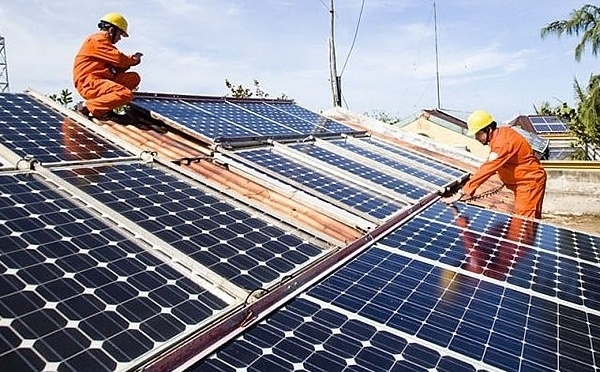
Vietnam Breakthrough Policy: Raises Rooftop Solar Electricity Sales Limit to 50%
Vietnam - The government has recently implemented a new policy allowing the increase of surplus electricity sales from residential rooftop solar systems to a maximum of 50%. This significant adjustment is expected to provide substantial momentum for the self-consumption model while effectively harnessing distributed renewable energy resources amidst continuing electricity demand growth.
Background on Solar Energy Development in Vietnam
In recent years, Vietnam has achieved remarkable success in renewable energy development, particularly in solar power. By the end of 2022, the total solar power capacity connected to the national grid reached approximately 19,500 MW, with rooftop solar accounting for about 9,500 MW of this capacity.
However, previous policies only permitted households and businesses to sell unused surplus electricity back to the national grid at a maximum limit of 20%. This restriction significantly reduced the economic viability of rooftop solar projects and limited the growth of this model.
Details of the New Policy
According to the newly issued decision, households and businesses installing rooftop solar systems will be permitted to sell surplus electricity back to the national grid at a maximum rate of 50% of their total electricity production. This policy took effect on June 1, 2023.
Specifically, households and businesses will be able to:
- Use free of charge the electricity they produce and consume directly
- Sell back to the national grid surplus electricity up to a maximum of 50%
- Benefit from preferential electricity selling prices as per current regulations
- Receive simplified and expedited grid connection support
Comparison of Old and New Policies
| Indicator | Old Policy | New Policy |
|---|---|---|
| Percentage of electricity that can be sold back | Maximum 20% | Maximum 50% |
| Selling electricity price | 7.09 USD/MWh | 7.09 USD/MWh |
| Policy validity period | 20 years | 20 years |
| Grid connection procedures | Complex | Simplified |
Significance and Impact of the Policy
The increase of the surplus electricity sales limit to 50% is being hailed as a breakthrough decision that will generate numerous positive impacts:
- Enhanced Economic Efficiency: Households and businesses will generate additional revenue from selling surplus electricity, reducing the payback period for rooftop solar projects.
- Accelerated Renewable Energy Development: The policy will encourage more households and businesses to invest in rooftop solar systems, contributing to an increased share of renewable energy in Vietnam's electricity generation mix.
- Grid Load Reduction: As more households and businesses generate their own electricity, the load on the national grid will decrease, particularly during peak hours.
- Environmental Protection: Solar power helps reduce greenhouse gas emissions, contributing to Vietnam's commitment to achieving Net Zero by 2050.
In-depth Analysis of Benefits
According to expert calculations, with the new policy, a household installing a 10 kWp rooftop solar system can:
- Produce and consume approximately 1,200 kWh/month
- Sell back approximately 600 kWh/month (50% of production)
- Generate income from surplus electricity: approximately 4.2 million VND/month
- Achieve an estimated payback period of 4-5 years (reduced from 7-8 years previously)
For businesses, the benefits are even greater due to larger installation capacities and higher electricity consumption needs. A business installing a 100 kWp solar system could potentially achieve payback in just 3-4 years.
Challenges and Solutions
However, the new policy also presents several challenges:
- Grid Management: The increasing number of rooftop solar systems may complicate grid management, particularly regarding frequency stability issues.
- Pricing Mechanism: The 7.09 USD/MWh selling price may not be sufficiently attractive to encourage large-scale investment.
- Technical Infrastructure: Many areas lack the technical infrastructure to support rooftop solar grid connections.
To address these challenges, the Ministry of Industry and Trade has proposed:
- Investing in grid upgrades to accommodate the growing integration of rooftop solar systems.
- Considering more flexible pricing mechanisms to encourage investment.
- Improving the legal framework to facilitate grid connections.
- Enhancing training and knowledge dissemination about rooftop solar systems.
Future Expectations
According to expert forecasts, with the new policy, Vietnam's rooftop solar capacity could reach 20,000 MW by 2025, double the current capacity. This will significantly contribute to achieving Vietnam's renewable energy development targets.
Furthermore, this policy will create numerous job opportunities in the installation, operation, and maintenance of rooftop solar systems, contributing to sustainable economic and social development.
Conclusion
Raising the surplus electricity sales limit to 50% is a timely and appropriate decision that provides strong momentum for the development of rooftop solar systems in Vietnam. This policy not only brings direct economic benefits to households and businesses but also makes a significant contribution to renewable energy development, environmental protection, and national energy security.
However, to maximize the effectiveness of this policy, coordinated efforts from multiple stakeholders are necessary: improving the legal framework, investing in technical infrastructure, developing human resources, and enhancing public awareness. Only through such comprehensive measures can Vietnam fully harness its solar energy potential, contributing to the clean energy transition and sustainable development.
Hashtags: #rooftopsolar #renewableenergy #energypolicy #cleanenergy #greenbuilding #energysolutions #environmentalprotection #energysecurity