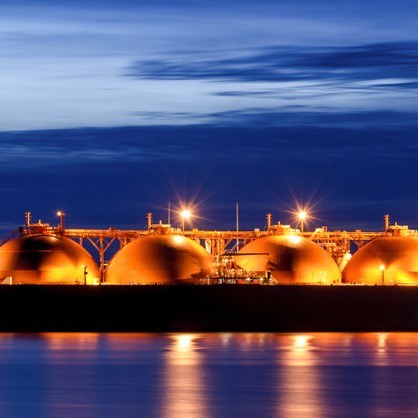
Investment in Natural Gas Exploration Surges in Australia Amid Global Energy Crisis
Australia is witnessing a significant boom in investment in natural gas exploration, with investment reaching a peak in the past decade amid the ongoing global energy crisis driven by geopolitical conflicts in the Middle East and increased demand from Asian markets.
Record Investment Growth in Gas Exploration
According to recent government data cited by Reuters, investment in natural gas exploration in Australia reached approximately $329 million in the first quarter of 2023 - marking the highest level in 10 years and reflecting a renewed confidence in the sector.
This surge is part of a broader growth trend identified by energy research firm Rystad Energy, which forecasts that investment in gas exploration will increase by 10% throughout 2023. If this trend continues, the total amount spent on exploration could exceed $1 billion by 2026, signaling a long-term commitment to developing Australia's gas resources.
The driving force behind this investment boom is Australia's strategic position as the world's second-largest exporter of liquefied natural gas (LNG), behind only Qatar. With Asian demand for cleaner energy alternatives remaining strong, Australia is seeking to expand its production capacity to maintain and grow its market share in the global LNG trade.
Expert Analysis of the Exploration Boom
"We are seeing renewed interest in frontier and unconventional exploration areas as modern geological and drilling techniques help reduce development risks and costs," said Krishan Pal Birda, vice president of Rystad Energy. "Australia's geological potential combined with favorable market conditions is creating an attractive environment for exploration investment."
Industry experts note that technological advances in seismic imaging, directional drilling, and hydraulic fracturing have made previously uneconomical gas reserves commercially viable, particularly in Australia's vast shale and tight gas formations.
State-Level Energy Strategies and Policy Shifts
The renewed focus on gas exploration reflects significant policy shifts at the state level. Earlier this year, New South Wales launched its first gas exploration tender in a decade, explicitly citing the need to address domestic energy security concerns that have been exacerbated by the LNG export boom.
Historically, Australia's eastern states have been more restrictive toward gas development due to environmental concerns. However, recent energy shortages and price volatility have prompted a reassessment of these positions, with Queensland becoming the latest state to approve an oil project – signaling that energy security is now being prioritized over other considerations.
This policy shift represents a pragmatic approach to the energy transition, recognizing that natural gas can serve as a crucial bridge fuel as Australia works toward achieving its long-term renewable energy targets while maintaining energy reliability and affordability.
Key Exploration Areas and Their Significance
| Region | Status | Estimated Resources | Economic Impact |
|---|---|---|---|
| Victoria's Otway Basin | Under exploration | Potentially significant offshore reserves | Could create new domestic supply source |
| Beetaloo Basin (Northern Territory) | Under development | 500+ trillion cubic feet of gas | Could establish NT as major LNG hub |
| Queensland's Taroom Trough | Approved | First commercial oil project in decades | Economic boost for regional Queensland |
Beetaloo Basin: Transforming Australia's Gas Landscape
Australia's gas exploration strategy is currently focused on three major areas, with the Beetaloo Basin in the Northern Territory representing perhaps the most transformative opportunity. This onshore shale formation has been compared to the prolific Marcellus Shale formation in the United States, which revolutionized American energy markets.
The Beetaloo Basin is estimated to contain approximately 500 trillion cubic feet of gas resources, potentially making it one of the largest unconventional gas reserves in the world. Development of this resource could transform the Northern Territory into a major LNG production center, complementing existing facilities in Western Australia and Queensland.
The project faces technical and environmental challenges, including the need for extensive hydraulic fracturing and water management. However, proponents argue that with proper regulation and technological oversight, development can proceed responsibly while delivering significant economic benefits to the region and the nation.
Global Context and Market Dynamics
The renewed focus on gas exploration in Australia occurs against a backdrop of significant global energy market shifts. The war in Ukraine and subsequent sanctions on Russian energy exports have created supply gaps in European and Asian markets, creating new opportunities for Australian LNG producers.
Meanwhile, many Asian nations continue to rely heavily on coal for power generation but are seeking to transition to cleaner alternatives. Natural gas, with its lower carbon emissions compared to coal, is positioned as an attractive option for these countries as they work toward decarbonization goals.
Additionally, the global energy transition has created new demand for gas as a complementary source to intermittent renewables. Gas-fired power plants can provide the flexible generation needed to balance grids with high penetrations of solar and wind power.
Environmental Considerations and the Energy Transition
The increased investment in gas exploration has sparked debate about Australia's climate commitments and the role of natural gas in the energy transition. Proponents argue that gas is essential for maintaining energy reliability during the transition to renewables and can help reduce emissions in the short to medium term by displacing coal.
Critics, however, contend that expanded gas development risks locking in fossil fuel infrastructure that may become stranded assets as the world accelerates toward net-zero emissions. They also point to methane emissions from gas production and transportation as a significant climate concern.
Industry responses have included increased focus on reducing methane leakage through improved monitoring and mitigation technologies, as well as exploring the potential for carbon capture and storage (CCS) to reduce the carbon footprint of gas operations.
Comparative Analysis of Major Gas Projects
| Project | Location | Estimated Resources | Development Status | Projected Timeline | Investment Commitment |
|---|---|---|---|---|---|
| Beetaloo Basin | Northern Territory | 500+ trillion cubic feet | Early development phase | Production expected by 2027-2030 | $Billions in committed investment |
| Taroom Trough | Queensland | Commercial quantities | Approved, awaiting final investment | First production by 2025 | $Hundreds of millions |
| Otway Basin | Victoria | Potentially significant | Exploration phase | Unknown timeline | Tens of millions in exploration |
Economic Implications and Regional Development
The expansion of gas exploration and production is expected to have significant economic impacts across Australia. Beyond direct investment in exploration and development, the projects will create thousands of jobs in regional areas, particularly in the Northern Territory and Queensland where economic opportunities have been limited.
Government revenues from royalties and taxes associated with gas development will provide substantial funding for public services and infrastructure. For example, the Northern Territory government has estimated that Beetaloo Basin development could generate billions in royalties over the project lifetime.
Indigenous communities are also expected to benefit through land access agreements, employment opportunities, and community development programs. Several traditional owner groups have negotiated agreements with gas companies that include financial benefits, training programs, and environmental protections.
Conclusion: Balancing Energy Security and Climate Goals
The surge in natural gas exploration investment in Australia reflects a pragmatic approach to energy security in an increasingly uncertain global environment. With major projects like the Beetaloo Basin and Taroom Trough moving forward, Australia is consolidating its position as a significant global energy supplier while meeting growing demand for LNG from Asian markets.
As the world navigates the complex transition to a low-carbon future, Australia's gas resources may play an important role as a bridge fuel that enables deeper renewable penetration while maintaining energy reliability. The development of these resources, however, must be managed carefully to ensure alignment with long-term climate goals.
The coming years will be critical in determining how Australia balances its economic interests in gas development with its international commitments to reduce emissions. The success of this balance will depend on technological innovation, effective regulation, and continued investment in the renewable energy transition that will ultimately define Australia's energy future.