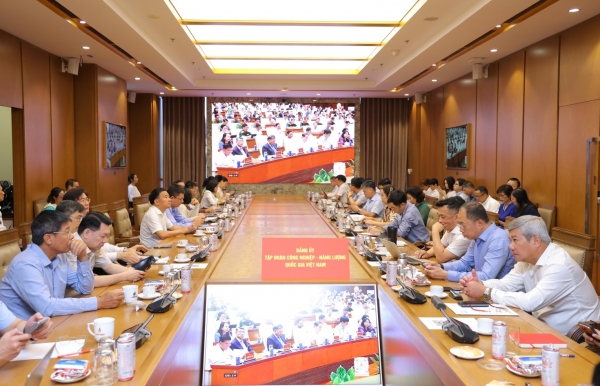
Petrovietnam Party Committee Studies and Implements Resolution No. 10-NQ/TW on Foreign Investment Development
On the morning of June 30, the Party Committee of Vietnam National Oil and Gas Group (Petrovietnam) participated in a national conference to study, disseminate, and implement Resolution No. 10-NQ/TW issued on June 8, 2026, by the Politburo. This historic resolution focuses on developing the economy with foreign investment, a critical topic in Vietnam's current economic landscape. As one of the country's largest economic conglomerates, Petrovietnam's participation in this conference signals the organization's commitment to aligning with national strategic priorities in economic development.
Background and Significance of Resolution No. 10-NQ/TW
Resolution No. 10-NQ/TW represents a comprehensive policy framework designed to enhance Vietnam's approach to foreign direct investment (FDI). In an era of increasing global economic competition and technological advancement, Vietnam recognizes the strategic importance of attracting high-quality foreign investment while ensuring sustainable economic growth. The resolution comes at a crucial time when Vietnam is seeking to transition from a labor-intensive economy to a knowledge-based, innovation-driven economy.
The resolution builds upon Vietnam's long-standing policy of openness to foreign investment while introducing new mechanisms to address emerging challenges and opportunities in the global economic landscape. It reflects the Vietnamese government's commitment to creating a more favorable investment environment while maximizing the developmental benefits of foreign capital.
Key Objectives of the Resolution
Resolution No. 10-NQ/TW sets forth several ambitious objectives aimed at improving the effectiveness of attracting and utilizing foreign investment to promote sustainable economic growth. The specific goals include:
- Enhancing administrative reform and improving the investment environment through streamlined procedures, reduced bureaucracy, and increased transparency in licensing processes.
- Stimulating investment in strategic sectors, including high technology, renewable energy, and advanced manufacturing, with particular emphasis on industries that support Vietnam's industrialization and modernization goals.
- Strengthening the competitiveness of domestic enterprises by facilitating technology transfer, knowledge sharing, and human resource development through foreign investment partnerships.
- Developing supporting industries and creating value chains that integrate domestic enterprises with foreign-invested projects to maximize local economic benefits.
- Improving legal frameworks and institutional mechanisms to protect investors' rights while ensuring compliance with environmental, social, and governance standards.
Implications for Petrovietnam
As a state-owned enterprise playing a pivotal role in Vietnam's energy sector and broader economy, Petrovietnam faces both opportunities and challenges in implementing the provisions of Resolution No. 10-NQ/TW. The resolution's emphasis on strategic sectors, particularly energy and technology, aligns closely with Petrovietnam's core business areas and development priorities.
The specific implications for Petrovietnam include:
- Strengthening international cooperation in the energy sector through joint ventures, technology partnerships, and investment collaborations with leading global energy companies.
- Accelerating the transition to cleaner energy sources by actively seeking foreign investment in renewable energy projects, including solar, wind, and hydrogen energy initiatives.
- Enhancing capacity for developing large-scale projects with foreign participation, particularly in offshore oil and gas exploration and production, as well as in emerging energy sectors.
- Improving technological capabilities through partnerships with foreign companies specializing in advanced extraction technologies, digital transformation, and energy efficiency solutions.
- Contributing to Vietnam's energy security while aligning with global sustainability goals through responsible investment practices and environmental stewardship.
Implementation Framework and Key Measures
To effectively implement Resolution No. 10-NQ/TW, Petrovietnam has established a comprehensive framework with specific measures across various functional areas. The following table outlines the key implementation strategies:
| Implementation Area | Key Measures and Strategies |
|---|---|
| Administrative Reform | Streamlining investment approval processes, establishing one-stop service centers for foreign investors, enhancing transparency in decision-making, and implementing digital platforms for license applications and renewals. |
| Technology Transfer and Innovation | Establishing technology incubation centers, facilitating joint research projects with foreign partners, implementing knowledge management systems, and creating incentives for technology adoption and innovation. |
| Strategic Partnerships | Developing long-term cooperation agreements with leading global energy companies, creating joint venture frameworks for large-scale projects, and establishing international advisory boards to guide strategic development. |
| Human Resource Development | Implementing specialized training programs for international project management, establishing exchange programs with foreign energy companies, and developing bilingual capabilities among technical staff. |
| Environmental and Social Responsibility | Adopting international environmental standards, implementing community engagement programs, developing sustainable business practices, and establishing monitoring systems for environmental and social impacts. |
Timeline for Implementation
The implementation of Resolution No. 10-NQ/TW follows a phased approach, with specific milestones and deliverables defined for each period. Petrovietnam has developed a detailed implementation timeline to ensure systematic progress:
| Time Period | Implementation Focus | Key Deliverables |
|---|---|---|
| Short-term (2026-2027) | Policy alignment and capacity building | Completion of internal assessment, development of implementation guidelines, establishment of working groups, and initial partnership outreach. |
| Medium-term (2028-2029) | Project development and partnership implementation | Launch of at least 3 major joint ventures, completion of 2 renewable energy projects with foreign investment, and implementation of technology transfer programs. |
| Long-term (2030-2035) | Full integration and sustainability | Transformation of 50% of operations to incorporate foreign partnerships, establishment of Petrovietnam as a regional energy hub, and achievement of carbon neutrality targets in strategic business units. |
Expected Outcomes and Impact
The successful implementation of Resolution No. 10-NQ/TW is expected to generate significant benefits for Petrovietnam and Vietnam's economy. Key anticipated outcomes include:
- Increased foreign direct investment in Vietnam's energy sector, estimated at $15-20 billion over the next decade.
- Technology advancement in energy extraction, processing, and renewable energy development, positioning Vietnam as a regional leader in energy innovation.
- Job creation across the value chain, with an estimated 50,000 new positions in high-skilled energy-related fields.
- Enhanced energy security through diversified energy sources and reduced dependency on traditional fossil fuels.
- Strengthened global positioning of Petrovietnam as a reliable partner in international energy markets.
Challenges and Mitigation Strategies
Despite the significant opportunities, Petrovietnam faces several challenges in implementing Resolution No. 10-NQ/TW. Key challenges and corresponding mitigation strategies include:
| Challenge | Mitigation Strategy |
|---|---|
| Regulatory complexity and inconsistencies | Establishing a dedicated legal team to navigate regulatory frameworks, advocating for policy harmonization, and developing standardized compliance procedures. |
| Cultural and management differences | Implementing cross-cultural training programs, developing joint management protocols, and establishing clear communication channels between domestic and international partners. |
| Technology transfer limitations | Creating structured knowledge-sharing frameworks, implementing reverse engineering capabilities, and investing in domestic R&D to complement foreign technologies. |
| Environmental concerns | Adopting best international practices, implementing advanced monitoring systems, and developing transition plans for sustainable operations. |
Conclusion: Petrovietnam's Strategic Vision
The national conference on Resolution No. 10-NQ/TW represents not only an important step in disseminating the Politburo's directives but also a significant opportunity for Petrovietnam to reaffirm its role in promoting economic development with foreign investment. The active participation of Petrovietnam's Party Committee in implementing the Party's policies will contribute significantly to the country's sustainable development.
Looking ahead, Petrovietnam is poised to leverage the opportunities presented by Resolution No. 10-NQ/TW to transform its operations, enhance its technological capabilities, and strengthen its position in the global energy landscape. By embracing foreign investment and international partnerships, Petrovietnam aims to achieve its strategic vision of becoming a leading, modern, and sustainable energy enterprise while contributing to Vietnam's broader economic development goals.
The implementation of this resolution will require commitment, innovation, and collaboration across all levels of the organization. As Petrovietnam embarks on this transformative journey, it is well-positioned to serve as a model for other state-owned enterprises in effectively harnessing foreign investment to drive economic growth and technological advancement in Vietnam.