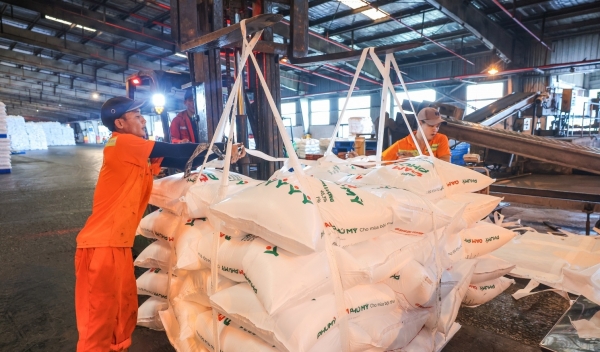
Petrovietnam and the Mission to Ensure National Food Security
When many people think of the Vietnam National Oil and Gas Group (Petrovietnam), the first images that come to mind are offshore oil rigs, submarine gas pipelines, and large-scale power plants. However, few realize that behind every golden harvest across Vietnam's farmlands—from the vast rice fields of the Mekong Delta and the south-central coast to the Red River Delta—there is also the enduring imprint of Petrovietnam.
The Expanding Role of Petrovietnam in Agriculture
Petrovietnam has evolved beyond its identity as merely a major energy conglomerate to become a significant contributor to the agricultural sector, particularly in ensuring national food security. The corporation's activities extend beyond energy provision to encompass various domains including fertilizer production, agricultural technology support, and research and development initiatives aimed at modernizing Vietnam's agricultural landscape.
This diversification reflects Petrovietnam's strategic vision to leverage its technical expertise, resources, and infrastructure toward addressing Vietnam's critical food security challenges. By integrating energy and agricultural sectors, the corporation has created a synergistic approach that enhances both national energy independence and food self-sufficiency.
Flagship Agricultural Projects
To fully appreciate Petrovietnam's impact on agriculture, it is essential to examine several of its noteworthy initiatives that demonstrate the corporation's commitment to agricultural development:
- Large-scale Fertilizer Production: Petrovietnam has made substantial investments in fertilizer manufacturing facilities across Vietnam. These state-of-the-art plants produce high-quality fertilizers tailored to specific soil conditions and crop requirements, directly addressing the nutrient needs of Vietnamese farmers. The corporation's fertilizer division has become one of the largest suppliers in the country, providing affordable and effective solutions that have significantly improved crop yields nationwide.
- Advanced Agricultural Technology Implementation: The corporation continuously researches and implements cutting-edge technologies in agricultural production. From developing high-yield crop varieties to optimizing cultivation techniques, Petrovietnam has established agricultural technology transfer centers that demonstrate modern farming methods to farmers. These centers serve as living laboratories where innovative approaches to irrigation, pest control, and sustainable farming are tested and refined before being disseminated to farming communities.
- Farmer Partnership Programs: Petrovietnam has implemented numerous collaborative programs with farmers aimed at enhancing knowledge and skills in agricultural production. These programs include training workshops, technical assistance, and direct support for transitioning to more sustainable and productive farming methods. The corporation has established demonstration farms where farmers can observe and learn advanced techniques in real-world settings before implementing them on their own land.
- Agricultural Research and Development: Through its specialized research institutes, Petrovietnam conducts studies focused on developing climate-resilient crops, improving soil health, and creating more efficient farming systems. This research addresses specific challenges faced by Vietnamese agriculture, including salinity intrusion in the Mekong Delta, drought conditions in central provinces, and the need for reduced chemical inputs in farming.
Notable Achievements and Impact
Through its various projects and support programs, Petrovietnam has made substantial contributions to enhancing both the productivity and quality of Vietnamese agricultural products. The following table summarizes key achievements from recent years:
| Year | Key Achievement | Contribution to Food Security |
|---|---|---|
| 2020 | Production of 1 million tons of specialized fertilizers | Increased rice yields by approximately 10% in participating regions; reduced fertilizer costs for farmers by 15% |
| 2021 | Established partnerships with over 1,000 farming households | Improved cultivation and harvesting techniques; reduced post-harvest losses by 20%; increased average household income by 18% |
| 2022 | Implementation of biotechnology in crop production | Enhanced nutritional quality of agricultural products; developed salt-tolerant rice varieties; reduced chemical pesticide usage by 30% |
| 2023 | Launch of smart farming initiative in five provinces | Optimized water usage by 25%; increased crop quality consistency; established traceability systems for premium agricultural products |
Beyond these quantifiable achievements, Petrovietnam's agricultural initiatives have generated broader socioeconomic benefits. The corporation's programs have created thousands of jobs in rural areas, stimulated local economies, and helped establish more resilient agricultural systems capable of withstanding climate change impacts. Additionally, by promoting sustainable practices, Petrovietnam has contributed to reducing agriculture's environmental footprint while maintaining productivity.
Future Directions and Strategic Vision
Looking ahead, Petrovietnam has outlined ambitious plans to further expand its role in agricultural development. The corporation aims to increase its fertilizer production capacity by 50% over the next five years, with a particular focus on developing environmentally friendly fertilizer products that minimize ecological impact while maximizing crop nutrition.
Research and development efforts are being intensified to create climate-resilient crop varieties specifically adapted to Vietnam's diverse growing conditions. These initiatives include developing drought-tolerant corn varieties, flood-resistant rice, and salt-tolerant vegetables capable of thriving in coastal regions affected by sea-level rise.
Furthermore, Petrovietnam is investing in digital agriculture solutions, including IoT-based monitoring systems, precision farming technologies, and blockchain-based supply chain management. These digital innovations promise to revolutionize Vietnamese agriculture by optimizing resource use, improving product quality, and enhancing market access for small-scale farmers.
Conclusion: A Dual Mandate for National Resilience
Petrovietnam's multifaceted approach to development exemplifies how state-owned enterprises can contribute to multiple dimensions of national progress. By simultaneously addressing Vietnam's energy needs and agricultural challenges, the corporation has established itself as a critical pillar of national resilience.
The integration of energy and agricultural expertise has created unique advantages that specialized agricultural companies cannot match. Petrovietnam's technical capabilities, infrastructure resources, and research capacity have enabled it to develop comprehensive solutions that address both immediate productivity challenges and long-term sustainability concerns.
As Vietnam continues to confront the complex interplay of climate change, population growth, and economic development, Petrovietnam's dual focus on energy and food security represents a strategic model for national development. The corporation's success demonstrates how leveraging core competencies across sectors can create synergistic benefits that enhance overall national security and prosperity.
In the final analysis, Petrovietnam's agricultural initiatives represent more than just corporate social responsibility—they constitute an essential component of Vietnam's strategy for achieving comprehensive national security in the 21st century. By ensuring both energy independence and food self-sufficiency, the corporation is helping build a more resilient and prosperous future for all Vietnamese citizens.