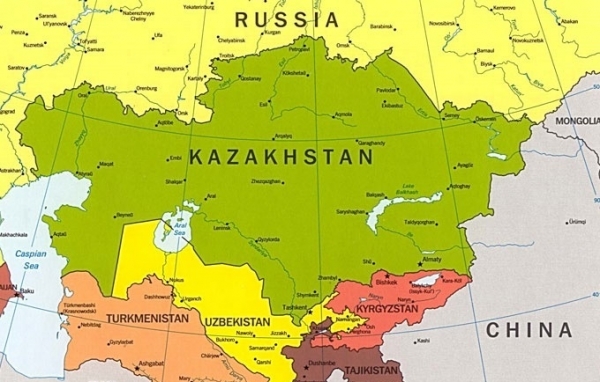
Central Asia's Energy Crisis: From Russian Dependence to Technological Transformation
The world is witnessing an unprecedented energy crisis in Central Asia, where heavy dependence on Russian oil and gas is pushing these nations into a difficult position as fuel prices skyrocket and supply becomes increasingly unstable.
Disruptions to Russia's energy sector due to the conflict with Ukraine have created ripple effects throughout Central Asia, forcing governments to urgently seek alternative energy sources to meet growing demand while facing inflationary pressures and economic instability.
The Energy Crisis Context
The Central Asian region, comprising Kazakhstan, Uzbekistan, Turkmenistan, Kyrgyzstan, and Tajikistan, has historically maintained close economic ties with Russia. Particularly, these countries have relied heavily on Russian oil, gas, and electricity to meet domestic energy demands and sustain economic activities.
However, since Russia launched its special military operation in Ukraine in February 2022, international sanctions have disrupted energy flows, causing shortages and price surges across the entire region.
Russian Dependence - A Historical Legacy
The reliance on Russian energy in Central Asia originates from the Soviet era, when energy systems were designed to serve a unified economic space. Following the Soviet Union's dissolution, despite efforts to diversify, many Central Asian countries have maintained significant dependence on Russia.
| Country | Percentage of Energy Dependence on Russia (%) | Primary Energy Products Imported from Russia |
|---|---|---|
| Kyrgyzstan | 85 | Diesel, gasoline, natural gas |
| Tajikistan | 80 | Oil, electricity, coal |
| Uzbekistan | 60 | Natural gas, oil |
| Kazakhstan | 40 | Coal, nuclear power components |
| Turkmenistan | 30 | Industrial components |
Specific Impacts on Central Asian Countries
Kazakhstan - The Region's Largest Nation
Kazakhstan, the most resource-rich country in Central Asia and a member of the Eurasian Economic Union (EAEU), is facing a dual challenge. Although it is a major oil producer, Kazakhstan still imports substantial amounts of refined petroleum products from Russia to meet domestic demand.
According to Kazakhstan's Ministry of Energy, energy prices have increased by an average of 40% in 2022, placing significant pressure on the state budget and citizens. The government has had to implement subsidy measures, but limited budgetary resources make maintaining these policies challenging.
Uzbekistan - The Second Most Populous Nation
Uzbekistan, the most populous country in Central Asia with 35 million people, is experiencing a severe fuel crisis. The country imports approximately 60% of its natural gas demand from Russia and is completely dependent on imported oil.
Gasoline prices in Uzbekistan have increased by nearly 70% in 2022, leading to social unrest in several regions. The government has had to introduce fuel discount cards for the poor and small businesses to alleviate the burden.
Turkmenistan - "The Saudi Arabia" of Central Asia
Turkmenistan, home to the world's fourth-largest natural gas reserves, has not been immune to the impacts. Although it is a major gas exporter, Turkmenistan still depends on Russia for transporting a portion of its production to European markets via the Central Asia-Center pipeline.
Disruptions in gas transportation have affected Turkmenistan's foreign exchange earnings, forcing the government to seek new markets, particularly China, to compensate.
Kyrgyzstan and Tajikistan - The Poorest Nations
The two poorest countries in the region, Kyrgyzstan and Tajikistan, are being hit hardest by the energy crisis. Both countries depend on Russia for over 80% of their energy needs.
In Tajikistan, electricity shortages during winter have become more severe due to rising prices for imported electricity from Uzbekistan and Kyrgyzstan. Meanwhile, Kyrgyzstan is facing fuel shortages affecting both industrial production and daily life.
Skyrocketing Fuel Prices and Economic Impacts
Dependence on Russian energy has led to soaring fuel prices across Central Asia. According to the Asian Development Bank (ADB), inflation in the region reached a 20-year high in 2022, averaging 15%.
| Country | 2022 Inflation Rate (%) | Gasoline Price Increase (%) | Natural Gas Price Increase (%) |
|---|---|---|---|
| Kyrgyzstan | 18.5 | 75 | 65 |
| Tajikistan | 17.2 | 68 | 60 |
| Uzbekistan | 14.4 | 70 | 55 |
| Kazakhstan | 12.8 | 45 | 40 |
| Turkmenistan | 11.5 | 35 | 30 |
The economic impacts of the energy crisis are spreading across multiple sectors:
- Agriculture: Higher operating costs for agricultural machinery threaten regional food security
- Industry: Many factories have reduced production or shut down due to insufficient energy
- Transportation: Rising transportation costs affect supply chains and commodity prices
- Social Welfare: Poverty rates are increasing, especially in poorer countries like Kyrgyzstan and Tajikistan
Efforts to Diversify Energy Sources
In response to the emergency situation, Central Asian governments are actively seeking alternative energy sources:
Cooperation with China
China is becoming an important energy partner for Central Asian countries. Kazakhstan has increased crude oil exports to China, while Uzbekistan and Turkmenistan are boosting natural gas exports via the Central Asia-China pipeline.
Seeking New Markets
Turkmenistan is negotiating to export natural gas directly to Pakistan and India, while Kazakhstan is seeking to increase oil exports to the Middle East and Asia.
Investing in Renewable Energy
Several countries are accelerating renewable energy development to reduce dependence on fossil fuels. Uzbekistan has approved a large-scale solar power development plan, targeting 5 GW capacity by 2030.
Enhancing Regional Cooperation
Central Asian countries are strengthening regional energy cooperation, including building trans-Central Asian gas pipelines and developing a shared power system.
Social and Political Impacts
The energy crisis is having profound social and political impacts across the region:
- Social Unrest: Numerous protests have occurred in Uzbekistan and Kyrgyzstan due to rising fuel prices
- Labor Migration: The number of migrant workers going to Russia and other countries is increasing due to economic difficulties
- Policy Changes: Governments are adjusting energy and economic policies to adapt to the new situation
- Energy Security: Countries are reassessing their energy security strategies, focusing on supply diversification
Future Outlook
Experts predict that the energy crisis in Central Asia will continue in the short and medium term:
- Short-term (2023-2024): Energy prices may remain high, forcing governments to continue price support measures
- Medium-term (2025-2030): The region will witness energy supply diversification with increased renewable energy
- Long-term (2030 onwards): Central Asia could reduce dependence on Russia to below 50% of energy demand
However, this transition process will come with significant challenges, including the need for substantial investment in new energy infrastructure and changes in economic policy.
Conclusion
The energy crisis in Central Asia is a clear testament to the risks of excessive dependence on a single energy source. The crisis is driving countries in the region to diversify their energy supplies and restructure their energy systems.
Nevertheless, this process will not be easy and requires substantial investment, intelligent policies, and international cooperation. The lessons from this crisis will likely shape Central Asia's energy and economic future for decades to come.
In the rapidly changing geopolitical landscape, Central Asia stands at an opportunity to position itself as an energy bridge between Europe, Asia, and the Middle East, but it also faces considerable challenges in this transition process.