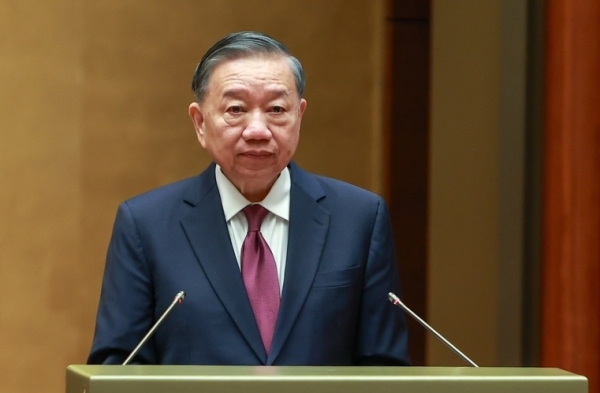
General Secretary and President Tô Lâm: Breakthrough in Organizational Reform After One-Year Pilot
On the morning of July 1, General Secretary and President Tô Lâm attended and delivered directives at the National Conference reviewing one year of operation of the overall organizational model of the political system and the three-tier government model. Organized by the Politburo, the conference assessed the achievements after one year of implementing these new models and outlined development directions for the future.
Context and Significance of the Conference
The conference was held in the context of Vietnam's political system undergoing renovation, with efforts to streamline organizational structures for more efficient and effective operations. The implementation of the overall organizational model and the three-tier government model represents one of the key priorities of the Party and State in the current phase.
General Secretary and President Tô Lâm emphasized: Improving the organizational structure of the political system is an urgent requirement to enhance the effectiveness and efficiency of state management, better serve the people, and meet the country's development needs in the new context.
Results Achieved After One Year of Operation
Over the past year, the overall organizational model of the political system and the three-tier government model have been implemented in many localities and central agencies. Notable achievements include:
- Streamlined government apparatus, reducing intermediate management levels
- Enhanced effectiveness and efficiency of management
- Accelerated application of information technology in governance
- Strengthened coordination between different levels and sectors
- Improved service quality for citizens and businesses
Digital Government Operations in the New Model
One of the key highlights in General Secretary Tô Lâm's address was the accelerated application of information technology in the new organizational model. Digital government and e-government were identified as essential directions to improve management effectiveness and service delivery.
Over the past year, many localities have successfully implemented online public services at levels 3 and 4, reducing administrative procedures and creating convenience for citizens and businesses. The integration of national data and data sharing among agencies has also achieved significant progress.
Development Directions for the Future
General Secretary and President Tô Lâm outlined key priorities for the future:
- Completing the legal framework for the new organizational model
- Accelerating digital transformation in state management
- Improving the capacity of officials and civil servants
- Strengthening supervision and evaluation of the model's effectiveness
- Expanding the model to more challenging localities
Digital Transformation and Digital Government
In the context of the Fourth Industrial Revolution, building a digital government is crucial for the country's development. General Secretary Tô Lâm emphasized:
"We need to fully leverage the opportunities from the Fourth Industrial Revolution to build a modern, dynamic, and creative political system that meets the country's rapid and sustainable development requirements."
To achieve this, focus should be placed on the following solutions:
- Building national digital infrastructure
- Developing high-quality information technology human resources
- Ensuring national information security and safety
- Strengthening international cooperation in digital transformation
Summary Table of Results After One Year of Implementing the New Model
| Indicator | Achieved Results | Target Goals | Completion Rate |
|---|---|---|---|
| Government Streamlining | 15% reduction in intermediate management levels | 20% reduction in intermediate management levels | 75% |
| Online Public Services | 70% of public services at levels 3 and 4 | 80% of public services at levels 3 and 4 | 87.5% |
| Technology Application | 90% of agencies using centralized management systems | 95% of agencies using centralized management systems | 94.7% |
| Satisfaction Index | 12% increase compared to previous period | 15% increase compared to previous period | 80% |
Conclusion
The conference reviewing one year of operation of the overall organizational model of the political system and the three-tier government model assessed the achievements and identified development directions for the future. With the decisive leadership of General Secretary and President Tô Lâm and the active participation of the entire political system, the new model will continue to be improved, contributing to enhancing the effectiveness and efficiency of state management, better serving the people, and meeting the country's development requirements in the new context.
#DigitalGovernment #DigitalTransformation #OrganizationalStructure #PoliticalSystem