## Unprecedented Floating Storage Signals Market Uncertainties
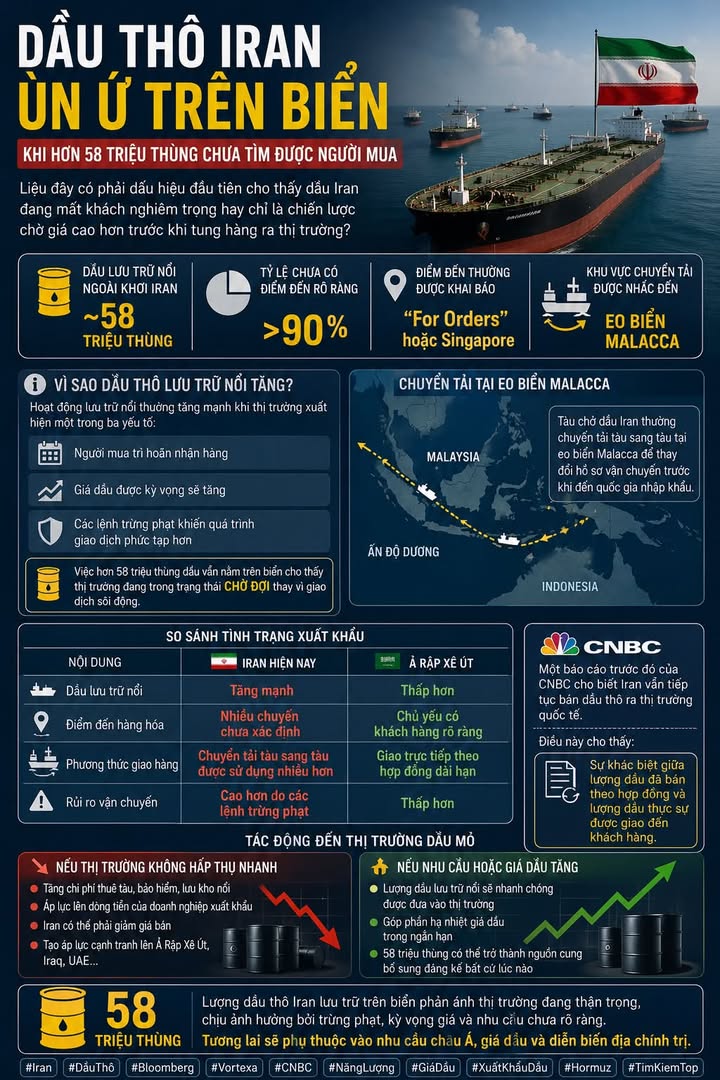
Data from Vortexa and calculations by Bloomberg reveal an extraordinary situation in global oil markets: approximately 58 million barrels of Iranian crude oil are currently stored on tankers awaiting final destinations. This represents a significant buildup of floating inventory, with over 90% of this oil lacking clear end-market designation. The development raises critical questions about Iran's ability to maintain its export volumes amid ongoing geopolitical challenges and shifting market dynamics.
The majority of these tankers have declared their destinations as either "For Orders" or Singapore. In the maritime oil industry, these designations typically indicate that vessels are awaiting purchase decisions or preparing for ship-to-ship transfers in strategic waterways like the Malacca Strait—a common practice used to alter shipping documentation before final delivery to importing countries.
Understanding the Floating Storage Phenomenon
Floating storage typically increases when one of three market conditions prevails: buyers delay taking physical possession, market participants anticipate rising prices, or sanctions and regulatory complexities complicate transactions. The current situation with Iranian crude suggests that the market is in a state of anticipation rather than active trading.
This buildup of Iranian crude at sea comes at a time when global oil markets are already facing numerous challenges. The International Energy Agency has noted that while demand is recovering from pandemic lows, the pace remains uneven across regions. Against this backdrop, Iran's inability to immediately place its oil cargoes could indicate deeper structural issues in its export capabilities.
Key Statistics on Iranian Floating Storage
| Metric | Value |
|---|---|
| Total crude oil stored at sea | Approximately 58 million barrels |
| Percentage without clear destination | Over 90% |
| Common declared destinations | "For Orders" or Singapore |
| Notable transfer area mentioned | Malacca Strait |
Contradictory Signals in Iran's Export Strategy
Despite the apparent challenges in placing Iranian crude, earlier reports from CNBC suggest that Iran continues to sell oil in international markets. This apparent contradiction highlights the difference between oil that has been contracted and oil that has actually been delivered to end customers. Many cargoes may have been traded but are still awaiting completion of the complex shipping and documentation processes, particularly given the sanctions environment surrounding Iranian petroleum exports.
Ship-to-ship transfers, which appear to be more prevalent in Iran's current export strategy, add complexity and time to the delivery process. This method allows Iranian oil to change documentation and potentially routing while still at sea, making it more difficult for tracking mechanisms and sanctions enforcement to monitor the final destination of these cargoes.
Comparative Analysis: Iran vs. Other Major Exporters
| Comparison Factor | Current Iran | Saudi Arabia |
|---|---|---|
| Floating storage levels | Significantly increasing | Relatively stable |
| Cargo destination clarity | Many shipments unspecified | Primarily to known customers |
| Delivery methodology | Increased ship-to-ship transfers | Direct contracts, long-term relationships |
| Shipping risk profile | Higher due to sanctions | Lower, established routes |
Market Implications and Potential Scenarios
The accumulation of Iranian crude on tankers carries several potential consequences for global oil markets. Extended periods of floating storage can pressure charter rates, increase marine insurance costs, and strain the cash flows of export companies. If the market fails to quickly absorb this inventory, Iran may be forced to implement price discounts to attract buyers, thereby intensifying competition with other major exporters such as Saudi Arabia, Iraq, and the United Arab Emirates.
Conversely, if oil demand in Asia—particularly in China and India—accelerates or if global prices continue their upward trajectory, the currently stored Iranian crude could rapidly enter the market. This influx of approximately 58 million barrels would represent a significant supply addition that could temper oil price increases in the short term.
The situation also highlights the ongoing challenges facing Iranian oil exports under international sanctions. The United States' pressure campaign against Iran's petroleum sector has forced Tehran to develop increasingly complex methods for placing its oil, including using intermediary companies, falsifying documentation, and employing creative routing strategies.
Geopolitical Context and the Strait of Hormuz
The Iranian oil storage situation occurs against a backdrop of heightened tensions in the Middle East, particularly around the Strait of Hormuz—a critical chokepoint through which approximately 20% of global oil supplies pass. The ability of Iranian oil to reach market is directly impacted by the security situation in this strategically vital waterway.
While the current floating storage doesn't necessarily indicate an immediate crisis in Hormuz transit, it does reflect the broader challenges facing Iranian petroleum exports. The country's reliance on complex shipping maneuvers and extended storage periods underscores the effectiveness of international sanctions in constraining its oil sector.
Conclusion: A Signal of Market Transition
The accumulation of Iranian crude at sea represents more than just a temporary logistical challenge—it may signal a fundamental shift in Iran's export capabilities and its position in global oil markets. Whether this situation reflects a strategic pause to await higher prices or indicates growing difficulties in finding buyers remains to be seen.
What is clear is that the current buildup of Iranian crude adds a significant variable to global oil market calculations. Market participants will be closely monitoring how this situation evolves, as the resolution could have substantial implications for oil prices, regional geopolitics, and the balance of power among global oil exporters.
As the world economy continues its uneven recovery from the pandemic and geopolitical tensions persist, the fate of these 58 million barrels of Iranian crude may serve as an important indicator of both immediate market sentiment and longer-term structural changes in the global oil landscape.