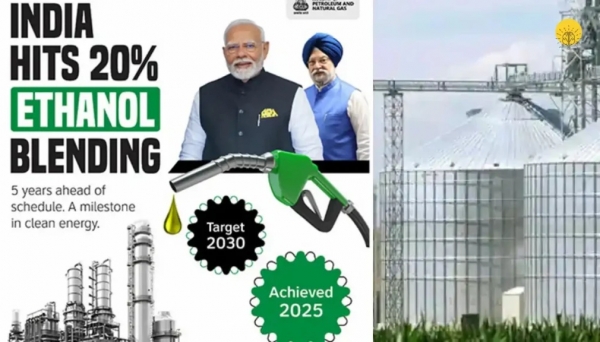
India's Ethanol Fuel Journey: Part One of the Energy Transition
In an ambitious effort to reshape its energy landscape, India has been implementing its Ethanol Blending Program (EBP) since January 2003. This comprehensive initiative represents a critical step toward promoting environmentally friendly alternative fuels while addressing the nation's growing energy security concerns. As one of the world's largest energy consumers, India's transition to ethanol-blended gasoline carries significant implications not only for its own economy and environment but also for global energy trends.
The Genesis of India's Ethanol Blending Program
India's Ethanol Blending Program emerged from a strategic recognition of the nation's vulnerabilities in the energy sector. As a rapidly developing economy with a burgeoning population and industrial base, India faces substantial challenges in meeting its energy demands while maintaining environmental sustainability. The program was conceived as a dual-purpose initiative: to reduce the country's dependence on imported petroleum products and to mitigate the environmental impact of transportation fuels.
The transportation sector accounts for approximately 20% of India's total energy consumption, with road transport being the dominant segment. This heavy reliance on fossil fuels has not only strained India's foreign exchange reserves but has also contributed significantly to air pollution in its urban centers. The EBP was designed to address these challenges by gradually incorporating ethanol—a biofuel derived primarily from agricultural crops—into the national fuel supply.
Strategic Imperatives Behind the EBP
The implementation of the Ethanol Blending Program was driven by several strategic considerations that reflect India's long-term energy planning:
- Energy Security: With over 85% of its crude oil requirements met through imports, India faces substantial economic and geopolitical risks. The EBP aims to reduce this dependency by substituting gasoline with domestically produced ethanol, thereby conserving foreign exchange and insulating the economy from global oil price volatility.
- Environmental Sustainability: Transportation is a major source of greenhouse gas emissions and urban air pollution in India. Ethanol-blended gasoline offers a cleaner alternative, with the potential to significantly reduce carbon monoxide, hydrocarbon, and particulate matter emissions.
- Rural Economic Development: The ethanol production value chain involves agricultural crops, providing a stable market for farmers and stimulating rural economies. This aspect of the program aligns with India's broader agricultural development objectives.
- Climate Commitments: India's pledge to reduce carbon emissions intensity by 45% by 2030, as part of its Paris Agreement commitments, necessitates transitioning to cleaner energy sources. The EBP contributes to this national climate strategy.
Comprehensive Benefits of Ethanol-Blended Fuel
The advantages of ethanol-blended gasoline extend across environmental, economic, and social dimensions, making it a compelling component of India's energy transition strategy.
Environmental Advantages
- Reduced Carbon Footprint: Ethanol contains oxygen, which promotes more complete combustion of gasoline. This results in lower emissions of carbon monoxide (up to 30%), particulate matter (up to 50%), and other harmful pollutants compared to conventional gasoline.
- Lower Greenhouse Gas Emissions: The carbon dioxide released during ethanol combustion is partially offset by the carbon dioxide absorbed by the plants during their growth cycle. This results in a net reduction of greenhouse gas emissions of approximately 40-60% compared to fossil fuels.
- Improved Air Quality: By reducing emissions of toxic pollutants, ethanol-blended gasoline contributes to better air quality in urban areas, addressing public health concerns associated with vehicular pollution.
Economic Benefits
- Agricultural Stimulus: Ethanol production creates demand for agricultural commodities like sugarcane, corn, and grain, providing farmers with additional income streams and price stability. In India, the sugar industry—a major source of ethanol—has particularly benefited from this program.
- Foreign Exchange Savings: By substituting imported petroleum with domestically produced ethanol, India conserves valuable foreign exchange. With crude oil prices remaining volatile, these savings provide crucial economic stability.
- Rural Employment Generation: The ethanol supply chain—from cultivation to processing—creates numerous employment opportunities in rural areas, contributing to inclusive economic growth.
Technical and Operational Benefits
- Enhanced Engine Performance: Ethanol has a higher octane rating (around 100) compared to regular gasoline (typically 87-92), which can improve engine performance and efficiency when properly blended.
- Reduced Dependency on Oil Imports: The program diversifies India's energy sources, reducing vulnerability to supply disruptions and price shocks in the global oil market.
Implementation Challenges and Constraints
Despite its strategic importance and multiple benefits, the Ethanol Blending Program has faced several significant challenges that have affected its full implementation and effectiveness.
Production and Supply Constraints
- Feedstock Availability: The production of ethanol is dependent on agricultural crops, whose availability can be affected by seasonal variations, weather conditions, and competing demands from other sectors. In India, sugarcane—the primary feedstock—has faced production fluctuations due to erratic monsoons and water scarcity.
- Infrastructure Limitations: The ethanol supply chain requires specialized storage and transportation infrastructure that differs from conventional petroleum products. Many regions in India lack adequate facilities for handling ethanol, leading to logistical challenges and increased costs.
- Production Costs: Despite technological advancements, ethanol production remains more expensive than petroleum refining in many cases. The cost differential is particularly pronounced when oil prices are low, making it difficult to maintain economically viable ethanol production without subsidies.
Policy and Regulatory Hurdles
- Blending Targets and Compliance: India has progressively increased its ethanol blending targets, from 5% in 2003 to the current goal of 20% by 2025. However, achieving these targets has been challenging due to inconsistent supply and distribution mechanisms, leading to compliance issues across different states.
- Price Distortions: The complex pricing mechanisms for ethanol, involving government-set Minimum Support Prices (MSP) and procurement processes, have sometimes created market distortions and inefficiencies in the supply chain.
- Regulatory Fragmentation: The implementation of EBP involves multiple central and state agencies, leading to coordination challenges and regulatory inconsistencies that can impede program effectiveness.
Consumer and Industry Acceptance
- Consumer Awareness: Despite environmental benefits, many consumers remain unaware of ethanol-blended fuels or harbor misconceptions about their compatibility with vehicle engines. This lack of awareness limits market demand and slows adoption.
- Vehicle Compatibility: While modern vehicles can typically handle ethanol blends up to 10% (E10), higher blends require vehicle modifications or specialized engines. The transition to higher ethanol concentrations necessitates coordinated efforts across the automotive industry.
- Industry Resistance: Some stakeholders in the petroleum sector have expressed concerns about the infrastructure changes required for ethanol distribution and the potential impact on traditional business models.
Future Prospects and Development Trajectory
Looking ahead, India's Ethanol Blending Program is poised for significant expansion and technological advancement. The government has set an ambitious target of achieving 20% ethanol blending by 2025, a substantial increase from the current blending rate of approximately 10-12%. This target aligns with India's broader commitment to sustainable development and climate action.
Several key developments are expected to shape the future trajectory of the program:
- Advanced Feedstock Technologies: Research and development efforts are focusing on second-generation ethanol production from non-food biomass, agricultural residues, and waste materials. These technologies could significantly expand the feedstock base and reduce competition with food crops.
- Infrastructure Modernization: The government is investing in dedicated ethanol storage and transportation infrastructure to address current logistical bottlenecks and enable more efficient distribution.
- Policy and Regulatory Reforms: Streamlined procurement processes, transparent pricing mechanisms, and standardized quality controls are being implemented to improve program efficiency and attract greater private sector participation.
- Consumer Education Campaigns: Awareness initiatives are being scaled up to inform consumers about the benefits of ethanol-blended fuels and their compatibility with various vehicle types.
Comparative Analysis: Benefits vs. Challenges
The following table provides a comparative overview of the key benefits and challenges associated with India's Ethanol Blending Program:
| Benefits | Challenges |
|---|---|
| Environmental friendliness through reduced emissions | Production costs higher than conventional gasoline |
| Reduced air pollution and improved public health | Feedstock availability affected by climate and seasonal factors |
| Agricultural sector stimulation and rural development | Infrastructure limitations in storage and distribution |
| Enhanced energy security and reduced import dependency | Policy and regulatory coordination challenges |
| Foreign exchange conservation | Consumer awareness and acceptance issues |
| Rural employment generation | Vehicle compatibility concerns with higher blends |
Conclusion
India's Ethanol Blending Program represents a critical component of the nation's comprehensive energy transition strategy. While the program has made significant progress since its inception in 2003, achieving its full potential requires addressing the multifaceted challenges related to production, infrastructure, policy coordination, and consumer acceptance.
As India continues to pursue its ambitious ethanol blending targets, the program is expected to play an increasingly important role in the country's energy landscape. With technological advancements, supportive policies, and growing stakeholder engagement, ethanol could emerge as a cornerstone of India's sustainable energy future, contributing to environmental protection, economic development, and energy security simultaneously.
The journey of India's ethanol program offers valuable insights for other nations considering similar biofuel initiatives, demonstrating both the transformative potential and the implementation complexities of transitioning toward cleaner energy sources in a rapidly developing economy.