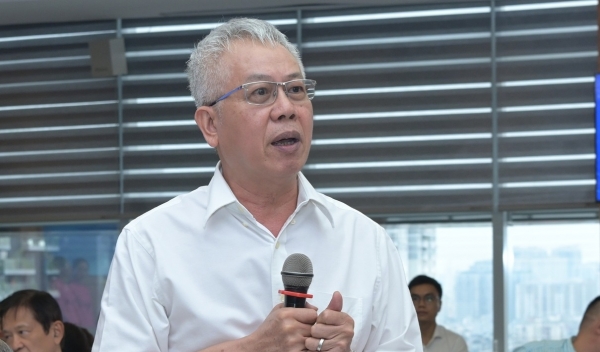
Strong State-Owned Enterprises Needed to Lead Vietnam's New Energy Transition
In the context of global energy transition, Dr. Nguyen Duc Kien advocates for the necessity of strong state-owned enterprises to lead strategic sectors like offshore wind power, while proposing a clear roadmap for equitization when the market has developed sufficiently.
As Vietnam stands at the crossroads of opportunity and challenge in its energy transition process, particularly in developing renewable energy sources, Dr. Nguyen Duc Kien, a leading economic expert, has presented his perspective on the role of state-owned enterprises in guiding the country's new energy sectors.
Dr. Nguyen Duc Kien's Perspective on the Role of State-Owned Enterprises
According to Dr. Nguyen Duc Kien, in the current phase, Vietnam still requires sufficiently strong state-owned enterprises to invest in and lead strategic sectors, particularly offshore wind power. "I am not against the participation of the private sector, but at this point in time, we need state-owned enterprises with financial capacity and technological capabilities to take the lead," Dr. Kien emphasized.
He noted that state-owned enterprises have advantages in mobilizing large-scale resources, accessing advanced technologies, and possessing the ability to bear high risks in large-scale investment projects such as offshore wind power - a field that requires enormous initial capital investment and complex technology.
Transition Roadmap to Joint-Stock Companies
Dr. Kien also proposed a clear transition pathway: "When the market develops, the state can completely equitize and mobilize social resources." This perspective demonstrates a balanced approach between the leading role of state-owned enterprises in the initial phase and private sector participation when the market has matured sufficiently.
This is not the first time Dr. Kien has addressed the role of state-owned enterprises in strategic sectors. Previously, he has repeatedly emphasized the importance of state-owned economic groups in building infrastructure and leading key industries of the country.
Current Status of Renewable Energy Development in Vietnam
Vietnam possesses abundant renewable energy potential, particularly in wind and solar energy. However, the exploitation of these energy sources, especially offshore wind power, faces numerous challenges regarding capital, technology, and policy.
According to statistics from the Ministry of Industry and Trade, the total installed wind power capacity in Vietnam by the end of 2022 reached approximately 4,000 MW, of which onshore wind power accounted for the majority. Offshore wind power has only begun to be implemented with several pilot projects.
| Type | Installed Capacity (MW) | Percentage (%) | Main Challenges |
|---|---|---|---|
| Onshore Wind Power | 3,950 | 98.8% | Limited planning |
| Offshore Wind Power | 50 | 1.2% | Large investment capital |
| Solar Power | 16,500 | - | Transmission infrastructure |
Role of State-Owned Enterprises in Energy Development
State-owned economic corporations such as Vietnam Oil and Gas Group (PetroVietnam) and Vietnam Electricity (EVN) have been playing important roles in developing renewable energy. PetroVietnam, with its financial capacity and experience in the energy sector, has implemented many offshore wind power projects.
However, according to Dr. Kien, state-owned enterprises need to be given more autonomy in investment decisions and management to enable them to respond flexibly to the market and apply new technologies.
Comparison with Energy Development Models in Other Countries
Many countries worldwide have adopted different models to develop renewable energy. Some countries focus on the private sector, while others maintain the leading role of state-owned enterprises.
| Country | Development Model | Role of State-Owned Enterprises | Lessons for Vietnam |
|---|---|---|---|
| Denmark | Private sector focus | Policy support | Strong incentive policies |
| China | State-led development | Dominant in large projects | Large-scale investment |
| Vietnam | Transition model | Dominant in initial phase | Need for clear roadmap |
Dr. Kien believes Vietnam can learn from both models but needs to adjust them to suit the country's socio-economic conditions. "We don't need to copy completely, but rather need a model that fits Vietnam's context," he said.
Prospects and Recommendations
To effectively develop new energy sectors, Dr. Kien proposed several key solutions:
- Enhance financial capacity and technological capabilities of state-owned enterprises
- Establish a clear legal framework for offshore wind power
- Promote international cooperation for technology transfer
- Develop a clear equitization roadmap for state-owned enterprises when the market has developed
Vietnam aims to achieve 15-20% renewable energy in total electricity output by 2030 and increase it to 30-35% by 2050. To achieve these ambitious targets, the role of state-owned enterprises in the initial phase is extremely important.
Dr. Nguyen Duc Kien's perspective not only reflects a strategic vision but also demonstrates a balance between state and market roles in developing the country's key industries during the transition period.