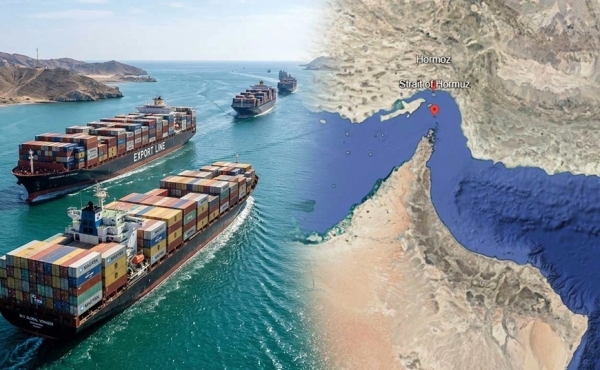
The Strait of Hormuz Paralyzed as US-Iran Military Tensions Escalate
In the midst of escalating tensions between the United States and Iran, the Strait of Hormuz—one of the world's most critical oil and natural gas transportation routes—has fallen into a state of near-total paralysis. The once-bustling maritime corridor, which facilitates the movement of energy resources from the Persian Gulf to global markets, has seen its traffic nearly completely halted within just two weeks following President Donald Trump's declaration of a ceasefire.
Current Situation Analysis
The recent missile exchanges between American and Iranian forces have transformed the strategic waterway into a flashpoint of geopolitical conflict. Military analysts report that both nations have significantly increased their naval presence in the region, with multiple warships from both sides actively maneuvering in close proximity.
- Timeline of Events: The heightened tensions began with the downing of an American drone by Iranian forces, prompting retaliatory cyber operations from the US. This was followed by the seizure of commercial vessels by Iranian Revolutionary Guard forces, leading to direct military confrontations.
Geopolitical Significance: The Strait of Hormuz connects the Persian Gulf with the Gulf of Oman and the Arabian Sea, serving as the only sea passage for oil from major Middle Eastern producers including Saudi Arabia, Kuwait, Iraq, and the UAE.- Economic Impact: With approximately 20% of global oil production and 35% of seaborne oil trade passing through this narrow waterway, the current situation represents a significant threat to global energy security and economic stability.
Historical Context of US-Iran Relations
The current crisis represents the most severe escalation in US-Iran relations since the 2018 withdrawal of the United States from the Joint Comprehensive Plan of Action (JCPOA), commonly known as the Iran nuclear deal. Since then, a series of tit-for-tat measures has steadily eroded diplomatic channels:
- May 2019: US reimposes sanctions on Iranian oil exports
- June 2019: Iran breaches uranium enrichment limits set by JCPOA
- July 2019: Iran seizes British-flagged oil tanker Stena Impero
- January 2020: US airstrike kills Iranian General Qasem Soleimani
- January 2020: Iran launches ballistic missile attack on US bases in Iraq
- June 2023: Iran downs US drone over international waters
- July 2023: US launches cyber operations against Iranian military infrastructure
Impact on Global Oil Markets
The disruption of oil flows through the Strait of Hormuz has immediate and profound implications for global energy markets. The following table outlines key market impacts:
| Market Factor | Current Status | Projected Impact |
|---|---|---|
| Brent Crude Prices | Increased by 8.7% in two weeks | Potential rise to $90-95 per barrel if disruption continues |
| Increased by 7.2% in two weeks | Could reach $85-90 per barrel with extended conflict | |
| Asian Refining Margins | Decreased by 15% | Further declines expected if supply constraints persist |
| Increased by 6.3% | Secondary effects from potential LNG rerouting |
International Response and Diplomatic Efforts
The international community has responded with a mixture of concern and diplomatic maneuvering:
- United Nations: Secretary-General António Guterres has called for "maximum restraint" from both parties, emphasizing the need for de-escalation.
- European Union: Member states have expressed deep concern about the impact on global energy markets, with France and Germany urging a return to diplomatic channels.
- China and Russia: Both nations have criticized US "aggressive" policies toward Iran, while simultaneously calling for peaceful resolution.
- Gulf Cooperation Council: Regional states have expressed anxiety about the potential economic fallout, particularly given their reliance on stable oil markets.
- Industry Associations: The International Energy Agency (IEA) and OPEC have issued statements monitoring the situation, with OPEC hinting at potential production adjustments if needed.
Strategic Implications for Energy Security
The current crisis has exposed vulnerabilities in global energy infrastructure and supply chains:
| Vulnerability Area | Risk Assessment | Mitigation Strategies |
|---|---|---|
| Maritime Security | High - Single chokepoint vulnerability | Diversification of shipping routes, increased naval patrols |
| Strategic Reserves | Moderate - Adequate current levels | Coordinated release from strategic petroleum reserves |
| Alternative Supply Routes | Low - Limited alternatives available | Increased pipeline capacity, rail transport development |
| Moderate - Long-term solution | Accelerated renewable energy adoption, efficiency measures |
Future Scenarios and Potential Outcomes
Analysts have identified several potential scenarios for the unfolding situation:
- Short-term De-escalation: Diplomatic intervention leads to a temporary cooling of tensions, allowing commercial traffic to resume normal operations within the strait.
- Prolonged Standoff: Continued military posturing results in a "new normal" of heightened security risks, leading to persistent insurance premiums and route diversification.
- Regional Conflict Expansion: Escalation draws in additional regional powers, potentially leading to a wider conflict with catastrophic implications for global energy markets.
- Geopolitical Realignment: The crisis accelerates efforts to establish alternative energy corridors and reduce dependence on Middle Eastern oil.
Expert Analysis and Industry Perspectives
Energy security experts emphasize the unprecedented nature of the current situation:
"The Strait of Hormuz represents a classic example of a single point of failure in global energy infrastructure," explains Dr. Sarah Johnson, Senior Fellow at the Center for Energy Security Studies. "While we've seen disruptions before, the current combination of direct military confrontation between major powers creates a level of uncertainty that markets haven't experienced in decades."
From an industry perspective, shipping companies and energy traders are already implementing contingency measures:
- Insurance premiums for vessels transiting the strait have increased by up to 300%
- Several major carriers have rerouted vessels around the Cape of Good Hope, adding 15-20 days to transit times
- Energy traders are adjusting contract terms to account for potential delivery delays
- Refiners are increasing inventory levels as a precaution against supply disruptions
Conclusion: A Critical Juncture in Global Energy Security
The paralysis of the Strait of Hormuz serves as a stark reminder of the delicate balance that underpins global energy security. As the world's most critical energy corridor remains in limbo, the potential economic consequences extend far beyond the immediate price fluctuations in oil markets.
What began as a bilateral dispute between the United States and Iran has evolved into a test of the international community's ability to manage geopolitical tensions that threaten the stability of global energy markets. The coming weeks will be critical in determining whether diplomatic channels can prevail or whether the world must brace for a prolonged period of energy market volatility.
In the longer term, this crisis may accelerate the global energy transition as nations and corporations reevaluate their dependence on vulnerable supply chains and invest in more resilient energy infrastructure. However, in the immediate term, the world watches with growing concern as the fate of global energy security hangs in the balance.