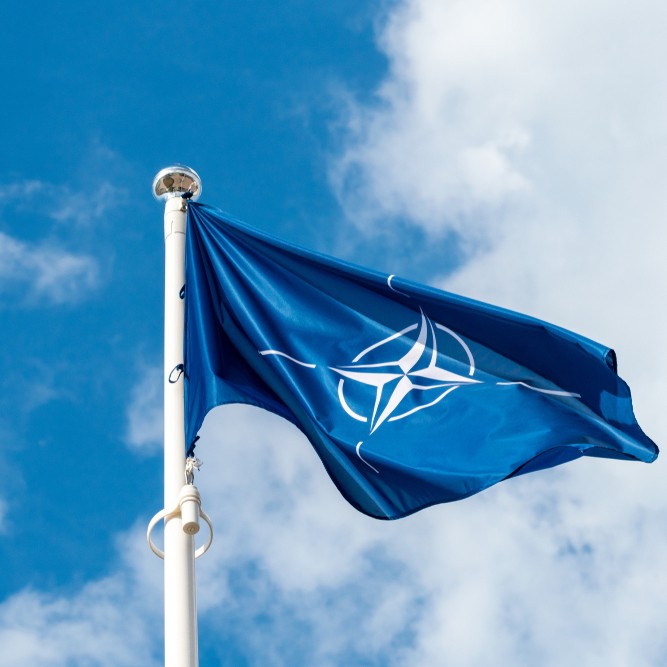
NATO Conference in Ankara: Public Tensions vs. Internal Unity
Meeting concludes with Ukraine declaration and military support commitments, while Trump surprises with differing stance in negotiations
The NATO conference held in Ankara on July 8th began with palpable tension, as the United States resumed attacks against Iran following an unstable ceasefire. The conflict has sent shockwaves through the military alliance, with U.S. President Donald Trump criticizing European allies for failing to assist and questioning their "loyalty."
Initial Tensions and Public Criticism
During a joint press conference with NATO Secretary General Mark Rutte on July 8th, Trump once again attacked European countries for delaying or preventing U.S. aircraft from using continental bases to conduct airstrikes, calling the Iranian regime "liars" and "scum," and stating that the deal with Iran was "over."
Additionally, he criticized Spain, a country that had recently publicly criticized the war while having to spend significantly on defense, hinting at potential trade sanctions against Madrid. Trump also revisited his plan from earlier this year to acquire Greenland from Denmark.
From images outside the meeting room, it appeared European leaders were bracing for the worst as they slowly entered the conference room.
The Contrast Between Public and Private Attitudes
Inside the meeting room, however, the circumstances were entirely different. NATO diplomats—speaking to RFE/RL on condition of anonymity as they were not authorized to speak on the record—described U.S. President Trump as being in a much better mood and far more diplomatic, and he did not repeat his comments about Spain, Greenland, and Iran with the other 31 leaders.
Following the meeting, Trump was full of enthusiasm, stating there was "great unity," while Rutte called the Ankara meeting "a huge success" and spoke with enthusiasm about "a great sense of unity."
| Key Developments at the Ankara NATO Conference | Response |
|---|---|
| Iran Situation | Conference statement confirmed "Iran must never have nuclear weapons" |
| Use of European Air Bases | U.S. has conducted over 5,000 flights from European air bases in recent months |
| Defense Spending Increases | Other 31 allies collectively increased defense spending by $139 billion in the past year |
Iran Issues and Defense Spending
Regarding Iran, the conference statement approved by all leaders noted that "Iran must never have nuclear weapons" and reiterated the "call on Iran to fully respect freedom of navigation in the Strait of Hormuz."
Despite U.S. concerns about European hesitation in supporting Washington in the conflict, Rutte pointed out that the U.S. had conducted over 5,000 flights from European air bases in recent months.
Then there was the issue of European and Canadian defense spending shortfalls—a persistent concern for the White House, which Trump has recently spoken out against. Following the meeting, NATO proudly pointed out that the other 31 allies collectively increased defense spending by $139 billion in the past year—a growth that Rutte didn't hesitate to give Trump credit for.
Ukraine's Improved Position
At last year's NATO conference in The Hague, there had been questions about whether Ukrainian President Volodymyr Zelenskyy would attend. All hopes that his country would join the alliance anytime soon had vanished, and he was not a favorite at the White House after a stormy meeting earlier in the year that ended humiliatingly.
What a difference a year makes. This time, there was no doubt that Zelenskyy would be invited to Ankara, and while not fully open to membership, the Ankara declaration acknowledged "Ukraine's contribution to Euro-Atlantic security."
In the final conference statement, there was also a commitment to provide Kyiv with 70 billion euros in military aid this year and at least a comparable amount for 2027—though not all of this would be new money.
Trump-Zelenskyy Relationship and Support for Ukraine
Washington would not contribute to this, but it may have brought Ukraine the greatest gift of all—a license to produce Patriot missiles in Ukraine—which Kyiv has sought for a long time, especially as Russia intensified attacks on civilian targets across the country.
Speaking alongside Zelenskyy, Trump said that "we're going to show Ukraine how to make Patriots" though the procedures likely still need to be finalized.
Following the bilateral meeting after the conference, Trump and Zelenskyy faced the media, and it appeared they got along quite well. Trump said they had "developed a good relationship," speaking enthusiastically about the Ukrainian military doing a "fantastic job" and being "brave," opening the possibility of an "early" visit to Kyiv, and showing interest in making drone deals with the country.
There were also warm praises for the "intelligence" of the Ukrainian delegation present in the room and the country's great potential if the war could end soon.
| Ukraine Support Commitments at NATO Conference | Details |
|---|---|
| 2024 Military Aid | 70 billion euros |
| 2027 Military Aid | Minimum 70 billion euros |
| Missile Production License | Patriot missiles in Ukraine |
| Trump's Comments on Ukraine | Praised Ukrainian military, potential Kyiv visit |
Controversial Comments
That was the promising part. But Zelenskyy also looked displeased when Trump suddenly praised Polish President Karol Nawrocki warmly, who had recently stripped Zelenskyy of Poland's highest political medal after a bilateral dispute that threatened Ukraine-Poland relations.
The U.S. President also said there wasn't much difference between the Ukrainian and Russian peoples, that he speaks more with Putin than with Zelenskyy, and that the Russian leader is "a tough character"—but Zelenskyy is too.
At least Zelenskyy drew the biggest laugh from the media crowd when Trump noted that Putin had proposed a meeting in Moscow to discuss ending the war, to which Zelenskyy replied that going there would be dangerous, as the city had too many Ukrainian drones.
Uncertain Future of Next NATO Conference
That may not have been the most important line in the Ankara declaration, but it was certainly the most curious one. NATO conference texts usually conclude with a line about where the next conference will be held. But this year's document simply states "We look forward to our next meeting." No further details.
Last year in The Hague, it had been determined that the next meeting would be held in Turkey, followed by Albania. Rutte confirmed in the final press conference that "the next meeting will be in Albania, that was the decision at The Hague. We have to decide on the exact timing."
There are two reasons for this lack of clarity. One is that there have been whispers within the alliance that a country that recently dropped below the 2% GDP defense spending threshold should not host a conference. Tirana has promised to soon pass a budget including increased military spending.
But there are also countries hoping that NATO will return to the tradition of holding conferences every two years, as it's difficult to produce concrete political outcomes on an annual basis.
So for now, we know that the next meeting will be in Albania, but it's uncertain whether that will be in the summer of 2027, the fall of that year, or even postponed until 2028.
By RFE/RL