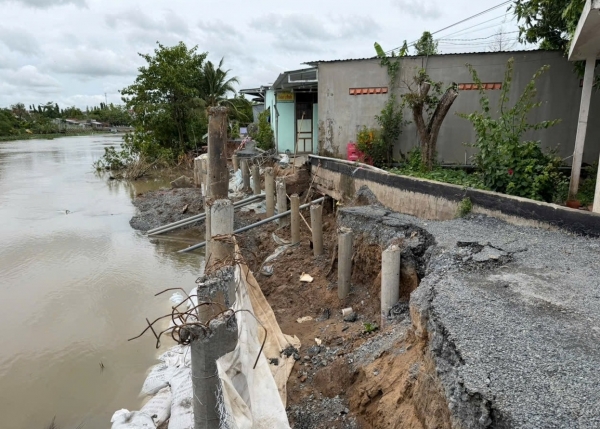
Riverbank Erosion Crisis in Vietnam's Mekong Delta: A Looming Environmental Catastrophe
The Mekong Delta, affectionately known as Western Nam Bo to locals, stands as one of Vietnam's most vital agricultural and economic regions. Renowned for its breathtaking natural landscapes and intricate network of serene waterways, this "rice bowl" of Vietnam is now confronting an existential threat: accelerating riverbank erosion. What was once a gradual natural process has transformed into a crisis that imperils thousands of households, forcing communities to live in perpetual anxiety as their homes literally crumble into the river.
The Escalating Crisis: Understanding the Scale of Erosion
Riverbank erosion in the Mekong Delta is not a novel phenomenon, but its intensity and frequency have increased dramatically in recent years. Satellite imagery reveals alarming rates of land loss, with some areas experiencing retreat of up to 30 meters annually. The visible signs are heartbreaking: houses precariously balanced at river's edge, community infrastructure collapsing into waterways, and fertile agricultural land vanishing before residents' eyes.
What makes this crisis particularly concerning is its unpredictable nature. Unlike gradual sea-level rise or consistent flooding, erosion often occurs in sudden, violent episodes. Communities may remain stable for months or even years, only to experience catastrophic land loss during a single rainy season or when river currents shift unexpectedly.
Root Causes of the Erosion Crisis
The complex web of factors contributing to riverbank erosion in the Mekong Delta requires a multifaceted understanding:
- Hydrological Disruption: The construction of upstream dams, particularly in China and Laos, has fundamentally altered the natural flow and sediment distribution of the Mekong River. These dams trap sediment that would naturally replenish delta areas, depriving riverbanks of the materials needed to maintain their structure.
- Climate Change Impacts: Increased rainfall intensity and changing weather patterns have led to more extreme flooding events. These events accelerate erosion by creating stronger river currents and higher water levels that undermine riverbanks.
- Unregulated Resource Extraction: The illegal and poorly regulated sand mining industry has removed vast quantities of riverbed material, destabilizing the river's natural balance and increasing flow velocity, which in turn accelerates bank erosion.
- Deforestation of Mangroves: The clearing of mangrove forests, which naturally buffer riverbanks and reduce wave impact, has left many areas more vulnerable to erosion.
- Infrastructure Development: Poorly planned construction of roads, embankments, and other infrastructure has disrupted natural water flow patterns, creating new erosion hotspots.
Human Impact: Lives Disrupted and Livelihoods Destroyed
The consequences of riverbank erosion extend far beyond mere property loss. For the approximately 500 households directly affected across the delta region, the impacts are devastating and far-reaching:
- Displacement and Homelessness: Families are losing not just their homes but their entire sense of community and belonging. The forced relocation disrupts social networks and cultural ties that have been maintained for generations.
- Livelihood Destruction: The delta's economy relies heavily on agriculture, aquaculture, and fishing. Erosion destroys farmland, aquaculture ponds, and fishing access points, eliminating primary income sources for many families.
- Psychological Toll: Living under the constant threat of losing one's home creates significant mental health challenges. Anxiety, depression, and stress-related illnesses are increasingly common among affected communities.
- Education Disruption: As families are forced to relocate, children's education is frequently disrupted. Schools may be lost, or families may need to move to areas with different educational opportunities.
- Cultural Heritage Loss: Many communities have cultural and historical sites tied to specific locations along the river. As these sites are lost to erosion, irreplaceable cultural heritage disappears forever.
Current Response and Mitigation Efforts
Recognizing the severity of the crisis, Vietnamese authorities at various levels, along with international organizations and NGOs, have implemented several response strategies:
- Hard Engineering Solutions: Construction of concrete and rock revetments, groynes, and other structures to protect vulnerable riverbanks. While effective in the short term, these solutions are expensive and often merely shift erosion problems to adjacent areas.
- Soft Engineering Approaches: Promotion of mangrove restoration and bamboo planting along riverbanks. These living barriers provide more sustainable protection while improving biodiversity and water quality.
- Community-Based Adaptation: Programs to help communities develop early warning systems for erosion events and create evacuation plans. These initiatives also focus on diversifying livelihoods to reduce dependence on riverside activities.
- Policy and Regulation: Strengthening regulations on sand mining and construction near riverbanks, though enforcement remains challenging in many areas.
- International Cooperation: Collaborative research and resource sharing with neighboring Mekong countries to address the transboundary nature of the problem.
Regional Assessment: A Delta-Wide Perspective
The erosion crisis affects different parts of the Mekong Delta with varying intensity. The following table provides a comparative overview of the situation across key provinces:
| Province | Erosion Severity | Households Affected | Primary Causes |
|---|---|---|---|
| Tien Giang | Critical | 300+ | Upstream dam impacts, intensive sand mining |
| Dong Thap | Moderate to Severe | 150+ | Climate change impacts, deforestation |
| An Giang | |||
| Ben Tre | Severe | 200+ | Sea level rise, mangrove loss |
| Vinh Long | Moderate | 100+ |
Future Outlook: Pathways to Resilience
Addressing the riverbank erosion crisis in the Mekong Delta requires a comprehensive, long-term approach that combines immediate relief with sustainable adaptation strategies:
- Integrated Watershed Management: A coordinated approach involving all Mekong Basin countries to manage water resources and sediment flow more sustainably.
- Ecosystem-Based Adaptation: Scaling up nature-based solutions like mangrove restoration, which provide multiple benefits including erosion protection, carbon sequestration, and enhanced biodiversity.
- Climate-Resistant Infrastructure: Designing and constructing infrastructure that can withstand climate impacts while minimizing disruption to natural river processes.
- Livelihood Diversification: Supporting communities in developing alternative livelihoods less dependent on riverside resources.
- Community Empowerment: Ensuring that local communities are active participants in decision-making processes rather than passive recipients of assistance.
- Scientific Research: Enhancing monitoring and research capabilities to better understand erosion processes and predict future changes.
Conclusion: A Call for Collective Action
The riverbank erosion crisis in Vietnam's Mekong Delta represents a critical intersection of environmental degradation, climate change, and human vulnerability. What begins as a geological process quickly transforms into a humanitarian crisis, threatening the lives, livelihoods, and cultural heritage of millions.
Solving this challenge requires unprecedented cooperation between government agencies, scientific communities, international organizations, and local communities. The solutions must be both immediate and long-term, addressing both the symptoms and root causes of erosion.
As the Mekong Delta continues to change, the resilience of its people will be tested. However, with adequate support, innovative solutions, and collective will, it is possible to navigate these challenges and secure a sustainable future for this vital region. The time for action is now—before more homes are lost, more livelihoods destroyed, and more of the Mekong Delta's unique heritage vanishes into the waters that have sustained it for centuries.
#MekongDelta #RiverbankErosion #ClimateChange #EnvironmentalCrisis #Vietnam