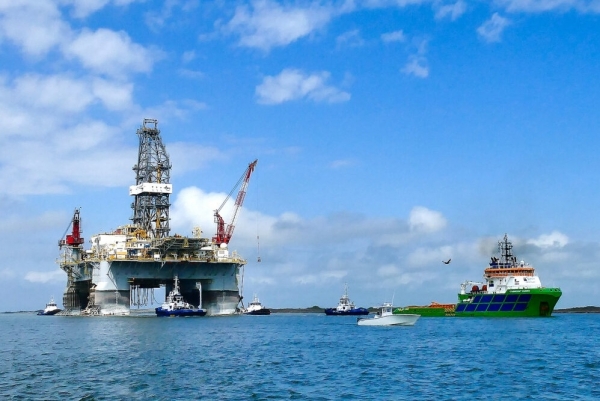
Technology Opens New Oil Exploration Areas in the Gulf of Mexico
The Gulf of Mexico is rapidly emerging as a pivotal hub in America's energy landscape, with offshore exploration activities driving significant contributions to the nation's oil production capabilities. Revolutionary technological breakthroughs are continuously expanding the horizons of viable exploration zones, delivering substantial economic benefits while simultaneously creating thousands of high-quality employment opportunities across multiple sectors.
The Gulf of Mexico - America's Premier Offshore Oil Exploration Region
For decades, the Gulf of Mexico has stood as one of the most strategically important offshore oil and gas exploration territories in the United States. Current statistics reveal that exploration operations within this maritime region contribute approximately 15% of the nation's total oil production, establishing it as a cornerstone of America's energy security infrastructure.
Beyond crude oil, this expansive underwater territory delivers substantial volumes of natural gas to American markets, effectively reducing the nation's reliance on imported energy resources while simultaneously contributing to greater price stability and energy independence.
Economic Impact and Employment Generation
The oil and gas exploration activities in the Gulf of Mexico generate a comprehensive economic ecosystem whose influence extends far beyond the coastal states where operations are physically located. This dynamic sector:
- Creates hundreds of thousands of direct and indirect employment opportunities, ranging from technical specialists to support service providers
- Attracts billions of dollars in annual investment for infrastructure development, technological innovation, and operational expansion
- Supports manufacturing and service industries across all 50 states through complex supply chains and specialized support services
- Contributes significantly to state and federal treasuries through various tax mechanisms, lease payments, and regulatory fees
Modern Extraction Technologies Transforming Gulf Operations
The relentless advancement of technology has fundamentally revolutionized oil and gas extraction methodologies throughout the Gulf of Mexico. State-of-the-art technologies currently being implemented include:
| Technology | Application | Benefits |
|---|---|---|
| Directional drilling | Allows drilling along curved paths to access multiple oil reservoirs from a single platform | Increased efficiency, reduced costs, minimized environmental footprint |
| Automated drilling rigs | Rigs capable of remote operation with significantly reduced personnel requirements | Enhanced operational safety, improved efficiency, reduced operating costs |
| Remote monitoring technology | Real-time monitoring of platform operations using advanced sensor networks and AI | Early detection of potential incidents, optimized operational parameters |
| Seawater treatment technology | Advanced systems for treating wastewater generated during extraction processes | Reduced environmental impact, enhanced regulatory compliance |
Cutting-Edge Technologies Expanding Exploration Frontiers
Recent technological innovations are successfully unlocking previously inaccessible exploration zones within the Gulf of Mexico, pushing the boundaries of what was once considered possible in offshore energy extraction. Key technological advances include:
Advanced Oilfield Discovery and Evaluation
Next-generation geophysical technologies combined with sophisticated artificial intelligence systems are enabling geologists to identify deep-sea oil reservoirs with unprecedented accuracy. Machine learning algorithms can now process vast volumes of complex geological data to predict potential hydrocarbon accumulations with remarkable precision.
Ultra-Deepwater Extraction Capabilities
Breakthrough technologies now permit commercial extraction operations at depths exceeding 3,000 meters below sea level, effectively opening up enormous new exploration territories previously considered economically unfeasible. These advancements include sophisticated remote control systems and revolutionary materials that maintain structural integrity under extreme pressure and temperature conditions.
Intelligent Production Optimization
The integration of Internet of Things (IoT) technology with real-time data analytics platforms enables continuous optimization of oil production from existing platforms. These intelligent systems can automatically adjust operational parameters in response to changing reservoir conditions, maximizing output while minimizing resource consumption.
Environmental Protection Technologies
Innovative technological solutions are being deployed to minimize the environmental footprint of exploration activities. These include advanced gas capture and utilization systems, next-generation wastewater treatment technologies, and comprehensive environmental monitoring systems that ensure operations remain within regulatory compliance standards.
Multi-State Economic Impact and Industry Synergies
The ripple effects of Gulf of Mexico exploration activities extend far beyond coastal states, creating symbiotic relationships with industries across all 50 states:
| Industry Sector | Impact from Gulf of Mexico Oil Exploration |
|---|---|
| Precision manufacturing | Consistent high demand for specialized equipment, components, and precision-machined parts |
| Information technology | Development of sophisticated monitoring, control, and data analysis systems for remote operations |
| Advanced materials | Research and development of corrosion-resistant, high-pressure capable materials for harsh environments |
| Logistics and transportation | Creation of extensive specialized transportation networks and distribution systems |
| Financial services | Development of specialized investment vehicles and insurance products for energy sector projects |
Environmental Challenges and Sustainable Development
Despite the substantial economic advantages, oil exploration in the Gulf of Mexico presents significant environmental and social considerations that must be carefully managed:
- Potential risks associated with oil spills and marine ecosystem contamination
- Impact on marine biodiversity and sensitive coastal habitats
- Interaction with competing economic sectors including tourism, commercial fishing, and recreational activities
- Visual and landscape changes affecting coastal communities
In response to these challenges, the oil and gas industry is investing heavily in advanced environmental mitigation technologies while adhering to increasingly stringent safety and environmental protection regulations established by federal and state authorities.
Future Trajectory and Industry Evolution
Continued technological advancement ensures that the Gulf of Mexico will remain a vital component of America's energy infrastructure for decades to come. Industry experts project several key developments:
- Expansion of exploration activities into previously uneconomical ultra-deepwater and remote offshore areas
- Increased implementation of automation and robotic systems in extraction and production operations
- Development and deployment of carbon capture, utilization, and storage (CCUS) technologies
- Integration of renewable energy systems with traditional oil and gas operations
- Gradual transition toward cleaner energy sources while maintaining oil production during the energy transition period
Conclusion
The ongoing technological revolution in oil exploration is unlocking new possibilities in the Gulf of Mexico, driving increased production, creating meaningful employment opportunities, and supporting broader economic growth. However, the industry faces the persistent challenge of balancing economic imperatives with environmental stewardship. Through the development and implementation of green technologies and sustainable operational practices, the Gulf of Mexico can continue to serve as a critical oil exploration center while minimizing its environmental footprint, ensuring its continued importance to America's energy security for generations to come.