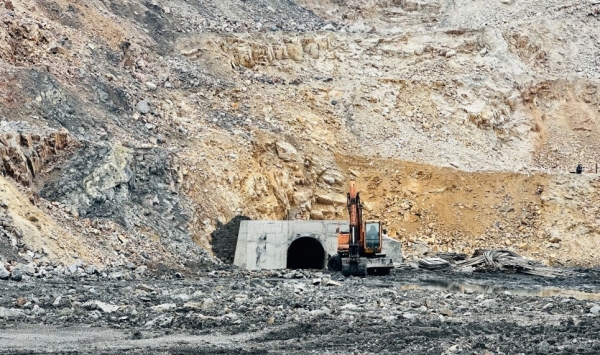
Prioritizing Safety: Vietnam's Mining Industry Embraces Advanced Technology for Worker Protection
In an era of increasingly extreme weather patterns and mounting operational pressures, the Vietnam National Coal and Mineral Industries Group (TKV) has elevated workplace safety and health to the forefront of its operational priorities. As one of Vietnam's largest state-owned industrial conglomerates, TKV faces unprecedented challenges in ensuring the wellbeing of its workforce while maintaining production efficiency in the demanding mining sector.
The Growing Challenge of Extreme Weather Conditions
Recent years have witnessed increasingly unpredictable weather patterns across Vietnam, with intensified typhoons, prolonged monsoon seasons, and extreme precipitation events becoming more frequent. These meteorological anomalies have significantly impacted mining operations nationwide, creating hazardous working conditions that threaten both operational continuity and worker safety.
The mining industry, by its very nature, is vulnerable to climatic disruptions. Open-pit mining operations face the risk of flooding, landslides, and unstable terrain, while underground mining operations contend with water infiltration and structural integrity concerns. The correlation between climate change and extreme weather events has created a new paradigm where traditional safety protocols are constantly being tested.
"We're witnessing weather patterns that deviate significantly from historical norms," stated Nguyen Van Hau, TKV's Director of Safety and Health Management. "What used to be considered 'once-in-a-century' storms are now occurring every few years, forcing us to continuously adapt our safety frameworks to these evolving challenges."
The Workforce Transition: Addressing Inexperience Through Comprehensive Training
Another significant factor influencing TKV's safety focus is the demographic shift within its workforce. The mining industry, like many traditional sectors, is experiencing a generational transition with younger workers comprising an increasingly large percentage of the labor force. While this brings fresh energy and new perspectives, it also presents challenges in terms of experience and safety awareness.
According to TKV's human resources department, approximately 35% of frontline mining workers have less than five years of experience, with many entering the industry directly from vocational training programs. These workers, while technically skilled, often lack the intuitive understanding of workplace hazards that comes with years of field experience.
"Our younger workforce brings valuable technical knowledge and adaptability to new technologies," explained Dr. Le Thi Minh, TKV's Chief Human Resources Officer. "However, transferring institutional knowledge about risk recognition and emergency response requires deliberate, structured approaches that go beyond basic orientation."
Comprehensive Safety Measures: Technology, Training, and Cultural Transformation
In response to these multifaceted challenges, TKV has implemented a comprehensive safety enhancement strategy that combines technological innovation, rigorous training programs, and organizational cultural transformation. This multi-pronged approach addresses both immediate safety concerns and long-term risk mitigation.
Technological Integration in Mining Operations
Perhaps the most visible aspect of TKV's safety transformation is its aggressive adoption of advanced technologies. The corporation has invested approximately $50 million over the past three years in digital safety systems, including:
- Real-time environmental monitoring stations that track air quality, ground stability, and potential gas leaks
- Wearable safety devices that monitor worker vital signs and location in hazardous areas
- Autonomous inspection systems using drones and robotic platforms for high-risk area assessments
- AI-powered predictive analytics that identify potential safety incidents before they occur
- Virtual reality training simulators that provide immersive hazard recognition experiences
Enhanced Training and Education Programs
Recognizing that technology alone cannot guarantee safety, TKV has developed an extensive training ecosystem designed to build safety competence at all organizational levels. The company's safety training initiatives include:
- Mandatory safety certification programs for all workers, with specialized tracks for different mining environments
- "Peer-to-peer" safety mentoring programs pairing experienced workers with newcomers
- Regular safety drills simulating various emergency scenarios from fires to structural collapses
- Digital learning platforms with micro-learning modules accessible on mobile devices
- Safety leadership training for supervisors and managers
Cultural Transformation Initiatives
Beyond technology and training, TKV has undertaken a fundamental transformation of its organizational culture to embed safety as a core value rather than a compliance requirement. Key cultural initiatives include:
- Implementation of "safety pause" protocols that allow any worker to halt operations if they observe unsafe conditions
- Regular safety recognition programs that celebrate both individual and team safety achievements
- Open communication channels for reporting safety concerns without fear of reprisal
- Integration of safety performance into employee evaluation and advancement criteria
- Family engagement programs to build broader support for workplace safety
Comparative Analysis of Safety Performance
| Performance Indicator | 2021 Baseline | 2022 Results | 2023 Target |
|---|---|---|---|
| Lost Time Injury Rate | 4.2 per 200,000 hours | 3.1 per 200,000 hours | 2.5 per 200,000 hours |
| Safety Training Completion Rate | 78% | 91% | 95% |
| Technology Implementation Coverage | 35% | 68% | 90% |
| Worker Safety Satisfaction Score | 6.8/10 | 7.9/10 | 8.5/10 |
Industry-Wide Impact and Future Directions
TKV's comprehensive safety approach has begun to influence broader industry practices in Vietnam's mining sector. The corporation has established partnerships with academic institutions and technology providers to develop indigenous safety solutions tailored to Vietnam's specific mining challenges and climatic conditions.
Looking ahead, TKV has outlined several strategic priorities for its safety program:
- Expansion of predictive maintenance systems to prevent equipment-related accidents
- Development of climate-adaptive safety protocols for extreme weather conditions
- Integration of mental health support into workplace safety programs
- Enhanced data analytics to identify emerging safety trends
- International benchmarking against global mining safety leaders
Conclusion: Safety as a Strategic Imperative
As TKV navigates the complex intersection of operational demands, environmental challenges, and workforce transitions, the corporation's unwavering commitment to workplace safety stands as both a moral imperative and strategic advantage. The comprehensive approach—combining technological innovation, rigorous training, and cultural transformation—represents a new paradigm for safety management in Vietnam's mining industry.
"Safety is not simply about compliance or statistics; it's about protecting the lives and wellbeing of the people who drive our operations forward," emphasized TKV's Chairman. "In an increasingly complex world, creating a safety culture that is both adaptive and resilient is perhaps our most critical responsibility to our workers, their families, and the communities in which we operate."
As Vietnam continues to develop its industrial capabilities, TKV's experience in transforming workplace safety offers valuable insights into how traditional industries can embrace innovation while protecting their most valuable asset: their people.